Rajasthan Sets Definitive Roadmap for Local Body Elections Following High Court Intervention
By Political Correspondent
Updated: July 21, 2026
The long-standing uncertainty surrounding the grassroots democratic process in Rajasthan has finally been addressed. In a significant development, the Bharatiya Janata Party (BJP) government in Rajasthan has formally submitted a binding election schedule to the Rajasthan High Court, pledging to complete the electoral process for both Panchayati Raj Institutions (PRIs) and Urban Local Bodies (ULBs) by November 15, 2026. This move comes after months of legal pressure and intense scrutiny from the judiciary regarding the repeated postponement of these vital local polls.
The Mandate: A Timeline for Democracy
The submission of the timeline took place during a hearing on July 20, 2026, before a Division Bench presided over by Acting Chief Justice S.P. Sharma. The government’s affidavit outlines a multi-stage process that hinges on the pending report from the Other Backward Classes (OBC) Political Representation Commission, which is expected in August.
According to the roadmap presented to the Court:
- August 2026: Submission of the OBC Commission’s report.
- August 15, 2026: Completion of the reservation process for Scheduled Castes (SC), Scheduled Tribes (ST), OBCs, and women through a mandatory lottery system.
- August 17, 2026: Official notification for Urban Local Body elections.
- September 20, 2026: Target date for the completion of polling for municipalities.
- September 23, 2026: Official notification for Panchayati Raj elections.
- November 15, 2026: Conclusion of all electoral phases for village panchayats.
The High Court, having previously issued contempt notices to the State Election Commission and Election Commissioner Rajeshwar Singh on April 2, 2026, finally disposed of the petitions filed by petitioner Giriraj Singh Devanda and former MLA Sanyam Lodha, noting the government’s formal commitment to this schedule.
Chronology of a Legal Tussle
The road to this announcement has been fraught with delays and judicial rebukes. The conflict between the state government’s administrative pace and the constitutional requirement for timely elections dates back to 2025.
November 14, 2025: The Rajasthan High Court issued a landmark directive, ordering the State government to finalize the delimitation process by December 31, 2025, and conduct local polls no later than April 15, 2026.
Early 2026: As the April deadline approached, it became clear that the state was not prepared. The government cited administrative complexities, including the intricate task of redrawing ward boundaries and updating electoral rolls, as the primary reasons for the delay.
April 2, 2026: The patience of the judiciary waned. The High Court issued contempt notices to the State Election Commission, expressing severe dissatisfaction with the lack of progress despite earlier clear instructions. This marked a turning point, signaling that the court would no longer accept administrative excuses as valid grounds for stalling the democratic process.
July 2026: Following the court’s "strict observations" regarding the defiance of its previous order, the Local Self-Government Department and the Panchayati Raj Department finally collaborated to file a concrete, phased plan, leading to the current roadmap.
Scale and Scope: The Magnitude of the Exercise
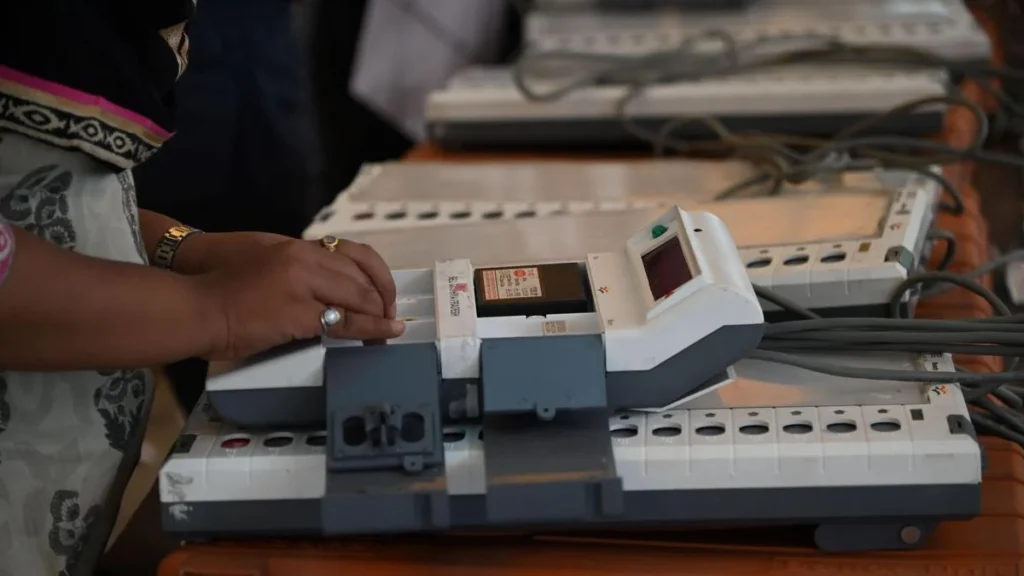
The scale of the upcoming electoral exercise is immense, reflecting the vast administrative geography of Rajasthan. The state is preparing to conduct elections for approximately 14,000 village panchayats and over 300 municipalities.
Government officials have maintained that the delay was not a matter of political convenience but rather a consequence of the technical requirements involved in democratic decentralization. According to the state’s filing:

- Delimitation: The process of redrawing boundaries for local bodies has been completed.
- Voter Lists: Revision of electoral rolls is finished.
- Logistics: The government estimates that holding the polls in a phased manner requires a minimum of 50 days to ensure adequate security, deployment of polling staff, and the fair implementation of reservation quotas.
The Political Firestorm: Governance vs. Strategy
The announcement has triggered a sharp response from the opposition. The Congress party, which has been vocal in its criticism of the BJP government, views the development not as a success of governance, but as a forced concession.
Congress leaders have alleged that the BJP’s strategy of delaying the polls was an attempt to avoid a referendum on its "misgovernance" over the last two-and-a-half years. By postponing the elections, the opposition claims, the ruling party sought to retain appointed officials in local bodies, thereby shielding itself from public accountability.
"The postponement of these elections was an attack on the very spirit of the Constitution," a senior Congress spokesperson stated. "The BJP government feared that if elections were held on time, the pulse of the people—who are frustrated with inflation, unemployment, and poor infrastructure—would have been reflected in a landslide defeat for the ruling party."
In contrast, government spokespersons have reiterated that the delay was necessary to ensure that the reservation of seats for OBCs was scientifically and legally sound. They argue that rushing the process without the OBC Commission’s input would have opened the door to further litigation, which would have stalled the election indefinitely.
Implications for Rajasthan’s Grassroots Democracy
The completion of these elections by November 15 will have far-reaching implications for the state’s political landscape.
1. Restoration of Local Representation
For over a year, many local bodies have been functioning without elected representatives, leading to a "bureaucratic vacuum." The return of elected councilors and sarpanches is expected to revitalize local governance, as these officials are the primary bridge between the state government and the rural population.
2. The OBC Factor
The reliance on the OBC Political Representation Commission’s report underscores the increasing importance of caste-based representation in Indian local politics. By tying the election schedule to this report, the government is attempting to immunize the election process against future legal challenges regarding reservation quotas, which have been a recurring point of contention in state-level elections across India.
3. A Test of Popular Sentiment
As the elections draw near, they will serve as a mid-term litmus test for the BJP’s popularity in Rajasthan. The results of these polls will likely be viewed as a barometer for the state’s mood ahead of future legislative cycles. The government’s ability to manage the logistics of 14,000 panchayats and 300 municipalities without further legal or administrative hitches will also be a test of the state machinery’s efficiency.
Conclusion
The Rajasthan High Court’s intervention has effectively brought an end to a period of institutional stagnation. By forcing the government to provide a fixed, time-bound schedule, the judiciary has re-asserted the importance of periodic elections as a cornerstone of Indian democracy.
As the state gears up for the notification process in August, the focus will now shift to the State Election Commission. The task ahead is Herculean: ensuring free, fair, and transparent elections across thousands of constituencies. For the citizens of Rajasthan, the upcoming months will be a critical opportunity to reclaim their voice in the local governance that affects their daily lives—from sanitation and water supply to rural development and municipal services.
Whether the government can meet these deadlines without further intervention remains to be seen, but for now, a path forward has been paved. The democratic clock, which had been paused, is now ticking once again.