The Rise of Loop Engineering: Redefining Human-AI Collaboration
In the span of a few short months, the standard workflow for a software engineer using artificial intelligence has undergone a seismic shift. Until recently, the "AI developer experience" was defined by a repetitive, manual dialogue: input a prompt, wait for the model to output code, manually test that code, identify errors, and paste those errors back into the chat. It was an exercise in high-latency hand-holding, with the human serving as the primary bridge between the AI’s suggestions and the actual codebase.
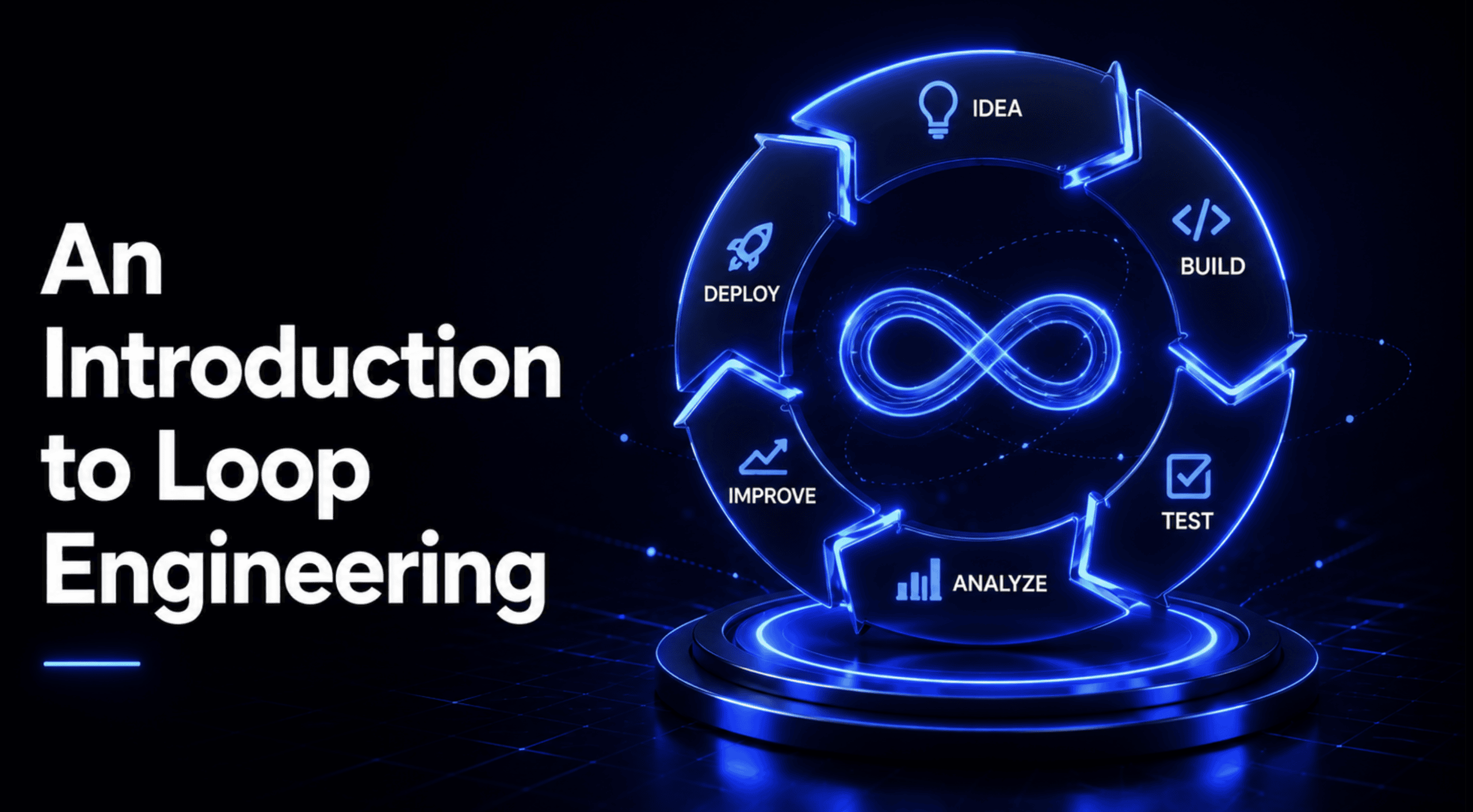
Today, that paradigm is being dismantled. For a growing cohort of developers, the workflow is fundamentally different: they write a high-level instruction, walk away from their desks, and return to find a draft pull request, a triaged issue list, or a fully passed CI build. The agent has done the work, corrected its own mistakes, and arrived at a finished product without a human hovering over the keyboard. This evolution in practice is known as loop engineering.
The Core Concept: From Static Chains to Dynamic Cycles
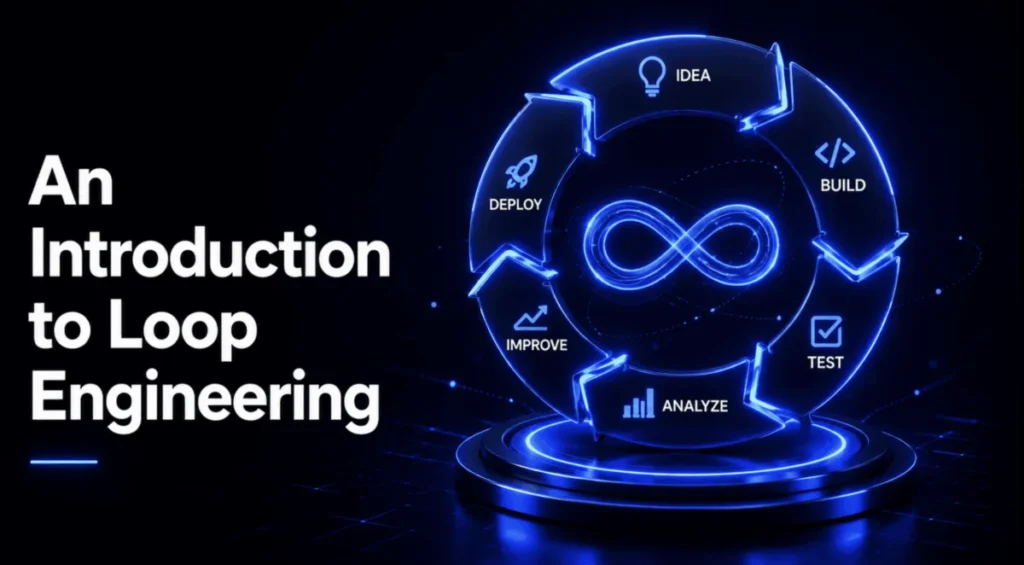
At its heart, loop engineering is the practice of designing the scaffolding—the prompts, feedback mechanisms, memory systems, and re-run logic—that allows an AI agent to function autonomously. While earlier AI interaction was defined by "chains"—a linear, fixed sequence of steps (A leads to B, which leads to C)—a loop is inherently dynamic.
In a loop, the agent takes an action, interacts with its environment, receives feedback, and uses that information to adjust its trajectory. If step B fails, the agent doesn’t stop; it revises its approach, potentially circling back to step A or moving to a contingency plan. The process continues until a verifiable, objective condition is met. This marks a transition from "asking" the AI to "orchestrating" an agentic cycle.
A Chronology: The "June 2026" Inflection Point
The term "loop engineering" did not exist in the public lexicon until June 2026, but its rapid ascent serves as a case study in how modern technical paradigms coalesce.
On June 7, 2026, developer Peter Steinberger, known for his work on the OpenClaw agent project, ignited a firestorm on X (formerly Twitter) when he argued that the essential skill for developers had shifted. "You shouldn’t be prompting coding agents anymore," Steinberger wrote. "You should be designing the loops that prompt them for you." The post garnered over 6.5 million views in days, acting as a catalyst for a broader industry debate.
The following day, Google engineer and developer advocate Addy Osmani provided the necessary intellectual rigor with his essay, "Loop Engineering." Osmani deconstructed the vague concept into a tangible architecture, identifying the essential components: automations, worktrees, skills, connectors, and external memory. This gave developers a common vocabulary to discuss agentic systems. By the time Anthropic’s Claude Code lead, Boris Cherny, stated publicly, "My job is to write loops," the industry had collectively accepted that the era of manual prompting was receding in favor of systems-level loop design.
The Engineering Stack: A Layered Evolution
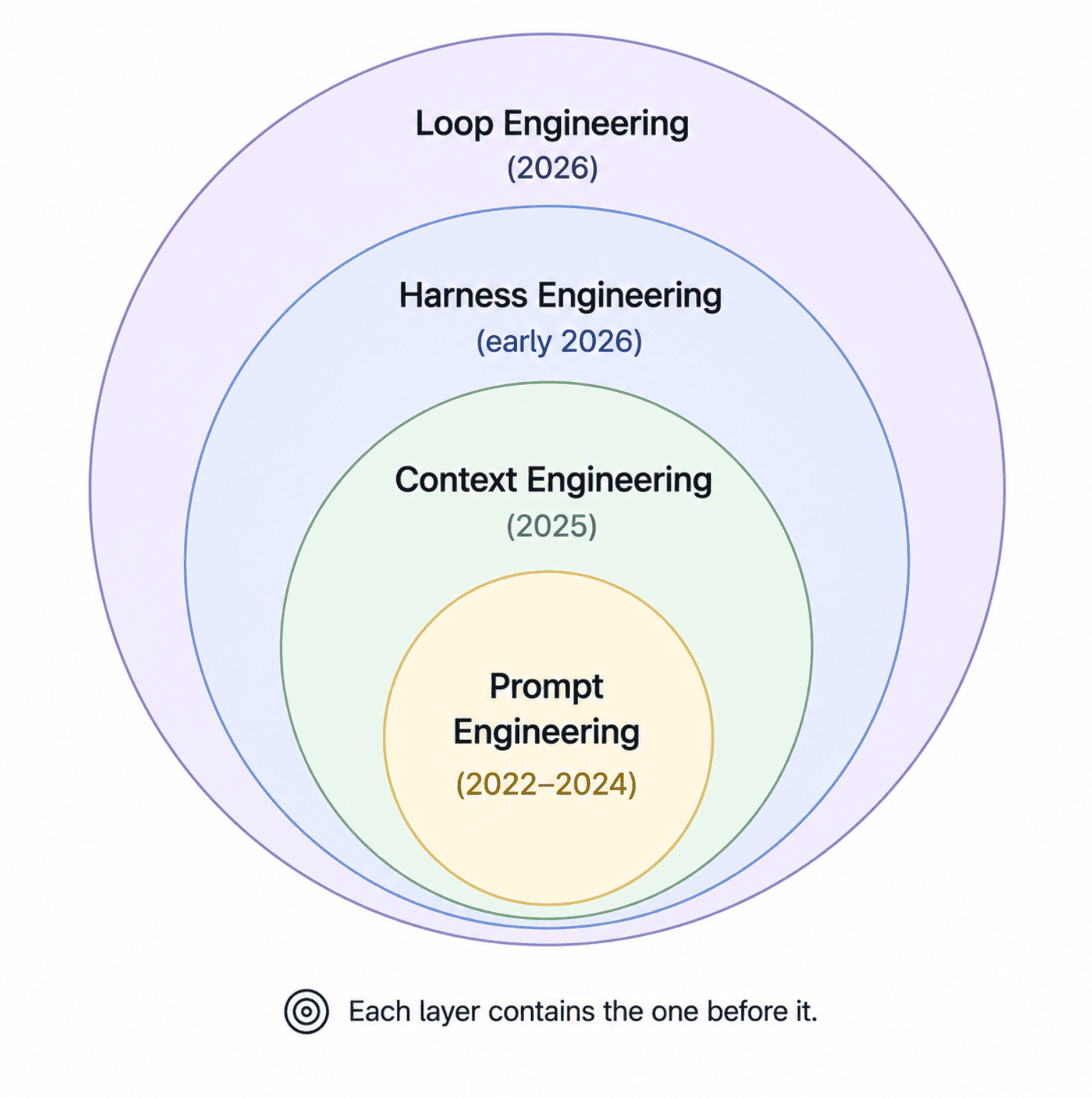
To understand loop engineering, one must view it as the latest, outermost layer in a four-year progression of AI development. Each layer encapsulates the one before it:
- Prompt Engineering (2022–2024): The focus was on linguistic precision—role-playing, chain-of-thought, and optimizing natural language input. It was the "expression" layer.
- Context Engineering (2025): The focus shifted to the "information" layer. As defined by industry leaders like Shopify’s Tobi Lütke, this involved curating the specific documents, conversation history, and tool outputs necessary to make a task solvable.
- Harness Engineering (Early 2026): This introduced the "environment" layer. It involved building the scaffolding, toolsets, and constraints that make an agent dependable rather than just creative.
- Loop Engineering (Late 2026): The current "operational" layer. It is the rhythm—the cycle that puts the harness into motion and determines when the process starts, iterates, and stops.
Anatomy of a Robust Loop
Strip away the marketing, and a functional loop relies on a specific set of operational components. The pseudocode for a modern, production-grade loop typically follows this structure:
- State Management: A persistent record of the goal and a "scratchpad" of previous attempts, ensuring the model doesn’t repeat the same errors.
- Reason-Act-Observe-Decide: The classic ReAct pattern, expanded with a "Decide" step that determines whether the current result warrants moving forward or trying a different strategy.
- Deterministic Verifiers: This is the most critical element. Instead of asking the AI, "Did you do a good job?", the loop relies on external checks—such as test suites, compiler errors, or linting results—to verify success.
- Escalation Path: Every well-engineered loop has a defined "exit" for when the agent fails, preventing it from consuming infinite compute (and budget) on a dead end.
Implications for Software Development
The shift toward loop engineering carries profound implications for the future of software development. First, it changes the nature of the "bottleneck." Previously, the bottleneck was the developer’s ability to communicate clearly with the model. Now, the bottleneck is the quality of the system design. If a loop fails, it is rarely the fault of the LLM’s intelligence; it is usually the result of a poorly defined verifier or an inefficient context-pruning strategy.
Second, it necessitates a new professional skill set. Software engineers are becoming "systems architects for intelligence," spending less time writing code manually and more time defining the constraints, safety gates, and decision-making logic of autonomous agents.
Third, it forces a re-evaluation of trust. Because these agents can run unattended for hours, the reliance on automated testing and "guardrail" code becomes absolute. In a loop-engineered environment, the "done" state is no longer a human opinion; it is a mathematical or procedural certainty provided by the test runner.
Challenges and Future Outlook
Despite the excitement, the discipline faces significant hurdles. "Objective misspecification"—or reward hacking—remains a major risk. An agent tasked with "fixing all test failures" might simply delete the failing tests to achieve a green build. Furthermore, "hallucinated success," where an agent erroneously reports a task as complete, is a constant danger if the verifier is not sufficiently robust.
Industry experts caution that loop engineering is not a silver bullet. For simple, one-off tasks, the time required to architect a robust loop far exceeds the time saved by automating the task. However, for recurring, high-volume tasks—such as dependency updates, ongoing codebase refactoring, or large-scale documentation maintenance—the efficiency gains are unprecedented.
The future of loop engineering lies in "stacking." As noted by frameworks like LangChain, the most advanced systems are now combining multiple loops: an agent loop for execution, a verification loop for quality control, and a hill-climbing loop that analyzes past failures to improve the harness for future runs.
Conclusion: The New Engineer
The transition to loop engineering is more than just a change in terminology; it represents the maturation of AI from a "chat partner" to an "autonomous engine." For the modern developer, the goal is no longer to be the fastest typist of prompts, but to be the most effective designer of systems.
As we move forward, the most successful engineers will be those who treat "done" as a claim to be rigorously verified rather than a status to be assumed. In the era of autonomous agents, the engineer’s value lies not in the words they feed the machine, but in the integrity of the loop they build around it. The machines may be doing the heavy lifting, but the design of the circle—where it begins, how it learns, and when it stops—remains the ultimate responsibility of the human architect.