The Battle for the Lunchbox: How India’s D2C Brands Are Reinventing Kids’ Nutrition—And Surviving the Scrutiny
Main Facts: Navigating the Modern Kids’ Nutrition Market
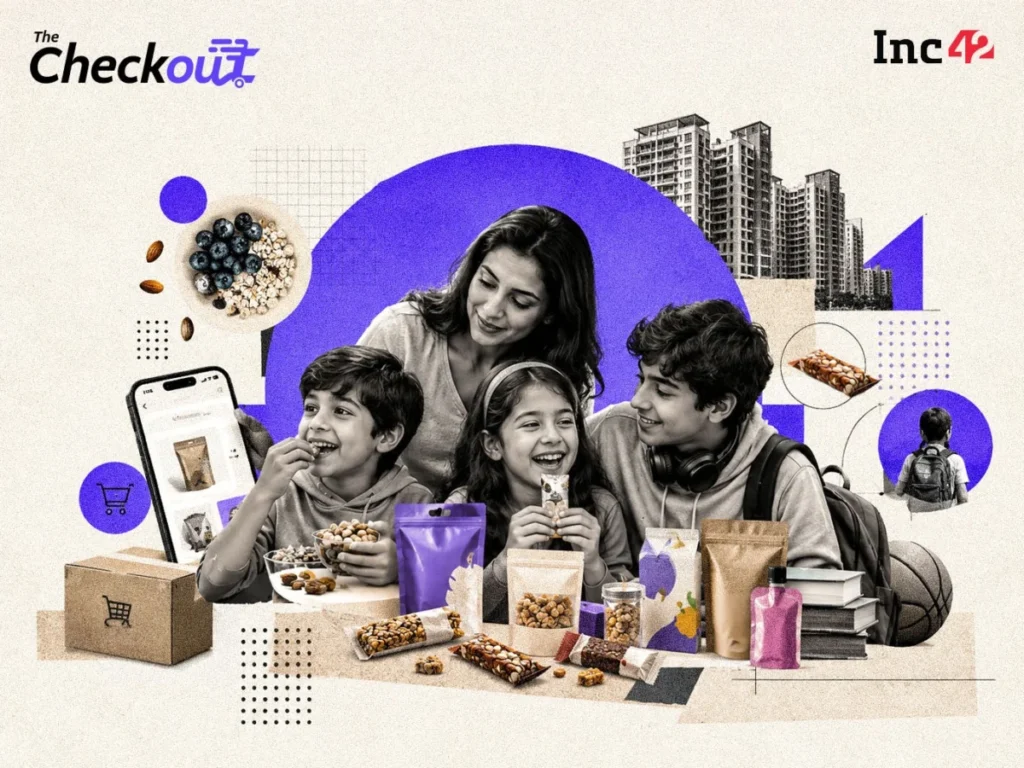
For generations, a silent tug-of-war has played out in supermarket aisles and kitchen pantries across India. On one side are children clamoring for sugary chocolates, processed wafers, and artificially flavored candies. On the other stand nutrition-conscious parents desperately seeking healthier snacking alternatives, often left negotiating temper tantrums over empty calories.
Enter a new wave of Indian Direct-to-Consumer (D2C) food and wellness startups. Rather than fighting human nature or trying to force children to adopt restrictive, unappealing diets, these brands have adopted a pragmatic philosophy: don’t ask children to eat differently; make the food they already love better.
This consumer-goods pivot has given rise to innovative formulations. Consider Little Joys, a health and wellness platform that bets it is significantly easier to smuggle high-quality protein into a daily staple like a roti than it is to convince a picky child to try an entirely foreign superfood. The company launched a specialized protein mix designed to blend seamlessly into everyday doughs and batters for rotis, dosas, and pancakes.
Similarly, Jaipur-based Gladful incorporates sprouted lentils and nutrient-dense millets into familiar breakfast mixes, while The Whole Truth’s "Next Gen" product line features clean-label milk mixes, snack bars, and protein blocks tailored for growing bodies.
Targeting urban millennial parents who possess high disposable incomes but precious little time to prepare complex meals from scratch, these brands offer convenience bundled with health. However, this business model walks a tightrope, as every product must simultaneously satisfy two drastically different consumers: the child who demands exceptional taste, and the parent who demands nutritional integrity, safety, and value for money.
Chronology: From Pandemic-Era Experimentation to Regulatory Reckoning
The evolution of India’s functional kids’ nutrition market has accelerated rapidly over the last several years, marked by shifting consumer habits and growing regulatory intervention:

- 2020–2022 (The D2C Boom): Accelerated by pandemic-era focus on health and immunity, a proliferation of new-age brands emerged on e-commerce platforms and quick-commerce channels, promising uncompromised nutrition, organic ingredients, and "clean labels."
- Late 2023–Early 2024 (Scaling Pressures): As venture capital funding tightened, young food startups were forced to pivot from pure growth-at-all-costs models to unit economics, grappling with skyrocketing ingredient costs, complex supply chains, and the steep price of consumer acquisition.
- June 2025 (The Regulatory Crackdown): The Food Safety and Standards Authority of India (FSSAI) stepped up oversight, publicly flagging 15 prominent food and beverage brands—including Storia, Two Brothers Organic Farms, PLAN B, The Health Factory, Troovy, and Emami’s Healthy & Tasty—over allegedly misleading branding and health claims. Buzzwords like "healthy," "organic," "zero maida," and "vegan" came under intense scrutiny.
- 2026 (The Maturity Phase): Armed with comprehensive market surveys—such as Farmley’s 2026 snacking report indicating that 86% of Indians prioritize protein—brands are moving past superficial marketing buzzwords. They are racing to establish genuine clinical validation, transparent sourcing, and sustainable unit economics that can survive both retail expansion and rigorous regulatory compliance.
Supporting Data: What the Metrics Tell Us
The economic and behavioral metrics shaping the modern Indian parenting and snacking landscape reveal a complex market dynamic:
- Willingness to Pay: According to Farmley’s 2026 snacking survey—which mapped responses from over ,600 participants across diverse Indian cities and demographics—nearly 60% of surveyed parents stated they are actively willing to pay a premium for healthier, functional snacks for their children.
- The Cost of Clean R&D: Achieving clean labels is financially punishing for startups. Troovy’s cofounder Mansi Baranwal reveals that her startup allocates approximately INR 10 Lakh to 12 Lakh every month exclusively for rigorous laboratory testing of raw materials and finished products.
- Regulatory Scrutiny: The FSSAI’s mid-year enforcement sweep targeted 15 major health-focused brands, signaling an end to the "wild west" era of unverified functional food marketing in India.
- Market Growth Indicators: Venture capital firms like Kae Capital note that while quick-commerce platforms (such as Blinkit and Instamart) provide rapid initial scale, scaling brands must fundamentally restructure their pack sizes, price points, and margin structures to survive on traditional kirana store shelves and supermarket aisles.
Official Responses and Industry Insights
Building a sustainable brand in a category defined by high skepticism requires deep operational rigor. Founders and investors navigating this space offer candid assessments of the hurdles involved.
Reflecting on the dual-customer paradox, Little Joys founder Revant Bhate noted:
"The hard thing in building a kids brand is building for two customers. A 10-year-old wants great taste, while a parent wants proof that the product is good and effective. And the bar for winning both over keeps getting higher."
The challenge extends deep into the ingredient bill and manufacturing line. Parul Sharma, cofounder of Gladful, emphasizes that balancing taste, texture, and strict compliance with the Indian Council of Medical Research’s (ICMR) recommended dietary allowances is an ongoing tightrope walk. Replacing conventional ingredients or reducing sugar inevitably alters mouthfeel, while higher-grade inputs drive up production costs.
Furthermore, the illusion of "clean labels" is frequently challenged by hidden additives. Mansi Baranwal of Troovy warns that while brands proudly highlight millets and pulses on the front of packaging, the fine print often masks complex stabilizers:

"These spices and condiments may contain silicon dioxide, disodium inosinate, disodium guanylate, and tertiary butylhydroquinone, or TBHQ, alongside artificial colors and flavors, emulsifiers, firming agents, and gelling agents. My concern is how far brands are willing to go in reworking these parts of the recipe to keep their ingredient promises."
Removing these industrial agents isn’t simple; it often leads to failed manufacturing batches and massive R&D expenditure just to ensure seasonings stick evenly to a snack without chemical assistance.
From an investment perspective, Sunitha Vishwanathan, partner at Kae Capital, cautions against over-reliance on digital-first distribution:
"The pack sizes, price points, and margin structures that work on Blinkit don’t automatically translate to a kirana shelf or a supermarket aisle. Brands concentrating only on D2C and quick commerce risk building on too narrow a base."
Implications: The Future of Kids’ Nutrition in India
As India’s functional food sector matures, the implications for startups, legacy giants, and consumers are profound.
1. The Death of the "Health Halo"
Regulatory crackdowns by the FSSAI signify that vague marketing terminology—such as "natural," "wholesome," or "zero-maida"—will no longer suffice. Brands must back their packaging claims with rigorous laboratory testing and transparent nutritional profiles. Those relying purely on clever branding face imminent compliance risks and consumer backlash.

2. Moving from "Trial" to "Routine"
As Gladful’s Parul Sharma notes, true commercial validation does not come from a customer’s one-time impulse purchase driven by an introductory discount. The ultimate metric of success is repeat retention: whether households integrate these products into their daily routines organically. Brands must prove tangible functional benefits—such as cognitive support, sustained energy for active children, or enhanced gut health—rather than simply listing what ingredients they exclude.
3. The Operational Crucible
Startups can no longer afford to treat R&D and supply chain management as secondary concerns. As ingredient costs for quality oils, alternative sweeteners, and proteins remain volatile, brands must drive internal efficiencies through smarter procurement, better production yields, and optimized packaging. Those that choose to compromise on ingredient quality to preserve profit margins risk alienating watchful parents.
4. The Omnichannel Reality Check
While quick-commerce has allowed innovative D2C brands to launch with minimal upfront capital, the path to enduring scale requires conquering traditional retail channels. Adapting products for physical kirana stores without eroding profit margins will separate fleeting digital fads from enduring household staples.
Ultimately, Indian parents have shown they are more than willing to invest in their children’s nutritional future. However, as the market grows more crowded and regulatory oversight tightens, the true test will be what these brands choose to protect when costs rise and margins squeeze—revealing, at last, how much their health promises are genuinely worth.