The AI Revolution: Transforming Business Operations and Digital Strategy in 2024
Artificial intelligence has transitioned from a futuristic concept to the backbone of the modern digital economy. What began as experimental algorithmic research has blossomed into an indispensable suite of tools for professionals, entrepreneurs, and global enterprises alike. As the utility of large language models (LLMs) and machine learning algorithms continues to diversify, businesses are discovering that the integration of AI is no longer a luxury—it is a requisite for survival in an increasingly automated marketplace.
The State of Play: Main Facts on AI Adoption
The current landscape of artificial intelligence is defined by rapid, widespread integration. According to data from AuthorityHacker, approximately 35% of companies have already fully embedded AI into their core operational processes. This figure, while significant, represents only the beginning of a broader technological shift.
The psychological shift in the corporate world is perhaps more striking: 90% of business leaders now perceive AI as a critical competitive advantage. This consensus suggests that organizations failing to leverage AI-driven insights, automation, or creative support risk obsolescence. Furthermore, the consumer-facing impact is inescapable, with 77% of all smart devices now utilizing AI functionalities to enhance user experience and predictive capability. From personal assistants to complex logistics software, AI is the invisible engine driving modern commerce.
A Chronology of the AI Evolution
To understand where we are, we must look at how quickly we arrived here.
- The Foundational Years (2010–2018): AI was largely restricted to data scientists and specialized research labs. Machine learning models were nascent, and natural language processing (NLP) was limited to simple chatbots and basic syntax analysis.
- The Generative Breakthrough (2019–2022): The introduction of transformer models changed the trajectory of the industry. These models allowed for the generation of human-like text, ushering in an era of "Generative AI." Tools like GPT-3 began to appear in the public consciousness, proving that machines could assist in creative writing and coding.
- The Commercial Explosion (2023–Present): The release of accessible, user-friendly interfaces brought AI to the masses. Companies began integrating APIs into their existing infrastructure. The focus shifted from "what can AI do?" to "how can AI optimize my specific workflow?"
Supporting Data: Why AI is Mandatory, Not Optional
The competitive advantage cited by industry leaders is backed by quantifiable performance metrics. In the realm of e-commerce, AI tools have demonstrated the ability to reduce customer acquisition costs by up to 20% through hyper-personalized marketing. By analyzing consumer behavior patterns, AI can predict purchasing intent with remarkable accuracy, allowing brands to deliver the right message at the right time.
Furthermore, operational efficiency is reaching new heights. In project management, AI-powered predictive analytics can identify bottlenecks in supply chains before they occur, saving millions in potential downtime. In content marketing, AI-assisted copywriting has been shown to increase production output by 300% without a commensurate increase in labor costs, allowing human teams to focus on strategy rather than repetitive drafting.
Official Perspectives: The Industry Consensus
Industry leaders and policy experts agree that we are in the midst of a "productivity renaissance." In various official statements from industry forums, the sentiment is clear: AI is a "co-pilot," not a replacement.
"The goal of integrating AI into the modern enterprise is to augment human intelligence, not replace it," states a lead developer in the SaaS sector. "When a professional spends less time on formatting, scheduling, or basic data entry, they are liberated to focus on the high-level critical thinking that only humans can provide."
However, this transition is not without its challenges. There is an ongoing dialogue regarding data privacy, algorithmic bias, and the ethical use of training data. Regulatory bodies worldwide are currently drafting frameworks to ensure that as AI becomes more autonomous, it remains transparent, accountable, and secure.
Implications for Your Business: A Strategic Roadmap
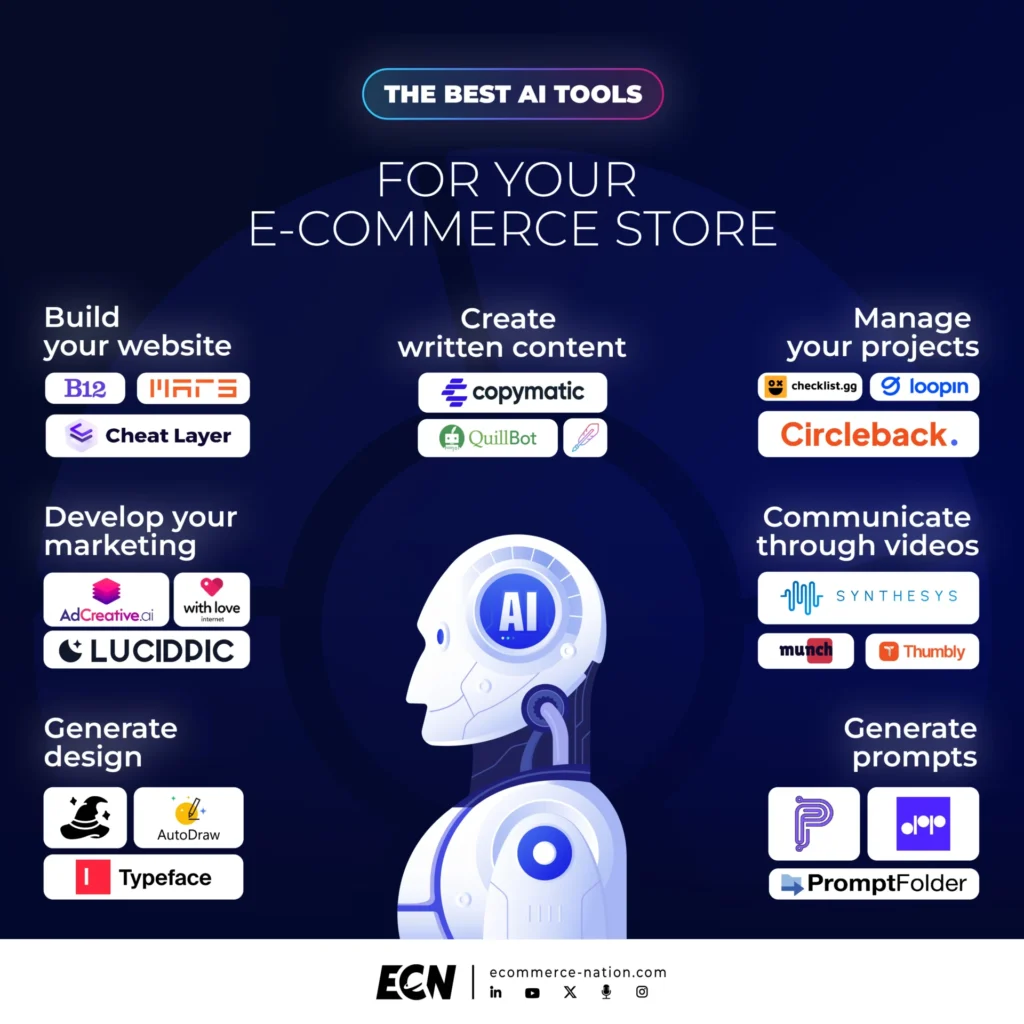
The integration of AI into your online store, blog, or project workflow is not merely about adopting a list of tools—it is about adopting a mindset of continuous optimization. Below are the key sectors where AI is currently redefining success:
1. Website Development: The End of "Static" Design
Building a website used to require weeks of development and complex coding knowledge. Today, AI-powered website builders can synthesize user requirements and design preferences to generate fully responsive, aesthetic, and functional websites in a matter of minutes.
2. Marketing and Consumer Engagement
Marketing has shifted from broad-spectrum outreach to precision targeting. AI tools now allow for the automated segmentation of audiences based on thousands of variables, enabling brands to craft bespoke marketing journeys that resonate on an individual level.
3. Video Production and Multimedia
Video is the most consumed form of content, yet it was traditionally the most expensive and time-consuming to produce. AI video generators now allow creators to turn scripts into professional-grade videos with realistic avatars, automated editing, and localized language translations, lowering the barrier to entry for video marketing.
4. Project Management and Efficiency
Managing remote teams requires sophisticated coordination. AI tools now provide real-time updates, sentiment analysis of team communications, and automated task allocation, ensuring that project managers can maintain a high-level view without getting bogged down in administrative minutiae.
5. Content Strategy and Prompt Engineering
The art of "prompt engineering"—the skill of communicating effectively with AI—has become a core competency for modern professionals. By mastering the inputs, companies can generate consistent, brand-aligned written content, from blog posts to technical whitepapers, at a scale previously unimaginable.
6. Design and Visual Assets
High-quality graphic design is essential for brand identity. AI-powered image generators can now create custom illustrations, product mockups, and social media assets in seconds. This allows for rapid A/B testing of creative elements, ensuring that your visual communication is always data-backed and visually compelling.
Conclusion: The Path Forward
The data is undeniable: the integration of artificial intelligence is the most significant shift in business technology since the advent of the internet. As businesses continue to navigate this landscape, the focus must remain on agility. By leveraging these powerful tools, companies can optimize their internal processes, enhance their customer experiences, and build a more resilient, scalable future.
Whether you are an individual entrepreneur or a large-scale enterprise, the tools at your disposal are more powerful than ever. The question is no longer whether you should use AI, but how effectively you can integrate it to define the next chapter of your success story. As we look toward the future, the organizations that embrace this transformation will be the ones that define the standards of their respective industries.
Stay curious, experiment with new tools, and remember that while AI provides the acceleration, you remain the driver of your company’s strategic vision.