Master Instagram Growth Without the Camera: The Power of Strategic Carousels

In the modern landscape of social media marketing, a persistent myth dominates strategy rooms across the globe: if you aren’t filming daily Reels, pointing at floating text, and chasing transient audio trends, your brand is destined for digital obscurity. For many small business owners, marketers, and writers, this narrative induces dread. The prospect of becoming a full-time video creator—complete with ring lights, microphones, and hours spent editing footage—acts as a massive barrier to entry.
However, a quiet revolution is taking place on Instagram. Content creators and marketing agencies are proving that you can scale past six figures, amass hundreds of thousands of loyal followers, and drive high-intent sales without ever hitting the "record" button. The secret weapon? The humble, highly strategic Instagram carousel.
Co-created by industry experts Katelyn Rhoades and Michael Stelzner, recent insights reveal a blueprint for building an authority-driven, revenue-generating Instagram presence using static and animated multi-image posts. By leaning into written word, deliberate visual storytelling, and algorithmic triggers, brands can bypass the video treadmill entirely.
Main Facts: Shifting the Paradigm from Reels to Carousels
The fundamental premise of Instagram growth has long been tied to short-form video. Yet, data and real-world case studies challenge this hegemony. Katelyn Rhoades leveraged educational carousels to build a following exceeding 217,000 users and establish a thriving six-figure revenue stream. Her agency has successfully replicated this methodology across numerous diverse niches, yielding consistent, measurable results.
The underlying mechanism of this success lies in how Instagram’s algorithm measures user interaction. While a Reel often prompts passive consumption—users watch for a few seconds and flick their thumbs upward to the next piece of content—carousels demand active, deliberate participation.

When a user encounters a carousel, a distinct behavioral chain reaction occurs:
- They stop their scroll to read the hook.
- They manually swipe through multiple slides.
- They frequently backtrack to re-read earlier points.
- They hit the save button for future reference.
- They share the post directly with friends, colleagues, or via their stories.
Instagram’s algorithm heavily rewards this friction and sustained attention. Metrics such as dwell time, completion rate (which slide the user drops off on), saves, and shares send powerful positive signals to the platform’s distribution network. Carousels naturally accumulate these high-value signals at rates that often surpass standard video content, particularly for educational and B2B brands.
Furthermore, this format solves a profound operational bottleneck: it completely eliminates camera shyness. Creators who excel at copywriting, structural narrative, and visual design can double down on their natural strengths. Consistency no longer depends on whether a creator "feels like filming" on a given day; it relies on structured, repeatable content frameworks.
Chronology: The Evolution of Content Strategy
Understanding how to deploy this strategy requires looking at the historical shift in social media consumption and the step-by-step evolution of how top creators plan, draft, and execute high-performing carousels.
Phase One: Establishing the Strategic Objective
Before a single design asset is touched or a headline is written, successful creators define their core objective. Growing a raw following, nurturing leads for high-ticket sales, and inspiring a community demand vastly different architectural approaches.
- The Follower Play: Focuses on broad-appeal educational content optimized for saves and shares.
- The Sales Play: Focuses on targeted problem-solving, high-friction curiosity gaps, and direct response calls to action.
Phase Two: Structuring the Narrative Arc
The common pitfall among amateur designers is starting with visual aesthetics and trying to retrofit a message afterward. Effective carousel strategists reverse this. They begin with a singular, hyper-focused target audience member—a "dream client"—and map out a rigid storytelling arc.
- The Hook (Slide 1): Delivers a heavy, pattern-interrupting blow that highlights a painful problem or shatters a common industry myth.
- The Value Delivery (Slides 2 through 7–9): Provides actionable, genuine insights while purposefully leaving the methodology slightly incomplete. This mimics the psychology of a high-converting webinar: the reader learns something concrete, but recognizes they need further guidance or partnership to achieve total transformation.
- The Call to Action (Final Slide): Directs the reader precisely on what action to take next, whether that is commenting for a lead magnet or sharing the post.
Phase Three: Refining Text and Visuals
Once the narrative skeleton is approved, creators move into production. Modern tools like Canva, Adobe Express, and native Instagram features allow for rapid assembly. Rather than relying on sterile, hyper-polished stock photography, top-performing accounts utilize authentic camera-roll assets—casual snapshots, behind-the-scenes glimpses, and mirror selfies—to lower the psychological barrier between brand and consumer.
Supporting Data and Core Methodologies
Executing a carousel-first strategy requires adherence to specific structural best practices. Industry leaders have identified several non-negotiable rules for maximizing engagement across each slide of a post.
1. Mastering the Text Hook
The initial slide dictates the lifespan of the entire post. If the text hook fails to halt the user’s momentum, the subsequent slides are effectively invisible.
Data indicates that negative hooks consistently outperform positive ones. Human psychology is naturally wired to pay closer attention to avoidable mistakes, hidden threats, and flawed assumptions than generic advice.
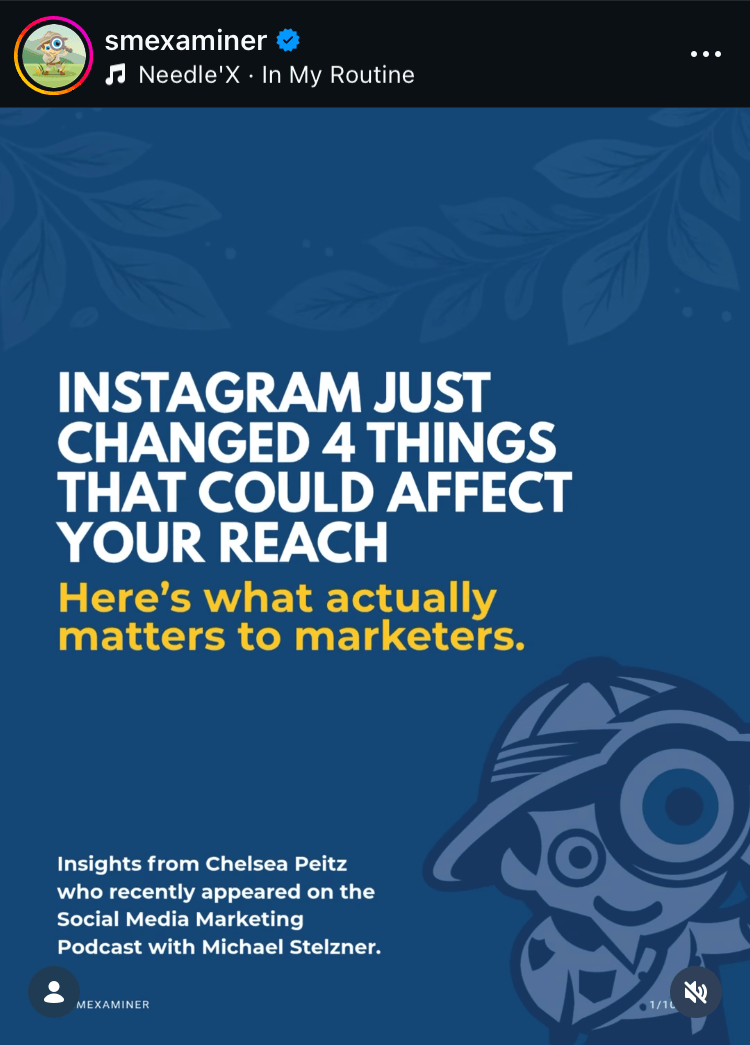
- Weak Hook: "5 Ways to Improve Your Instagram Strategy Today."
- Strong Hook: "You are actively destroying your Instagram reach if you keep making this one mistake."
The primary rule of the hook is maintaining a strict curiosity gap. It must create an itch that the reader feels compelled to scratch by swiping. If the first slide completely resolves the premise, the incentive to engage vanishes. Additionally, visual readability is paramount. High-contrast color pairings—such as stark black-and-white text or unconventional accent colors like high-visibility yellow—help punch through the monotonous visual noise of the standard feed.
2. Categorizing Calls to Action (CTAs)
The final slide of a carousel is frequently underutilized. To maximize ROI, creators must align their CTA with their primary business goal using three distinct avenues:
- Comments for Reach: Prompting users to answer a simple question or share an opinion. Every comment signals algorithmic approval, expanding organic reach.
- Shares for Virality: Platforms currently favor shares over almost all other metrics. Directing users to "send this to a colleague who needs to see it" unlocks exponential distribution networks.
- DM Automation for Revenue: Directing users to comment a specific keyword (e.g., "START") to trigger automated delivery of a lead magnet, sales page, or free resource via direct message using tools like ManyChat or Stan Store. This transforms passive scrollers into qualified sales leads seamlessly.
3. Visual Execution and Animation
While carousels rely heavily on text, the visual presentation anchors the reader. Incorporating human faces on the initial slide drastically improves conversion rates by establishing immediate, primal connection.
Furthermore, introducing subtle motion can act as a powerful pattern interrupt. Animating just the first slide of a carousel—either by layering text over a looping background video (such as moving clouds or transit feeds) or utilizing kinetic text animations like "typewriter" or "wiggle"—captures an extra second of user attention. This marginal gain is frequently the tipping point between a lost impression and a new follower.
Official Responses and Industry Perspectives
The pivot away from video-centric mandates has garnered significant attention from marketing analysts and platform architects alike. Meta’s continued evolution of its native platform features—such as integrated text overlay tools for photo dumps and expanded carousel slide limits up to 20 images—signals an official acknowledgment that diverse content formats remain vital to ecosystem health.

Industry veterans emphasize that the anti-video movement is not about rejecting Reels entirely, but rather about sustainability and resource allocation. For solo entrepreneurs, lean marketing teams, and subject-matter experts who possess deep intellectual property but lack video production bandwidth, forcing compliance with video-first models leads directly to burnout.
By validating text-heavy, design-driven, and narrative-focused formats, platforms are retaining creators who might otherwise abandon social media marketing altogether. The consensus among top digital strategists is clear: authenticity, depth of value, and psychological resonance will always supersede production value and format mandates.
Implications for Marketers and Business Owners
The transition toward carousel-centric growth strategies carries profound implications for the future of digital marketing:
- Democratization of Content Creation: Content creation is shifting back toward writers, thinkers, and graphic designers. You no longer need to be comfortable on camera to build a dominant personal or corporate brand.
- Rise of Conversational Marketing: The marriage of educational carousels with automated DM workflows bridges the gap between top-of-funnel awareness and bottom-of-funnel conversion. Social media is returning to its roots as a relationship-building medium rather than a pure broadcast network.
- Efficiency and Longevity: Carousels possess a longer shelf life than fleeting short-form videos. Because they are saved and shared at higher rates, they continue driving organic traffic, profile visits, and inbound leads weeks or even months after their initial publication date.
Conclusion
Growing a thriving business and building a loyal following on Instagram does not require a Hollywood-style production setup, daily dance trends, or endless hours staring down a camera lens. By mastering the art of the narrative-driven, visually engaging carousel, marketers can reclaim their time, honor their core communication strengths, and build a predictable, scalable engine for growth and revenue. The path forward is not about shouting louder in video; it is about writing smarter on the page.