The State of Modern CSS: Tooltips, Native Geolocation APIs, and the Quest for Smarter Layouts
Global Tech Desk — As the web development community transitions into a new seasonal cycle, the evolution of Cascading Style Sheets (CSS) and cutting-edge web platform features continues to accelerate at a breathtaking pace. Edition #18 of the industry-favorite briefing What’s !important has landed, highlighting a robust collection of developments, experimental APIs, and architectural debates that are redefining how front-end engineers approach layout, performance, and user experience.
From cutting-edge native HTML elements bridging the gap with complex hardware APIs to syntax highlighting powered entirely by native browser styles, the modern web is becoming more expressive, performant, and declarative than ever before.
Main Facts: What’s Shaping the Modern Web
The latest wave of CSS and HTML innovations focuses heavily on bridging native browser capabilities with declarative styling paradigms, reducing reliance on heavy JavaScript frameworks. Key developments include:
- Advanced Tooltip Mechanics: Moving away from rudimentary hover states toward delayed-then-instant triggers, utilizing emerging browser properties like
interest-delay-startandinterest-delay-end. - The Native
<geolocation>Element: A progressive enhancement solution designed to simplify complex hardware permissions and location-fetching workflows previously restricted to the imperative JavaScript Geolocation API. - MicroLighter and the Custom Highlight API: A lightweight syntax highlighter by Dave Rupert leveraging the native
::highlight()API to style text dynamically without injecting extra DOM nodes. - CSS Grid to Custom Properties: Innovative techniques by Temani Afif for extracting grid geometry—such as row/column counts and cell coordinates—directly into CSS custom properties.
- The Class Prefix Selector Proposal: A proposed syntax (e.g.,
.something-*) aimed at replacing clunky attribute selectors for multiple-class targeting with a cleaner, high-performance alternative. - Feature Detection via
named-feature(): An expansion of the@supportsrule allowing developers to query previously undetectable browser rendering nuances. - Balanced Flexbox Layouts: The introduction of
flex-wrap: balancein Chrome, bringing the optical balance concept oftext-wrap: balanceto flex containers.
Chronology of Recent Web Platform Innovations
The past few weeks have witnessed a steady cascade of releases, specifications proposals, and architectural deep-dives from prominent figures in the web standards community.
Early August: Refining User Interactions and Tooltips
The conversation began with an examination of user interface micro-interactions. Abhishek Jakhar published a comprehensive guide addressing a common UI annoyance: accidental tooltip triggers. Jakhar outlined a "delayed-then-instant" pattern, where a tooltip waits briefly before appearing to prevent flashing on fast mouse movements, but disappears immediately once the user navigates away.
Promptly responding to Jakhar’s implementation, Chris Coyier demonstrated a modern alternative utilizing native "interest invokers." Supported currently in experimental capacities within Chrome, these invokers introduce dedicated properties (interest-delay-start and interest-delay-end) to handle hover intent natively through the browser engine rather than custom scripting.
Mid-August: Native Geolocation and Syntax Highlighting Breakthroughs
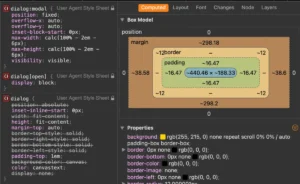
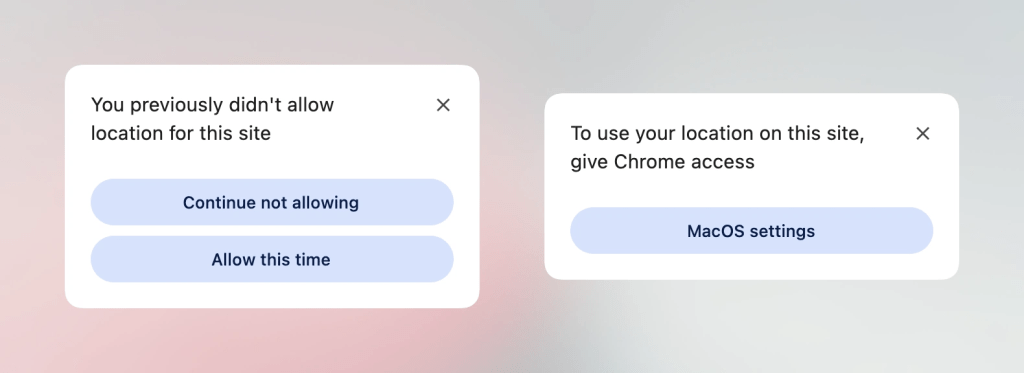
As the month progressed, the focus shifted toward lowering the barrier to entry for complex device APIs. The Geolocation API has historically suffered from friction due to external hardware dependencies (GPS, Wi-Fi triangulation, cell towers) and notoriously rigid permission persistence models. The introduction of the <geolocation> HTML element addresses many of these architectural pain points, though early adopters must navigate unique styling restrictions.
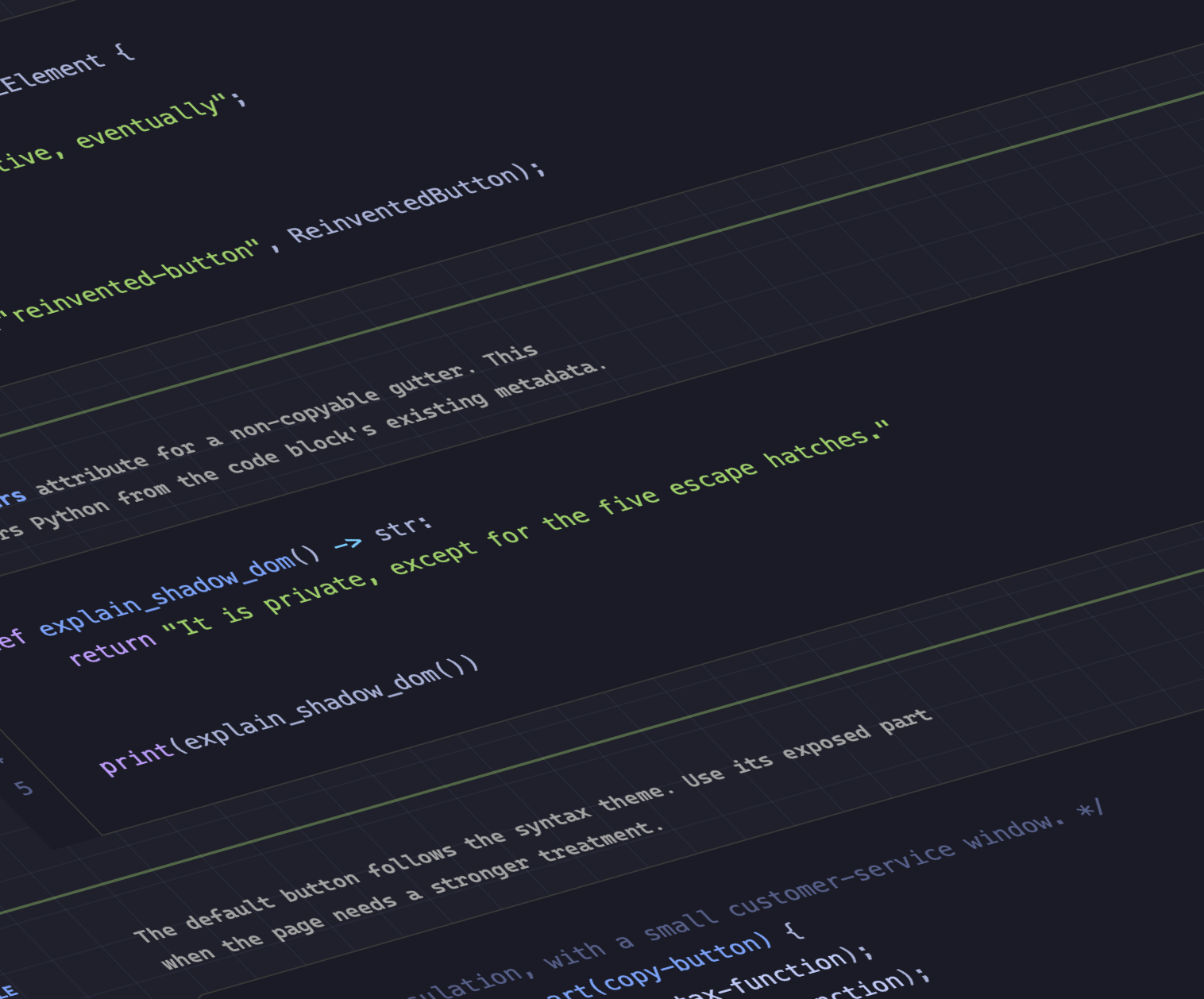
Concurrently, developer Dave Rupert unveiled MicroLighter, a syntax highlighter built upon the W3C Custom Highlight API. By bypassing traditional DOM manipulation and utilizing the ::highlight() pseudo-element, MicroLighter offers blazing-fast syntax coloring that integrates seamlessly with modern browser paint cycles.
Later in the month, browser capability detection took center stage. Bramus introduced the supports named-feature() function—currently shipping in Chrome—which permits granular queries for advanced rendering features, such as whether a browser correctly applies transforms to anchor-positioned elements. This was quickly followed by his proposal for the class prefix selector, designed to streamline CSS architecture.
Late August: Layout Intelligence and Architecture Debates
Wrapping up the period, layout control received major upgrades. Ahmad Shadeed explored the mechanics of flex-wrap: balance in Chrome, a feature that automatically distributes flex items evenly across multiple rows or columns to prevent orphan items on the final line. Simultaneously, debates surrounding dark-mode toggle states (two-state versus tri-state mechanics) captured the attention of architecture enthusiasts like Lea Verou and Bramus, highlighting the nuanced UX decisions still facing modern applications.
Supporting Data: Technical Deep-Dive into Emerging Features
To understand the practical impact of these updates, examining the raw mechanics reveals a significant shift away from JavaScript-heavy polyfills toward native browser primitives.
1. The Class Prefix Selector vs. Attribute Selectors
Historically, targeting elements based on shared class name prefixes required cumbersome attribute selectors. These selectors are notoriously heavy on rendering performance because they force the browser to scan attribute strings rather than optimized class registries.
Traditional Attribute Selector Approach:
[class^="something-"]
  /* Matches class="something-xxx" */


[class*=" something-"]
  /* Matches class="xxx something-xxx" */


[class*="something-"]
  /* Matches class="my-something-xxx" */
Proposed Class Prefix Selector:
.something-*
  /* Clean, performant, and intuitive matching */
While not yet implemented across major browser engines, the proposed class prefix selector promises massive performance improvements and cleaner stylesheets for design systems relying on systematic naming conventions (such as BEM variants or utility classes).
2. Bridging CSS Grid and Custom Properties
Temani Afif’s recent explorations have unlocked the ability to pass structural grid information directly into CSS variables. By mapping rows, columns, and index coordinates (x and y) to custom properties, developers can calculate proximity effects—such as dynamic hover reactions where surrounding grid cells respond intelligently to the cursor’s exact coordinates without JavaScript overhead.
Official Responses and Industry Discourse
The developer community’s reaction to these platform updates has been overwhelmingly enthusiastic, tempered by standard discussions around cross-browser compatibility and progressive enhancement.
- On Progressive Enhancement: Experts across the ecosystem emphasize that while cutting-edge features like interest invokers,
<geolocation>, andnamed-feature()are currently restricted to Chromium-based browsers, they represent the future of web standards. Developers are encouraged to use them today via robust fallback patterns. - The Dark Mode State Debate: A lively architectural debate unfolded regarding user preference controls. While Lea Verou advocated for streamlined two-state switches, Bramus made a strong case for tri-state toggles (light, dark, and system-default override), and independent developer Vale.Rocks championed an "auto-until-overridden" model. This dialogue underscores the lack of a universal UI standard for user color-scheme management.
- Standards Evolution: The rapid succession of proposals championed by developer advocates signals a healthy, aggressive push by browser vendors to solve long-standing developer pain points—particularly around text/flex balancing and layout introspection.
Implications for Web Developers and Enterprise Architecture
The cumulative weight of these updates signals a profound shift in front-end development philosophy. For years, developers relied on heavy JavaScript libraries to calculate text balances, manage tooltip timers, handle syntax highlighting, and bridge gaps in layout responsiveness.
- Reduced JavaScript Footprint: By shifting responsibilities like layout balancing (
flex-wrap: balance) and syntax highlighting (::highlight()) to the browser’s native layout and paint engines, applications will see measurable improvements in runtime performance, main-thread responsiveness, and Core Web Vitals scores. - Simplified Component Logic: Features like interest invokers and native geolocation elements abstract away complex state management routines, allowing developers to write declarative HTML and CSS instead of imperative JavaScript event listeners.
- Forward-Looking Engineering: Teams must adopt a mindset of progressive enhancement. Designing resilient systems that gracefully leverage modern CSS properties and HTML elements in supported browsers while maintaining functional fallbacks will separate high-performing web applications from legacy codebases.
As autumn arrives, the web platform stands stronger and more capable than ever. Front-end engineers who embrace these emerging primitives will be uniquely positioned to build the next generation of fast, accessible, and delightful digital experiences.