Bridging the Global Divide: How Spring GDS is Redefining E-Commerce Logistics
In the modern digital economy, e-commerce has evolved from a niche retail alternative into the backbone of global commerce. Yet, behind every seamless "click-to-delivery" experience lies a complex, invisible architecture of logistics. Without robust supply chain solutions, the global marketplace would grind to a halt. It is within this demanding environment that Spring GDS has emerged as a pivotal partner for businesses seeking to scale across borders. By merging the reliability of a historic postal giant with the agility required for 21st-century e-commerce, Spring GDS is setting new standards for international distribution.
The Pillars of Success: Backed by a Market Leader
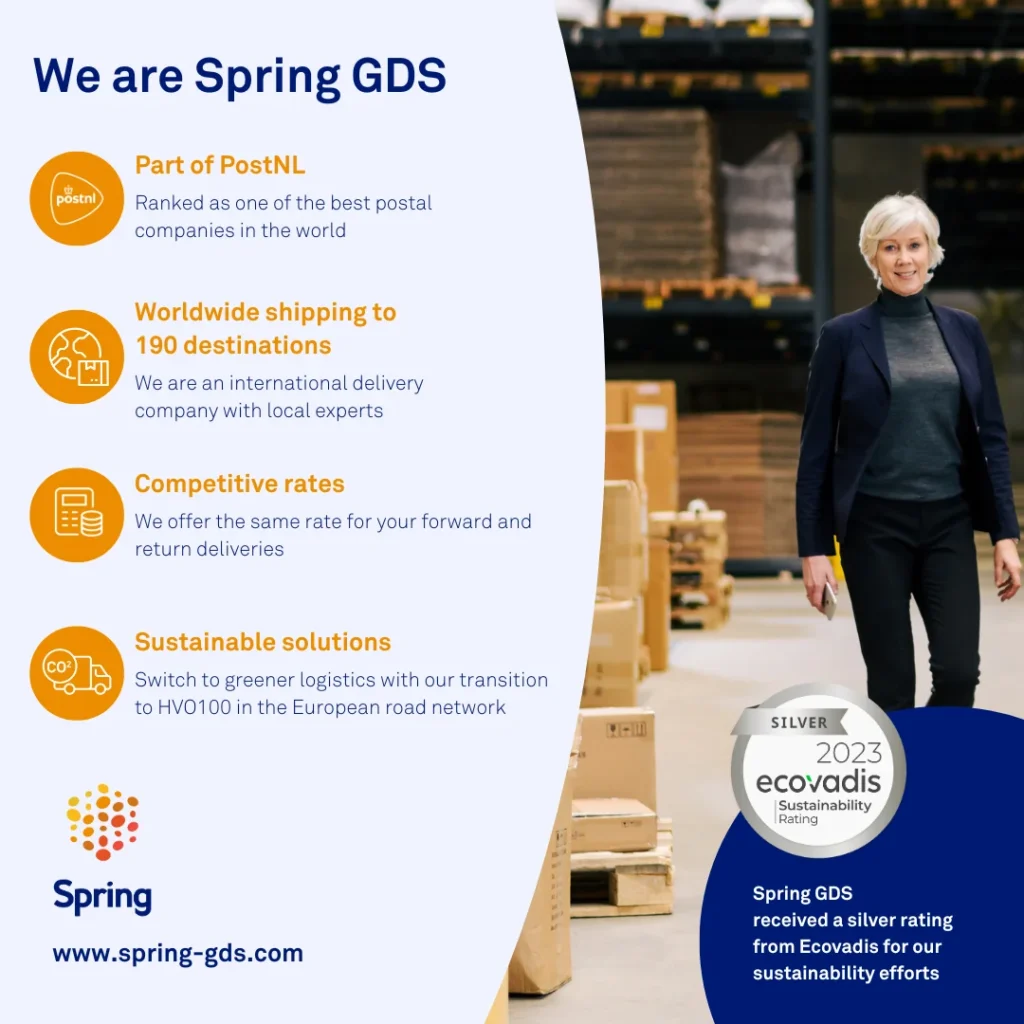
The credibility of a logistics provider is often defined by its infrastructure and institutional history. Spring GDS stands on the formidable foundation of PostNL, the Dutch postal and parcel corporation. As a company listed on the Euronext Amsterdam, PostNL brings a level of institutional stability and operational rigor that is rare in the high-volatility world of cross-border shipping.
The Universal Postal Union (UPU)—the specialized agency of the United Nations that coordinates postal policies among member nations—consistently ranks PostNL among the top ten postal companies globally. This recognition is not merely a badge of honor; it represents a commitment to universal service, standardized security, and international reliability. Furthermore, in an era where corporate responsibility is paramount, PostNL is frequently lauded in the Dow Jones Sustainability Index (DJSI) as one of the most sustainable companies in the logistics and transportation sector. For an e-commerce merchant, partnering with Spring GDS means leveraging this prestigious lineage to provide customers with peace of mind.
Chronology and Evolution: From Postal Roots to Digital Globalism
The evolution of Spring GDS reflects the shifting tides of the global economy. Originally conceived to bridge the gap between traditional postal networks and the burgeoning demands of international e-commerce, the company has undergone a deliberate transformation.
- Foundation and Integration: Following its inception as the international arm of PostNL, the company recognized that traditional postal methods were insufficient for the rapid delivery expectations of digital consumers.
- Infrastructure Expansion: Over the last decade, Spring GDS has systematically expanded its physical footprint, establishing 18 specialized operation centers across three continents. This geographic diversification allows the firm to bypass the traditional "bottlenecks" associated with long-haul international shipping.
- The Digital Shift: The launch of the XBS (Cross Border Shipping) platform marked a turning point, moving the company from a purely physical courier model to a tech-enabled logistics partner.
- Sustainability Milestones: In 2023, the company reached a significant milestone by receiving a silver medal from EcoVadis. This assessment serves as a formal, independent validation of their environmental, social, and ethical performance, marking the culmination of years of internal reform.
Local Expertise, Global Vision
One of the most persistent challenges in e-commerce is the "last mile" problem—the final leg of a delivery that is often the most expensive and complex. Spring GDS addresses this through a "Local Expertise, Global Vision" strategy. By collaborating with over 230 international logistics partners, the firm provides merchants with a gateway to 190 destinations worldwide.
This network-based approach ensures that a merchant based in Europe can tap into local delivery customs in Asia or North America without having to manage dozens of individual carrier contracts. Spring GDS serves as the central node, harmonizing diverse regional logistics standards into a single, cohesive shipping experience. Whether a merchant is shipping small parcels or bulk inventory, the proximity of the 18 operation centers ensures that shipments remain within the Spring GDS ecosystem for as long as possible, reducing the risk of transit errors and customs delays.
Commitment to Greener Logistics
Perhaps the most ambitious aspect of the Spring GDS business model is its aggressive stance on sustainability. Recognizing that logistics is a major contributor to global carbon emissions, the company has embedded ecological responsibility into its corporate DNA.
The transition toward a circular economy is central to this effort. Spring GDS has pioneered the use of reusable materials, actively replacing single-use items—such as cardboard pallet boxes and wooden pallets—with durable, circular alternatives. This shift not only reduces waste but also lowers the long-term operational costs for their partners.
The company’s roadmap is defined by the "Paris Agreement" standards. With an explicit goal of achieving net-zero emissions by 2040, Spring GDS is aligning itself with the global imperative to keep temperature increases under 1.5 degrees Celsius. This is not a passive policy; it involves proactive investments in low-emission transport, optimized routing to reduce fuel consumption, and rigorous audits by third-party bodies like EcoVadis. By prioritizing the environment, Spring GDS provides a competitive edge to e-commerce brands that are increasingly sensitive to the environmental values of their own consumer base.
Innovative IT Integration: The XBS Platform
In the digital age, a logistics company is only as good as its software. The XBS (Cross Border Shipping) platform serves as the central nervous system for all operations managed by Spring GDS. Designed to simplify the labyrinthine nature of international trade, XBS offers features that streamline the workflow for online retailers:
- Automated Customs Compliance: Navigating international trade regulations can be a barrier to entry for many small businesses. XBS automates the generation of documentation, ensuring that parcels move through customs with minimal intervention.
- Real-Time Visibility: The platform provides granular tracking data, allowing merchants to offer their customers transparent delivery status updates—a key factor in building consumer trust.
- Scalability: As a merchant grows from hundreds to thousands of orders, the XBS interface scales accordingly, providing API integrations that connect directly to major e-commerce platforms like Shopify, Magento, and WooCommerce.
- Operational Intelligence: The platform provides data analytics that help merchants identify trends in their shipping costs, transit times, and regional performance, allowing for data-driven decisions that improve the bottom line.
Implications for the Future of E-Commerce
The partnership between a brand and its logistics provider is no longer a peripheral operational decision; it is a strategic necessity. As consumer expectations shift toward faster, cheaper, and more sustainable delivery, businesses that fail to adapt their logistics chains will be left behind.
Spring GDS offers a blueprint for the future. By combining the massive scale of a traditional postal entity with the nimbleness of a tech-first logistics provider, they have created a solution that addresses the three core requirements of modern e-commerce: speed, transparency, and sustainability.
For the merchant, the implications are clear: outsourcing logistics to a specialist like Spring GDS allows the business to focus on product development and marketing, while the complexities of international shipping are managed by a partner with the infrastructure to handle the world’s most challenging routes.
Supporting Data and Industry Context
To understand the necessity of providers like Spring GDS, one must look at the current state of global e-commerce. According to recent industry data, cross-border e-commerce is growing at a rate significantly faster than domestic retail. However, the cost of logistics represents roughly 10% to 15% of the total revenue for most e-commerce businesses.
The EcoVadis Silver Medal awarded to Spring GDS in 2023 is a significant data point in the industry, as it places them in the top tier of companies assessed for sustainability. For businesses operating in Europe or exporting to regions with strict environmental regulations, partnering with a silver-rated sustainable provider can significantly reduce their Scope 3 emissions (the indirect emissions that occur in a company’s value chain).
Furthermore, the scale of the Spring GDS operation—covering 190 countries—provides a risk-mitigation strategy for merchants. In a world where geopolitical instability can disrupt shipping lanes overnight, the sheer breadth of their partnership network ensures that there is almost always a "Plan B" for rerouting, a luxury that smaller or regional couriers cannot afford.
Conclusion
Spring GDS has managed to solve one of the most difficult puzzles in business: how to be both massive and local, both traditional and innovative. By anchoring their operations in the reliability of the Dutch postal system and extending their reach through advanced IT and a commitment to a net-zero future, they have positioned themselves as an essential ally for the global merchant.
As the lines between domestic and international retail continue to blur, the logistical demands on small and medium-sized enterprises will only intensify. Whether it is through the streamlining capabilities of the XBS platform, the environmental benefits of their circular supply chain, or the sheer reach of their 230+ partner network, Spring GDS is proving that the future of logistics is not just about moving goods—it is about moving them with intelligence, purpose, and a global vision. For any e-commerce brand looking to expand its reach, the question is no longer if they should upgrade their logistics, but who will provide the foundation for their next phase of growth. With Spring GDS, the path forward is clearly mapped.