Political Turbulence in the Capital: Mamata Banerjee Leads Opposition Charge Against Election Commission
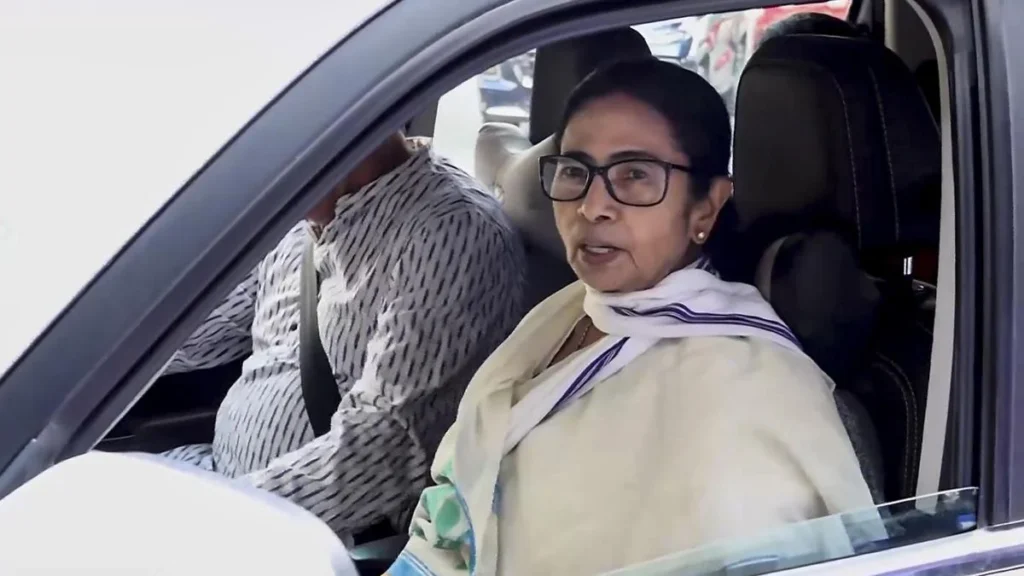
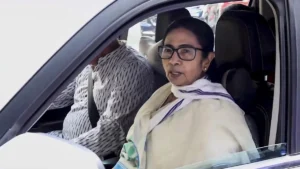
NEW DELHI – The political landscape in India has reached a boiling point as former West Bengal Chief Minister and Trinamool Congress (TMC) supremo, Mamata Banerjee, touched down in the national capital on Tuesday, September 29, 2026. Her arrival signals a significant escalation in the ongoing confrontation between the INDIA bloc and the Election Commission of India (ECI), specifically targeting Chief Election Commissioner (CEC) Gyanesh Kumar.
Accompanied by senior TMC leaders and Members of Parliament, Dola Sen and Kalyan Banerjee, the TMC chief’s visit is centered on a high-stakes coordination meeting of the opposition INDIA alliance. The agenda, as articulated by Banerjee, is clear: a unified, aggressive stance against the current leadership of the poll body.
The Core Conflict: Challenging the Election Commission
At the heart of this confrontation is the opposition’s growing distrust in the integrity of the electoral process. Addressing the media shortly after her arrival, Mamata Banerjee did not mince words. She leveled serious allegations of manipulation against the ECI, specifically calling out the Chief Election Commissioner.
"There is a meeting of the INDIA alliance… We have come to participate. Our target is the Chief Election Commissioner and his full software team, who cheated and betrayed the people," Banerjee stated. In a stinging personal rebuke, the TMC leader referred to the CEC as "Vanish Kumar," a moniker that has already begun to trend across social media platforms, symbolizing the opposition’s belief that the neutrality of the commission has "vanished."
The primary grievance of the opposition relates to the "special, intensive revision of electoral rolls." The INDIA bloc alleges that the process has been engineered to disenfranchise opposition strongholds and manipulate voter demographics to favor the ruling establishment.
Chronology of a Growing Alliance
The path to this week’s confrontation in Delhi was paved by weeks of back-channel diplomacy and a historic, albeit uneasy, rapprochement between political arch-rivals.
- Mid-September 2026: Reports emerged of growing concerns within the INDIA bloc regarding the methodology of the upcoming electoral roll revisions.
- September 20, 2026: CPI(M) General Secretary M.A. Baby reached out to Mamata Banerjee. The move was highly significant, as the TMC and CPI(M) have historically been locked in a bitter struggle for the political soul of West Bengal. However, the perceived existential threat to democratic processes has forced a tactical alignment.
- September 25, 2026: Mamata Banerjee held a private consultation with Congress leader Rahul Gandhi. Sources close to the meeting suggest that the two leaders reached a consensus on the need for a nationwide agitation regarding the ECI’s role.
- September 28, 2026: Public statements from the TMC leadership indicated that the party is willing to set aside all ideological and historical baggage to form a "Common Minimum Program" specifically focused on election integrity.
- September 29, 2026: Mamata Banerjee arrives in New Delhi, solidifying the opposition’s resolve to present a united front.
Supporting Data and Historical Context
The current tension is not an isolated incident but the culmination of months of friction. The ECI has faced unprecedented scrutiny throughout 2026. Data analytics from independent political observers suggest that the "intensive revision" of rolls in several states—notably West Bengal, Kerala, and parts of the Hindi belt—has seen a statistically anomalous surge in voter deletions.
Opposition leaders claim that the "software team" mentioned by Banerjee refers to the back-end digital infrastructure used by the ECI to manage voter data. They argue that without transparency in the algorithm and data verification processes, the entire electoral machinery is vulnerable to state-sponsored tampering. While the ECI has repeatedly maintained that its processes are robust, automated, and supervised by independent observers, the opposition remains unconvinced, citing a lack of consultation with stakeholders during the implementation of the new digital systems.
The Counter-Offensive: Suvendu Adhikari’s Scathing Critique
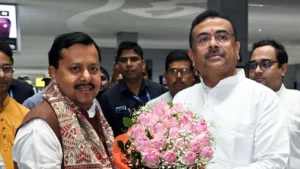
Back in Kolkata, the reaction from the ruling state government was swift and vitriolic. Chief Minister Suvendu Adhikari launched a blistering attack on his predecessor, accusing her of engaging in anti-national activities under the guise of political protest.
"INDIA alliance is finished," Adhikari declared at a press conference in Kolkata. "She is going there to hold a planning session with ‘Dimagi Naxals’ (intellectual Naxals). I will ask the Delhi Police and central intelligence agencies to keep a close watch on these meetings."
Adhikari’s rhetoric shifted toward national security, implying that the opposition’s coalition is a front for forces inimical to India’s sovereignty. "One who gives ‘azadi’ slogans—everyone knows what she is capable of. We must monitor whether she is holding meetings with anti-India forces. She has effectively become the advisor for these so-called intellectuals who aim to destabilize the country."

Furthermore, Adhikari expressed deep disdain for the TMC-CPI(M) partnership. "The coming together of these arch-rivals is a testament to their desperation. It is a marriage of convenience between two ideologies that have failed the people of Bengal, and now they seek to project their failure onto the national stage."
Implications for Indian Democracy
The standoff has profound implications for the Indian democratic framework. By openly questioning the credibility of the Chief Election Commissioner, the opposition is testing the boundaries of political discourse regarding constitutional bodies.
1. The Erosion of Institutional Trust
When the primary stakeholders in a democracy—the political parties—cease to trust the referee (the ECI), the legitimacy of the entire democratic process is brought into question. This could lead to a scenario where election results are routinely contested, leading to prolonged political instability and public unrest.
2. The Realignment of the Opposition
The TMC-CPI(M) cooperation is the most significant development of the current political cycle. If this alliance holds, it could change the electoral math in West Bengal and beyond. It signals that the INDIA bloc is moving toward a more pragmatic, issue-based strategy rather than relying on personality-driven politics.
3. The Role of the Central Government
The government’s response, channeled through leaders like Suvendu Adhikari, suggests that the ruling party is prepared to use the "anti-national" narrative to counter the opposition’s allegations of electoral malpractice. This framing creates a binary where questioning the ECI is equated with questioning the state, effectively shutting down room for nuanced debate on administrative reforms.
The Road Ahead: What to Expect
As the INDIA bloc prepares for its high-level meeting in Delhi, the atmosphere is tense. There is speculation that the opposition may demand a parliamentary committee inquiry into the ECI’s software and a temporary stay on the current electoral roll revision process.
If the ECI refuses to entertain these demands, the opposition has hinted at a nationwide "Save Democracy" movement. This would likely involve mass demonstrations, legal challenges in the Supreme Court, and potential disruptions in the upcoming winter session of Parliament.
For Mamata Banerjee, this is a moment of significant political theater. By positioning herself as the vanguard of this struggle, she seeks to reclaim her national relevance and cement her role as a primary antagonist to the current administration. However, the path is fraught with risk. The accusations of "Dimagi Naxal" collaboration from the state government are designed to alienate moderate voters and paint the opposition as radicalized.
Ultimately, the week in Delhi will be a litmus test for the resilience of India’s democratic institutions. The conflict between the TMC-led opposition and the ECI is not just about electoral rolls; it is a fundamental clash over the power dynamics of a modern Indian state. Whether the outcome is a return to institutional normalcy or a slide into deeper polarization, the events of September 30, 2026, will be recorded as a pivotal chapter in the history of Indian electoral politics.
As the delegates gather and the arguments are presented, the eyes of the nation remain fixed on the capital, waiting to see if the "Vanish Kumar" narrative will gain legal traction or if it will be dismissed as yet another chapter in the hyper-competitive theater of Indian politics.