The Death of Information Overload: Why Curation is the New Currency for Marketing Leaders
In the modern digital ecosystem, marketing leaders are drowning in data. Every day, the typical CMO or marketing director is bombarded by a deluge of industry reports, AI-driven frameworks, LinkedIn thought-leadership pieces, and “must-read” case studies. Yet, despite this constant influx of information, a paradox has emerged: while we have more content than ever, we have less clarity.
The consensus among industry experts is shifting. The problem isn’t a lack of information; it is a lack of effective filtration. Marketing leaders do not need more content—they need better filters. This realization has sparked a quiet revolution in corporate communications, pushing brands to pivot away from traditional, link-heavy email blasts toward highly curated, intelligence-driven newsletters.
The Shift: From Content Congestion to Strategic Curation
For years, the standard playbook for brand newsletters was simple: aggregate a list of recent blog posts, link to a new podcast episode, and hope for a click-through. However, as audiences have matured, so has their demand for utility. What worked to capture attention five or ten years ago is now easily ignored.
Convince & Convert (C&C), a prominent voice in the digital marketing consultancy space, recently underwent a massive structural evolution in their own communications strategy. After years of running their legacy newsletter, ON, the team recognized that the "link-list" model was failing to provide the strategic value that their audience of high-level decision-makers required.
This led to the launch of The Trendline, a redesigned newsletter built on a fundamental premise: marketing leaders need to be entertained, inspired, and, most importantly, equipped to make smarter decisions—all without having to click through a dozen links to find the "so what."
Chronology of an Evolution: Listening to the Audience
The decision to rebrand and restructure was not a cosmetic change; it was a data-driven response to audience behavior. The timeline of this shift follows a clear progression:
- Annual Audience Research: C&C conducts yearly surveys to assess the needs of their readership. Consistently, the data showed that while the firm produced podcasts, videos, and long-form articles, the audience preferred the newsletter format above all else.
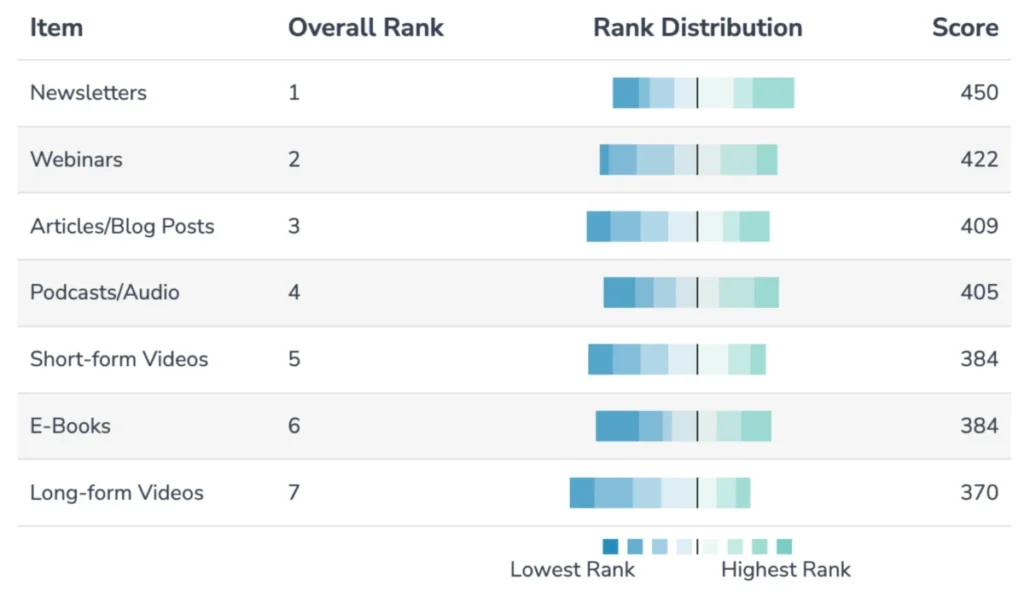
- The "Preference Gap" Discovery: In the most recent survey, the team asked respondents to rank seven different content formats. Newsletters were cited as the preferred method for learning about industry trends, ranking significantly higher than short-form video, webinars, and even podcasts.
- The Strategic Pivot: Recognizing that their existing format (ON) acted as a barrier to consumption rather than a gateway, the team began an intensive audit of their email strategy. They moved away from a "content-medium" hierarchy (listing blogs first, then podcasts) to a "value-driven" hierarchy.
- The Launch of The Trendline: By focusing on topical "debriefs" rather than mere link aggregation, the new format was designed to provide the meaning behind the news, not just the news itself.
Supporting Data: Why Newsletters Still Rule
The efficacy of the newsletter format is not merely anecdotal. According to C&C’s latest internal research, when marketing leaders were asked to rank their preferred learning channels, newsletters were nearly twice as likely to be ranked first compared to any other medium.

This preference is rooted in a fundamental human need: the desire for synthesis. In an industry defined by rapid change—from the rise of generative AI to shifting privacy regulations—leaders do not have the bandwidth to conduct deep-dive research into every single development. They require a "strategic lens."
The data suggests that when content is delivered in a format that does the "heavy lifting" of analysis for the reader, trust increases. By providing the summary, the implications, and the actionable takeaway directly in the inbox, a brand establishes itself as a partner in the reader’s decision-making process rather than just another source of noise.
Official Perspective: The "Filter" Philosophy
The internal perspective from the leadership at Convince & Convert highlights a shift in how they view their responsibility to their audience. According to their senior strategists, the primary goal of the new newsletter is to save the reader time while increasing their intellectual ROI.
"Marketing leaders don’t have time for constant deep dives," the team notes. "The Trendline is set up as a debrief—a resource that brings important topical resources to our readers through a strategic lens. Why do these stories matter? What questions should they be asking? We provide that value upfront."
This approach reflects a broader industry trend: the move toward "owned media" as a primary trust-builder. By creating an email that is readable, informative, and complete in its own right, brands can move away from "click-bait" metrics and toward meaningful engagement metrics, such as depth of reading time and direct, qualitative feedback from subscribers.
Implications for the Future of Email Marketing
The implications of this shift are profound for any brand looking to maintain relevance in a crowded market. If the goal is to earn and keep the attention of high-level decision-makers, the strategy must change from "volume" to "value."
1. The Death of the Link-List
The era of the "weekly roundup" of links is fading. Audiences now expect a synthesis of information. If your newsletter requires the reader to leave the email to understand the value of the content, you are creating friction. The new standard is the "self-contained" email.

2. The Rise of "Strategic Lenses"
Brands that succeed will be those that don’t just report the news, but interpret it. By applying a specific brand perspective or "lens" to industry developments, companies can cultivate a voice that readers return to for guidance, not just information.
3. Redefining Engagement Metrics
Open rates and click-through rates are becoming "muddier" in an era of email privacy protection. The shift toward interactive elements—such as polls, questions, or "sound-off" sections—allows brands to gather cleaner, more actionable data on what their audience actually cares about.
4. Audience-Centric Formatting
The structure of a newsletter should dictate the reader’s journey. By implementing clear sections with specific goals—such as "The Big Idea," "What it Means for You," and "Strategic Takeaways"—brands can help readers navigate complexity. This structure also allows for easier internal contribution, ensuring that the newsletter remains a collaborative effort from the smartest minds in the company.
Conclusion: A Call to Action for Marketers
The evolution of The Trendline serves as a case study for the entire marketing profession. It demonstrates that in an age where trust and attention are the most precious commodities, the best way to earn them is to respect the audience’s time.
Marketing leaders are not looking for more content to add to their "to-read" piles; they are looking for partners who can help them think. As you look to refine your own email marketing strategy, consider these takeaways:
- Audit your value: Does your newsletter solve a problem, or is it simply a billboard for your latest blog posts?
- Prioritize the "Upfront": Can the reader understand the core insight without clicking a link?
- Listen to the feedback loop: Use polls, surveys, and direct replies to understand what your audience actually needs, and be willing to pivot your format to meet those needs.
The future of marketing communication is not in the noise; it is in the signal. By acting as a filter for your audience, you transform your brand from a vendor into an indispensable resource. In the race for attention, the brands that provide the best filters will win the loyalty of the industry’s leaders.