The Front-End Frontier: Unpacking the Latest Breakthroughs in Modern CSS and Web Platform Features
As the digital landscape transitions into a new season, the web development community continues to push the boundaries of what is possible with Cascading Style Sheets (CSS) and native browser capabilities. From sophisticated interaction design patterns and cutting-edge syntax highlighters to groundbreaking native HTML elements and advanced selector logic, the past few weeks have delivered an extraordinary wave of innovation.
This comprehensive report examines the most significant developments, community debates, and emerging web platform features shaping the future of front-end engineering.
Main Facts: A Paradigm Shift in CSS and Native HTML
Recent weeks have brought a flurry of specifications, community experiments, and browser vendor implementations that collectively redefine how developers approach layout, state management, and user interaction.
Topping the list of major developments are:
- Interest Invokers and Tooltips: Advancements in hover states using native browser primitives.
- The
<geolocation>HTML Element: A native markup approach aiming to simplify location-sharing requests. - MicroLighter: A high-performance syntax highlighter driven by the CSS Custom Highlight API.
- CSS Grid Variables: Unlocking structural layout data inside custom properties for advanced proximity calculations.
- The Class Prefix Selector: A proposal for a cleaner, high-performance alternative to attribute-based class matching.
@supports named-feature(): A granular tool for querying notoriously undetectable browser capabilities.flex-wrap: balance: Bringing text-balancing visual harmony directly to multi-row flexible box layouts.
Chronology of Recent Discoveries and Debates
The timeline of front-end discourse over the past fortnight has moved at a breakneck pace, driven by prominent CSS engineers, core browser contributors, and developer advocates.
The Evolution of Tooltip UX
The conversation initially sparked when Abhishek Jakhar published a deep dive into user experience mechanics, arguing that tooltips require a deliberate delay upon initial hover to prevent accidental triggers, followed by an instant dismissal when the cursor leaves the target area. Jakhar provided a robust implementation guide, though careful critics noted that excessively small interactive hit zones could inadvertently de-trigger the tooltip mid-interaction, underscoring the necessity of preserving a grace-period delay.
Shortly thereafter, Chris Coyier responded with a modern implementation leveraging experimental interest invokers. By utilizing the interest-delay-start and interest-delay-end CSS properties, developers can offload complex timeout states to native browser handlers. While currently limited to Google Chrome, this pattern highlights the forward-looking strategy of progressive enhancement.
Layout Geometry and Grid Variables
In parallel, Temani Afif unlocked new architectural possibilities by demonstrating how to extract CSS grid structural information—such as total rows, total columns, and specific cell coordinate indexes (X and Y)—directly into CSS custom properties. Although restricted for now to columns of equal width, this technique was quickly adapted to calculate hover proximity, allowing developers to build spatial awareness directly into their stylesheets without relying on heavy JavaScript event listeners.
The Dark Mode Dilemma and Selector Innovations
Debates over design system architecture also came to a head. Prominent web developer Lea Verou championed a traditional two-state dark mode toggle, whereas Bramus argued passionately for a tri-state model (light, dark, and system-following). Ultimately, the community found widespread resonance in Vale.Rocks’ "auto-until-overridden" two-state approach, which respects system preferences by default while allowing manual persistence.
Bramus also dominated technical headlines by proposing the class prefix selector (.something-*), a syntactic enhancement designed to replace clunky attribute selectors ([class^="something-"]) with a cleaner, vastly more performant native solution. Shortly after, Bramus introduced the @supports named-feature() function in Chrome, opening the door to feature-detecting hyper-specific rendering behaviors—such as transform behaviors inside anchor positioning—that were previously invisible to standard queries.
Supporting Data and Technical Breakdown
To fully understand the weight of these updates, we must examine the underlying mechanics of these new specifications and APIs.
1. The <geolocation> Element and Progressive Enhancement
Obtaining user location has historically been a friction-heavy asynchronous JavaScript operation. It requires handling permission prompts, navigating hardware fragmentation (GPS, Wi-Fi triangulation, and cell towers), and managing complex state fallbacks.
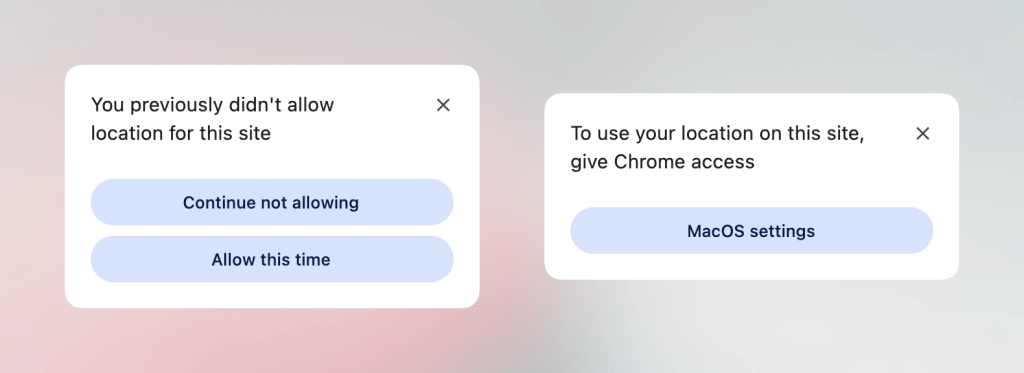
The introduction of the experimental <geolocation> HTML element aims to streamline this by baking permission flows directly into declarative markup. However, early adopters have encountered strict styling restrictions regarding how the browser-rendered permission dialogs can be manipulated. Because browser support remains fragmented primarily around Chrome, developers are currently utilizing progressive enhancement patterns—pairing the new HTML element alongside legacy Geolocation API event listeners to ensure cross-browser stability.
2. High-Performance Syntax Highlighting with MicroLighter
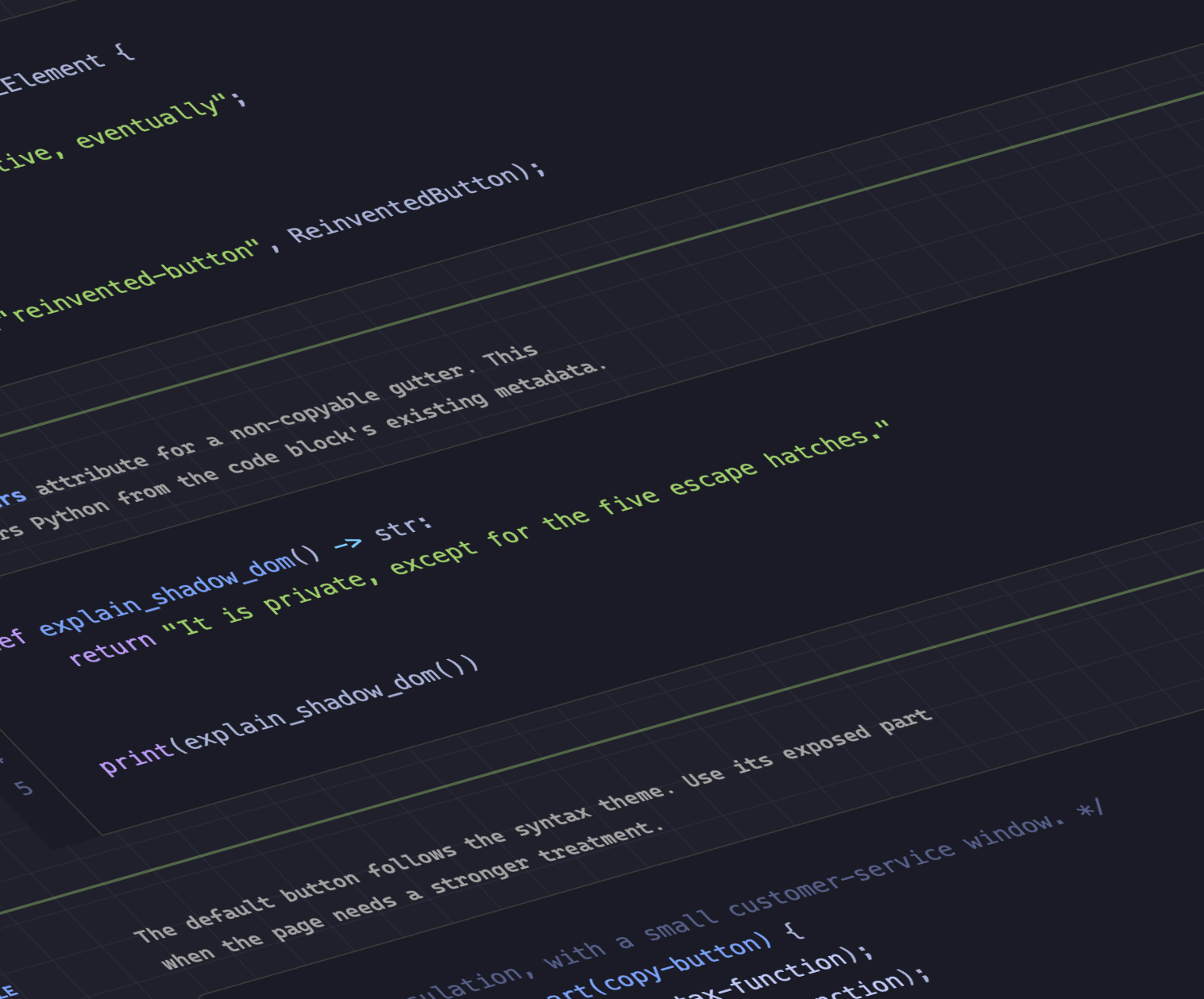
Dave Rupert introduced MicroLighter, a lightweight syntax highlighter built upon the emerging Custom Highlight API. Unlike traditional DOM-heavy highlighters that inject countless <span> tags into the document tree (causing significant layout thrashing and high memory consumption on large code blocks), the Custom Highlight API allows developers to style ranges of text directly via CSS without altering the underlying Document Object Model.
3. Class Prefix Selector Performance
Traditional CSS methodologies often require targeting classes that share a common prefix, forcing developers to write convoluted attribute selectors:
[class^="something-"]
  /* Matches class="something-xxx" */


[class*=" something-"]
  /* Matches class="xxx something-xxx" */


[class*="something-"]
  /* Matches class="my-something-xxx" */
The proposed class prefix selector simplifies this syntax down to a clean, highly optimized native pattern:
.something-*
  /* Applied cleanly and performantly */
This syntax promises significant rendering performance boosts for large scale applications by allowing browser engines to optimize class-matching hash lookups.
Official Responses and Community Insights
The web development community has responded with cautious optimism and eager experimentation. Core browser engineers at Google Chrome continue to spearhead experimental features like interest invokers, flex-wrap: balance, and named-feature().
Key figures across the ecosystem have shared vital insights:
- Geoff Graham highlighted both MicroLighter’s innovative DOM-free approach and the structural elegance of the upcoming class prefix selector, noting that developer feedback will likely fast-track its standardization.
- Ahmad Shadeed explored the practical applications of
flex-wrap: balance, illustrating how multi-row flex containers can finally achieve visual equilibrium—preventing awkward orphan items on the final row—mirroring the aesthetic success of text balancing properties.
Implications for the Future of Web Development
The convergence of these features signals a major strategic shift in front-end architecture. For years, developers relied on JavaScript frameworks and complex DOM manipulation libraries to handle UI states like tooltips, syntax highlighting, proximity detection, and layout balancing.
By pushing these capabilities directly into the CSS specification and native HTML layer, the web platform is becoming fundamentally more capable out-of-the-box:
- Reduced JavaScript Footprint: Native features translate to smaller bundle sizes and faster Time-to-Interactive (TTI) metrics.
- Enhanced Performance: Utilizing the Custom Highlight API and optimized class prefix selectors reduces memory overhead and layout recalculations.
- Better Accessibility and UX: Declarative primitives like interest invokers and native geolocation elements establish standardized, accessible patterns that benefit all users.
As autumn arrives and browser vendors continue to experiment with these proposals, front-end engineers have a unique opportunity to test, provide feedback, and help forge the next generation of web standards.