The Future of Digital Engagement: Navigating the Top Marketing Trends Shaping 2024 and Beyond
Marketing, much like the e-commerce landscape it serves, is in a state of perpetual metamorphosis. Every year, the industry witnesses the emergence of new paradigms, driven by the innovative strategies of global brands and the rapid deployment of disruptive technologies. As we move deeper into the current decade, the fundamental ways in which companies communicate, promote products, and interact with consumers have shifted from traditional broadcasting to nuanced, social-first, and data-driven engagement.
In today’s climate, the financial and temporal commitment required for successful marketing is higher than ever. Whether a brand leans into organic community building or performance-driven paid acquisition, the cost of entry is rising. This investment is not merely an expense; it is a calculated response to the fractured attention spans and evolving consumption patterns of modern audiences. To remain competitive, brands must master the art of being present on the right channel, at the precise moment of intent.
The Evolution of Marketing: A Chronology of Change
To understand where we are going, we must look at how we arrived here. The trajectory of digital marketing over the last decade has followed a clear path:
- 2015–2018 (The Era of Reach): Marketing was defined by social media saturation. Brands focused on follower counts and mass-broadcast advertising to drive traffic.
- 2019–2021 (The Era of Data): The focus shifted toward granular targeting. The integration of CRM systems and sophisticated pixels allowed for unprecedented tracking of consumer behavior.
- 2022–2023 (The Era of Disruption): The rise of generative AI and short-form video algorithms (TikTok/Reels) forced a pivot toward high-quality, authentic, and fast-paced content creation.
- 2024 and Beyond (The Era of Integration): We are now entering a phase defined by "Responsible Innovation." It is no longer enough to reach a user; brands must reach them ethically, sustainably, and through a hyper-personalized, conversational lens.
1. Responsible Artificial Intelligence: The New Ethical Standard
The rapid adoption of Artificial Intelligence has been the most significant disruption in modern marketing. However, the narrative is shifting from "AI for efficiency" to "Responsible AI."
Responsible AI is the practice of deploying machine learning and generative tools with a strict adherence to ethics, transparency, and social accountability. For brands, this means moving beyond automated content generation and focusing on data privacy, the mitigation of algorithmic bias, and the clear disclosure of AI-generated content.
The Implications for Brands
The primary implication of Responsible AI is the restoration of consumer trust. As deepfakes and automated spam flood the internet, brands that lead with transparency—clearly labeling AI-assisted communications—will cultivate deeper loyalty. Companies are now implementing "AI Governance" teams to ensure that their automated customer service bots and personalized recommendations do not inadvertently infringe on user privacy or perpetuate discriminatory marketing practices.

2. Sustainability as a Brand Pillar
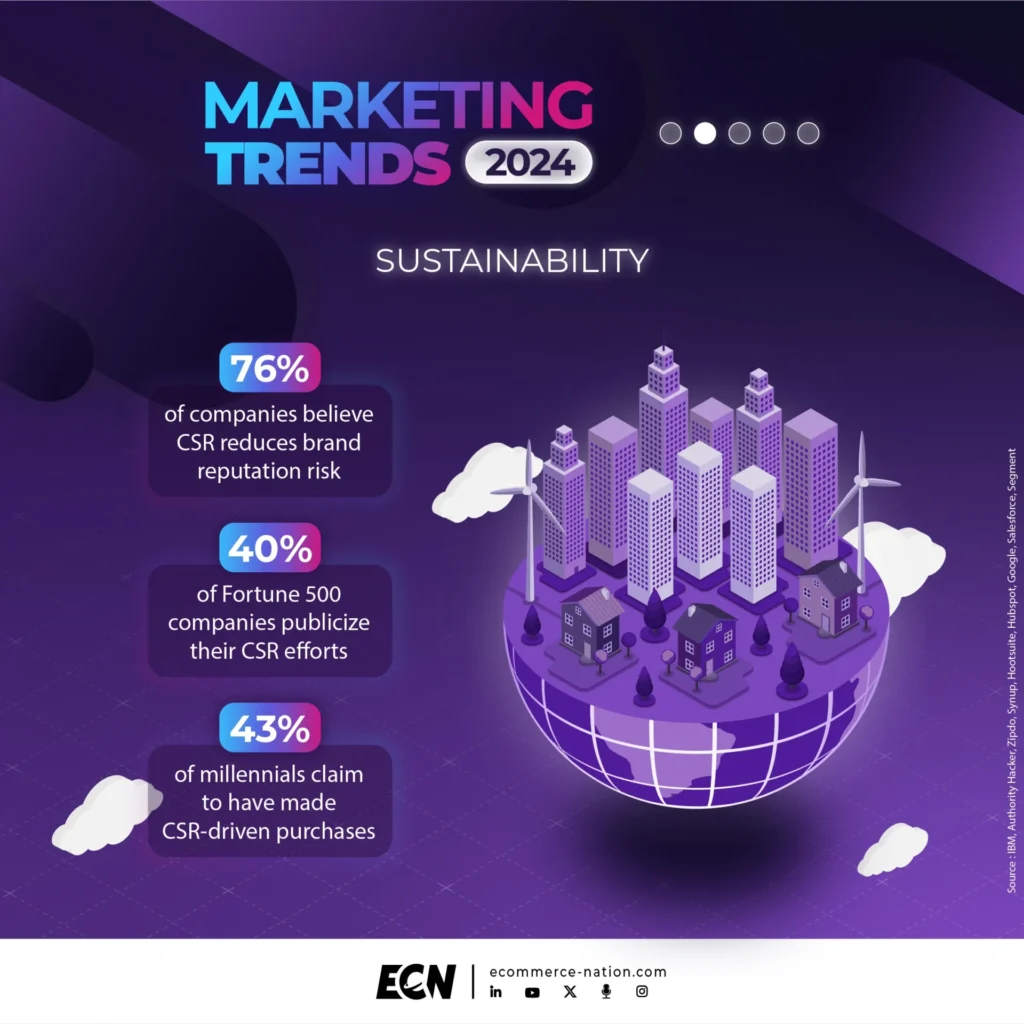
Sustainability has transitioned from a niche marketing angle to a core business strategy. Today’s consumers—particularly Gen Z and Millennials—conduct digital due diligence before making a purchase. They are looking for more than just a green logo; they are looking for evidence.
Integrating Sustainability into Digital Channels
- Content as Proof: Brands are moving away from vague "eco-friendly" claims toward radical transparency. By using digital platforms to publish impact reports and supply chain journeys, companies are turning sustainability into a competitive advantage.
- The Power of Influencer Advocacy: Partnering with sustainability-focused creators allows brands to reach "conscious consumers" through trusted voices. These collaborations are no longer about product placement; they are about values alignment.
- Technological Traceability: The integration of blockchain is emerging as a critical tool. By providing a digital ledger of a product’s lifecycle, brands can verify their claims, ensuring that the journey from raw material to doorstep is as transparent as the customer demands.
3. Conversational Search: The Rise of the Semantic Web
Search is no longer a static act of typing keywords into a box. With the ubiquity of smart speakers and sophisticated virtual assistants like Siri, Google Assistant, and Alexa, search has become a conversation.
Shifting from Keywords to Intent
Traditional SEO focused on "stuffing" keywords into articles. Today, search engines prioritize "Semantic Search," which interprets the intent behind a user’s question. If a user asks their smart speaker, "What is the best sustainable running shoe for flat feet?" the algorithm looks for a direct, conversational answer rather than a landing page that simply repeats the words "running shoe."

- The Data Shift: To win in the era of conversational search, marketers must build FAQ-style content that mimics natural human speech.
- The AI Advantage: Because smart assistants are becoming more context-aware, they can offer personalized results based on a user’s history. This creates a closed-loop system where the most helpful content is rewarded with higher visibility.
4. The Dominance of Short-Form and Immersive Content
The human attention span is increasingly fragmented. To combat this, marketing content has become shorter, faster, and more visually arresting.
Short-Form Video Strategy
Platforms like TikTok, Instagram Reels, and YouTube Shorts have conditioned the global audience to process information in seconds. Brands that succeed here employ "hook-driven" storytelling. The first three seconds of a video are now the most critical real estate in digital marketing; if the viewer isn’t grabbed immediately, the brand loses the opportunity for engagement.
The Immersive Frontier
While short content captures the initial spark, immersive content maintains the flame. Augmented Reality (AR) and Virtual Reality (VR) are no longer futuristic concepts; they are sales drivers.

- Try-Before-You-Buy: Retailers are utilizing AR to allow customers to "wear" products digitally. This reduces return rates—a significant cost for e-commerce—and bridges the gap between the tactile experience of a physical store and the convenience of the web.
5. Hyper-Personalization: The End of "Mass Marketing"
"One-size-fits-all" is dead. Hyper-personalization is the practice of using AI and real-time data to craft experiences so specific they feel curated for the individual.
How It Works
By leveraging machine learning, brands can analyze a user’s entire history—what they clicked, what they abandoned in their cart, and even what time of day they are most likely to convert. This data allows for the creation of:
- Dynamic Landing Pages: Websites that change their hero image and product recommendations based on the user’s demographic and past behavior.
- Predictive Email Marketing: Sending an offer not when the brand wants to sell, but exactly when the user is statistically likely to need a refill or an upgrade.
Supporting Data and Industry Implications
Recent industry surveys indicate that companies investing in AI-driven personalization see, on average, a 15-20% increase in conversion rates. Furthermore, reports from major e-commerce think tanks suggest that brands prioritizing sustainable practices see a 30% higher lifetime customer value compared to those that do not.

However, these gains come with significant responsibilities. The primary implication for the coming years is that Data Ethics will define the winners. As privacy regulations (like GDPR and CCPA) become more stringent, the brands that collect data with consent and use it to genuinely improve the customer experience—rather than exploit it—will be the ones that endure.
Conclusion
The marketing landscape of 2024 is defined by a paradox: technology is making us more automated, yet consumers are demanding more "human" experiences. To succeed, brands must balance the technical prowess of AI and hyper-personalization with a sincere commitment to sustainability and conversational, ethical engagement.
The goal is no longer just to "reach" a consumer; it is to build a digital ecosystem where the technology feels invisible and the value feels personal. By embracing these five trends, businesses can move beyond the noise and build lasting, meaningful relationships with their audiences in an increasingly complex digital world.