India’s Startup Ecosystem in FY26: Scaling Revenues, Chasing Sustainable Profits, and Gearing Up for the Public Markets
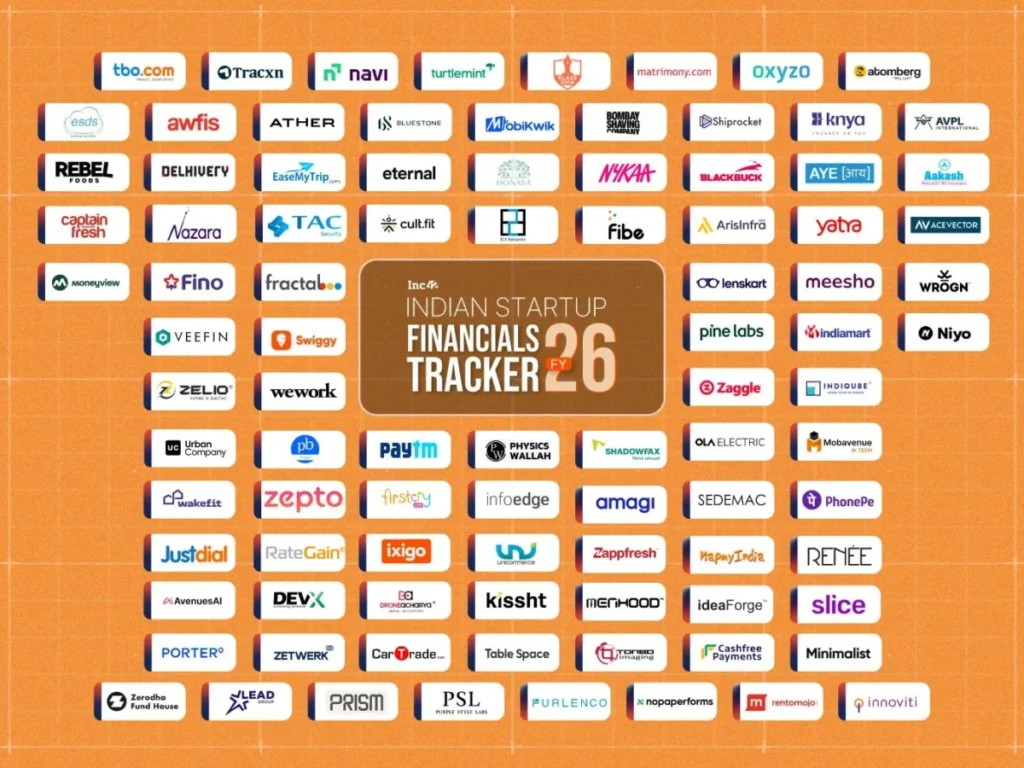
The Indian startup ecosystem demonstrated remarkable maturity and resilience in the financial year 2026 (FY26). Moving past the stringent cost-rationalization measures of prior years, new-age tech companies concentrated heavily on top-line expansion while pivoting toward sustainable profitability. This evolution is perhaps best highlighted by the surge in public market listings: 22 new-age tech companies made their stock market debuts in FY26, a significant jump from the 13 recorded in FY25.
To provide comprehensive transparency into this shifting economic landscape, Inc42 has launched the FY26 Financial Tracker, compiling vital financial metrics from nearly 100 prominent Indian startups. While macroeconomic headwinds and geopolitical uncertainties created a challenging environment in the fourth quarter, the overarching trend points to a maturing ecosystem poised for balanced, long-term growth.
Main Facts: Scale, Revenue Growth, and the Profitability Divide
An analysis of 98 tracked startups reveals a clear picture of expansion coupled with a persistent profitability divide.
- Surging Operating Revenues: Collectively, the 98 tracked companies generated an operating revenue of ₹3.22 Lakh Cr in FY26, marking a sharp 44.26% increase from the ₹2.23 Lakh Cr reported in FY25.
- The Two Halves of Profitability: Of the 98 startups, 65 companies (roughly 67%) reported net profits for FY26, generating a cumulative net profit of ₹14,511.8 Cr.
- The Cost of High Growth: Conversely, the remaining 33 companies posted a cumulative net loss of ₹21,459.4 Cr, proving that sustainable unit economics and immediate profitability remain a work in progress for capital-intensive sectors—particularly quick commerce and electric vehicles.
Chronology of Market Realities: From Survival to Scaled Ambition
The financial trajectory of India’s startup economy over the past few cycles can be mapped across three distinct phases:
- The Funding Winter (FY23–FY24): Marked by a sudden contraction in venture capital, forcing startups to slash burn rates, freeze hiring, and prioritize cash conservation over growth.
- The Rationalization and Recovery (FY25): Companies tested the waters of operational efficiency. Cost structures stabilized, and early green shoots of adjusted EBITDA profitability began to appear, paving the way for a modest rebound in IPOs (13 debuts).
- The Expansion and Public Market Rush (FY26): Armed with leaner operations, startups aggressively scaled their top lines. Giants like Eternal (Zomato/Blinkit parent), Zepto, and Swiggy posted massive revenue numbers, while 22 firms successfully crossed the threshold into the public markets. Simultaneously, traditional tech majors like Paytm and BlueStone reported their first full years of net profitability.
Supporting Data: Financial Snapshot of Key Startups
The financial health of the ecosystem varies wildly by sector. Below is a comparative overview of select major players extracted from the Inc42 FY26 Financial Tracker (all figures in ₹ Cr):
| Company Name | Operating Revenue (FY26) | YoY Revenue Change (%) | Loss / Profit (FY26) | Loss / Profit (FY25) | Total Expenses (FY26) |
|---|---|---|---|---|---|
| Eternal | 54,364.0 | 168.56% | 366.0 | 527.0 | 55,145.0 |
| Swiggy | 23,053.0 | 51.40% | -4,154.0 | -3,117.0 | 27,701.0 |
| Zepto | 22,623.6 | 103.63% | -5,905.2 | -4,699.7 | 29,026.7 |
| Delhivery | 10,508.3 | 17.65% | 152.5 | 162.1 | 10,707.8 |
| Nykaa | 10,022.3 | 26.07% | 203.9 | 72.1 | 9,707.5 |
| Lenskart | 8,814.0 | 32.49% | 500.9 | 297.3 | 8,287.9 |
| Paytm | 8,437.0 | 22.28% | 552.0 | -663.0 | 8,521.0 |
| PhonePe | 7,920.5 | 11.50% | -2,792.0 | -1,727.4 | 10,588.5 |
| Groww | 4,645.0 | 19.04% | 2,083.0 | 1,824.4 | 1,992.0 |
| Ather Energy | 3,671.8 | 62.83% | -517.2 | -812.3 | 4,335.2 |
Sector-Specific Highlights
- Quick Commerce & Food Delivery: Driven by Blinkit’s explosive growth under Eternal, operating revenues soared. Eternal logged ₹54,364 Cr in revenue. However, hyper-competition in quick commerce kept bottom lines under intense pressure; Zepto posted a net loss of ₹5,905.2 Cr, while Swiggy recorded a loss of ₹4,154 Cr.
- Fintech & Lending: The sector displayed robust maturity. Groww crossed the ₹2,000 Cr net profit mark, posting ₹2,083 Cr. Meanwhile, Paytm achieved a milestone by recording its first full year of profitability with a net profit of ₹552 Cr, recovering from a ₹663 Cr loss in FY25. Conversely, PhonePe saw its losses widen to ₹2,792 Cr due to aggressive marketing, ESOP expenses, and one-time write-offs.
- EVs and Manufacturing: Ather Energy managed to trim its net losses by 36% to ₹517.2 Cr despite supply chain roadblocks—such as China’s export ban on rare earth magnets—impacting production lines. Ola Electric similarly narrowed its losses by nearly 20% to ₹1,833 Cr, even as its operating revenue halved to ₹2,253 Cr due to cooling consumer demand and service-related challenges.
Official Responses and Strategic Shifts
Management teams across the ecosystem have emphasized a dual mandate: capturing market share while building defensible unit economics.
For companies preparing for or recently completing public listings, fiscal discipline has become paramount. For instance, fintech startups like Fibe and Cashfree Payments successfully managed to scale their operating revenues past key milestones while keeping operational bloat in check. Fibe doubled its PAT to ₹257.4 Cr, and Cashfree trimmed its losses down to ₹118.5 Cr.
In the consumer brand space, companies like Honasa Consumer (parent of Mamaearth) reaped the rewards of a diversified portfolio, pushing profits past the ₹200 Cr mark on the back of momentum from younger brands like The Derma Co. and Aqualogica. Similarly, omnichannel jewelry player BlueStone celebrated its first-ever profitable fiscal year, posting ₹13.2 Cr in net profit.
Implications for the Broader Economy
The FY26 financial disclosures signal a transformative period for the Indian startup narrative:
- Heightened Investor Scrutiny: Public market investors are no longer valuing pure-play top-line growth over bottom-line realities. Startups posting widening losses—particularly in capital-intensive verticals like quick commerce and logistics—face mounting pressure to demonstrate a clear path to profitability.
- The IPO Pipeline: With 22 companies debuting in public markets in FY26 and numerous others (such as Atomberg, Cult.fit, and Moneyview) prepping draft papers, the Indian stock exchanges are firmly established as viable, lucrative exit routes for early venture capitalists and founders.
- Operational Maturity: The reliance on heavy discounting is giving way to tech-driven efficiencies, supply chain localization, and alternative revenue streams (such as AI integrations seen in firms like AvenuesAI and Mobavenue).
As India’s new-age tech companies navigate the remainder of the decade, the ability to balance aggressive scaling with rigorous financial discipline will separate the market leaders from the rest. The Inc42 FY26 Financial Tracker will continue to monitor these developments as quarterly disclosures roll in.