India Challenges U.S. Green Card Restrictions: A Deep Dive into the Strained Mobility of Skilled Talent
New Delhi – In a significant diplomatic pushback, the Ministry of External Affairs (MEA) issued a firm response on Friday, October 9, 2026, regarding the recent suspension of several major IT firms from the United States’ permanent residency (Green Card) program. The move, which has sent shockwaves through the Indo-U.S. tech corridor, has prompted New Delhi to highlight the critical, symbiotic relationship between the world’s two largest democracies.
While the MEA sought to calm immediate anxieties regarding the validity of current visas, the broader geopolitical and economic implications of the decision remain a point of intense friction.
Main Facts: The Scope of the Suspension
The U.S. government’s decision to suspend the Program Electronic Review Management (PERM) applications—a foundational step in the process of obtaining an employment-based Green Card—for several prominent IT firms has created a climate of uncertainty for thousands of Indian professionals.
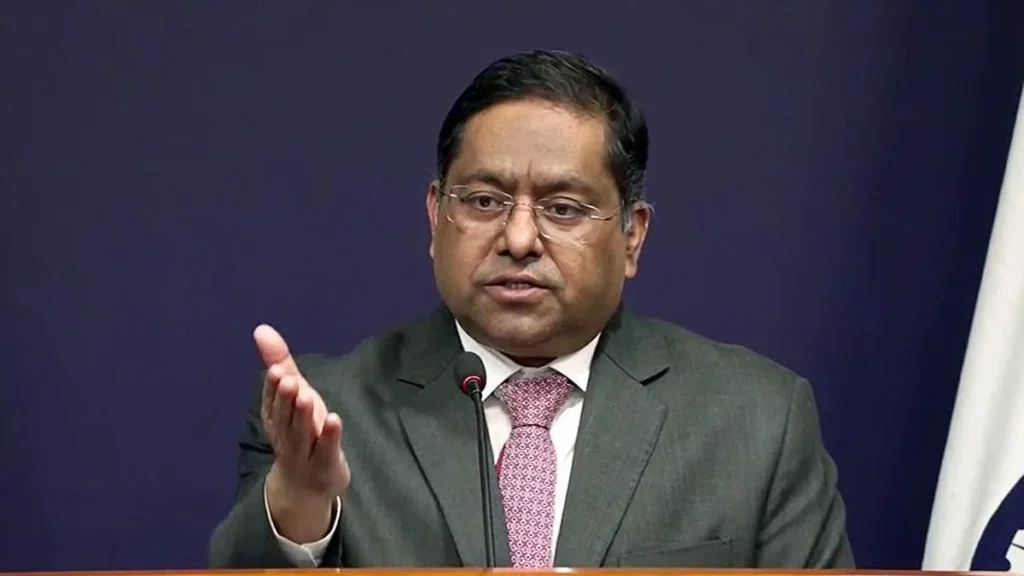
MEA Spokesperson Randhir Jaiswal clarified the legal status of those affected, stating, "The suspension of PERM applications does not, by itself, affect the validity of existing H-1B visas or the status of H-1B visa holders and their dependents."
However, the ministry acknowledged the secondary fallout: "There could be some impact on the permanent-residency/Green Card process of eligible employees of the affected companies." For many Indian tech workers, the Green Card is the ultimate objective after years of H-1B visa cycles. Any disruption to the PERM process essentially freezes their path to permanent residency, leaving them in a state of professional and personal limbo.
Chronology: From Collaboration to Conflict
The current tensions are the culmination of a shifting political narrative in Washington regarding immigration and labor.
- Mid-2026: Increased scrutiny by the U.S. Department of Labor regarding corporate compliance and wage-level benchmarks for foreign workers begins to signal a more protectionist stance.
- Early October 2026: Several major IT firms—often the largest employers of Indian tech talent in the U.S.—are notified of a suspension in their ability to file new PERM applications, citing alleged procedural inconsistencies.
- October 8, 2026: U.S. Vice-President J.D. Vance makes public remarks regarding immigration and foreign labor that are widely perceived in New Delhi as inflammatory and historically insensitive.
- October 9, 2026: The Indian Ministry of External Affairs releases a formal statement addressing both the administrative suspensions and the rhetoric used by the U.S. Vice-President, marking a rare and sharp public rebuke.
Supporting Data: The Value of Indian Talent
The MEA’s response underscored a vital economic reality: the U.S. economy relies heavily on the innovation, research, and productivity fueled by Indian professionals.
Data consistently shows that Indian nationals are the largest cohort of recipients of H-1B visas, providing the bedrock for the U.S. software, pharmaceutical, and financial services sectors. Beyond mere labor, Indian professionals have become integral to the "shareholder wealth" of U.S. corporations. By spearheading AI development, cloud infrastructure, and cybersecurity initiatives, Indian talent serves as a force multiplier for American competitiveness against global rivals.
According to industry reports, Indian-led companies and professionals in the U.S. are estimated to contribute hundreds of billions of dollars annually to the U.S. GDP. Any policy that artificially restricts this flow of talent does not merely inconvenience the individual; it hampers the R&D capabilities of American tech giants.
The Diplomatic Friction: A Clash of Rhetoric
A major point of contention in this standoff is the rhetoric employed by high-ranking U.S. officials. The MEA explicitly criticized remarks made by U.S. Vice-President J.D. Vance, labeling them "unwarranted."
The Ministry’s statement was particularly biting when addressing the historical tone of the debate. "The history of the United States itself has been shaped by generations of immigrants whose labour, enterprise and innovation have contributed to its growth and prosperity," the MEA noted.

The Indian government went further, condemning the use of "terminology that carries painful historical and colonial legacy connotations." This represents a significant escalation in diplomatic language, signaling that India is no longer willing to silently absorb rhetoric that it deems offensive, regardless of the bilateral strategic partnership.
Implications: The Future of Indo-U.S. Tech Relations
Impact on Global Competitiveness
The suspension of the PERM process for major firms may lead to a "brain drain" of a different sort. If top-tier talent finds the U.S. immigration system increasingly volatile and hostile, they may choose to migrate to other technology hubs in Canada, Europe, or even return to the burgeoning startup ecosystem in India. This outcome would be counter-productive to the U.S. goal of maintaining dominance in the global tech race.
Strategic Ambitions vs. Protectionist Policies
India has framed the movement of skilled professionals as an area of "tremendous mutual benefit." By creating obstacles, the U.S. risks undermining the very "shared ambitions" that both nations have spent decades cultivating under the Initiative on Critical and Emerging Technology (iCET).
"The steps announced by the U.S. do not advance the shared ambitions of both countries," the MEA release noted, serving as a warning that the "strategic partnership" cannot be bifurcated into "security cooperation" and "hostile labor policy."
Corporate Uncertainty
For IT firms, the implication is a massive administrative and legal burden. These companies now face the prospect of extended litigation and the potential need to restructure their workforce deployment strategies. This uncertainty is likely to impact stock valuations and long-term project planning for the upcoming fiscal years.
Conclusion: A Call for Pragmatism
As the situation unfolds, the message from New Delhi is clear: India views the current U.S. approach as a misunderstanding of the economic value proposition that Indian talent provides.
The MEA’s statement is a call for a return to evidence-based policy. By highlighting that Indian professionals are not merely "foreign workers" but architects of American corporate success, India is attempting to shift the narrative from one of "immigration control" to one of "economic necessity."
Whether the U.S. administration will recalibrate its stance or continue down a path of protectionism remains to be seen. However, one thing is certain: the era of India passively accepting shifts in U.S. visa policy as purely "domestic issues" has effectively come to an end. The interconnected nature of the modern global economy demands a more nuanced approach—one that values the human capital that bridges the two nations.
As stakeholders on both sides of the Pacific wait for clarity, the diplomatic channels remain open, but the atmosphere has undoubtedly chilled. The challenge now lies in whether both nations can reconcile their internal political pressures with the undeniable fact that their technological futures are inextricably linked.
For the thousands of H-1B holders currently in the "waiting room," the hope remains that cooler heads will prevail, and that the rhetoric of the political campaign trail will give way to the pragmatic realities of the boardroom. Until then, the IT sector remains in a state of watchful waiting, bracing for the ripple effects of a policy decision that threatens to disrupt one of the most successful economic partnerships of the 21st century.