A Digital Evolution: Inside the Redesign of the WordPress Mercantile Store
The WordPress ecosystem has long been synonymous with community, open-source values, and a relentless push toward modern web standards. Nowhere is this better exemplified than in the recent, comprehensive overhaul of Mercantile, the official swag store of the WordPress project. More than just a simple refresh of a storefront, the new Mercantile serves as a high-fidelity demonstration of what the current generation of WordPress and WooCommerce technology can achieve. By blending brand heritage with cutting-edge development practices, the team behind Mercantile has created a digital shopping experience that is as functional as it is culturally significant.
Main Facts: A Modernized Frontend and Backend
The redesign of Mercantile is defined by a "catalog-first" philosophy. The storefront has been completely restructured to place products at the center of the user journey, ensuring that the visual experience is consistent across a vast array of devices, from ultra-wide desktop monitors to compact mobile handsets.
However, the improvements go far beyond aesthetics. The user experience has been tightened with intuitive micro-interactions—such as the automatic selection of product variants when only one stock option remains—and order confirmation emails that mirror the branding of the web interface.
The store is built almost entirely using blocks, showcasing the maturity of the Gutenberg block-based editing experience. From the cart and checkout pages to the mini-cart and order confirmation screens, every component leverages native WordPress blocks, supplemented by a suite of custom-built theme blocks. Under the hood, the store operates on WordPress 7.0, utilizing the Interactivity API to power seamless catalog navigation and modal interactions. Perhaps most importantly, the site achieves high-level accessibility compliance, respecting user-defined reduced-motion settings and adhering to strict color contrast standards.
Chronology: From Concept to WordCamp Europe
The path to the new Mercantile was not merely a design project; it was a rigorous iterative process. Development began with a focus on decoupling the store’s legacy structure and re-implementing it within a modern, block-based architecture.
The project reached a critical milestone in June 2026, coinciding with WordCamp Europe. This event served as the ultimate stress test for the new platform. To prepare for the conference, the development team implemented a "Local Pickup" feature, allowing attendees to order online and collect their merchandise directly at the event booth. Furthermore, they curated a collection of event-exclusive products that integrated seamlessly into the main catalog architecture.
During the event, the system processed fifty in-person orders, providing the development team with invaluable real-world data regarding the stability of the new checkout flow. The success of this deployment signaled the readiness of the store for a wider, permanent launch.

Supporting Data: Technical Capabilities and Accessibility
The technical architecture of the new Mercantile is a testament to the power of the modern WordPress stack. By utilizing the Interactivity API, the developers have eliminated the need for heavy page reloads, providing a snappy, application-like feel that was once only possible through complex JavaScript frameworks.
Accessibility and Inclusion
Accessibility was not an afterthought; it was a foundational pillar of the design. The team conducted a thorough audit to ensure that the site is navigable for all users, regardless of physical or visual ability. By honoring reduced-motion preferences, the site avoids jarring animations that could trigger vestibular issues. Additionally, the team meticulously verified color contrast ratios to meet international web accessibility standards, ensuring that text is legible against all backgrounds.
Granular Product Data
Shoppers today expect transparency. To meet this expectation, the new product pages feature enhanced metadata. Each item includes detailed attributes—such as material composition, specific sizing charts, and maintenance instructions—surfaced directly on the product page. This preemptive information delivery reduces customer support inquiries and increases conversion rates by providing the consumer with full confidence before they add an item to their cart.
Official Responses and Philosophy
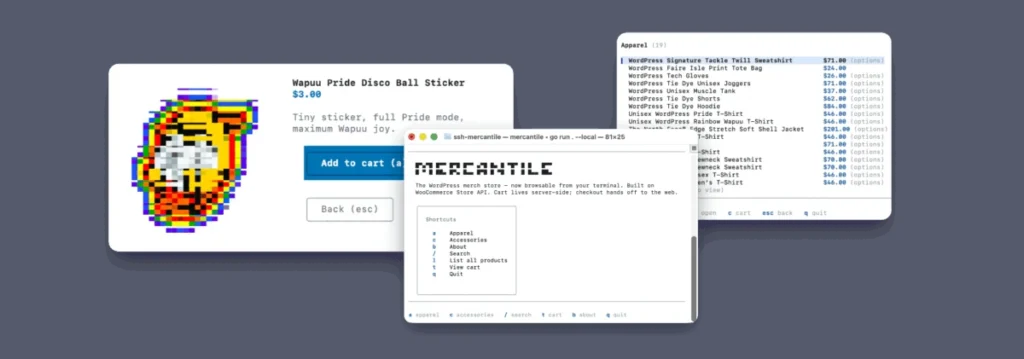
The design language of the store is perhaps its most distinct feature. The creators aimed to build a site that feels "uniquely WordPress." To achieve this, the visual identity draws heavily from the project’s internal history. Visitors will recognize subtle design nods to the classic WordPress metabox, the familiar admin bar, and the project’s beloved mascot, Wapuu.
For the developer-centric audience, the site is peppered with "Easter eggs"—small code references and open-source homages that reward the attentive user. This intentional infusion of project culture reinforces the idea that Mercantile is not just a store, but a part of the software’s identity.
Implications: Setting the Standard for the Ecosystem
The launch of the new Mercantile has broader implications for the WordPress and WooCommerce communities. By building a sophisticated, high-traffic store using core blocks and modern APIs, the WordPress project is effectively providing a "gold standard" blueprint for e-commerce developers worldwide.
A Catalyst for Future Innovation
The team is not resting on its laurels. A playful, experimental feature currently in development will allow technically minded users to interact with a text-based version of the store via a command-line interface. This project, which pays tribute to the developers who form the backbone of the WordPress community, represents the "next frontier" for the store’s development team. It highlights the creative freedom possible when building on top of an open-source platform.

Supporting the WordPress Mission
Ultimately, the success of Mercantile is tied to the sustainability of the project itself. Every purchase made on the platform provides direct financial support to the WordPress Foundation, a 501(c)(3) nonprofit organization. The Foundation’s mission—to democratize publishing and preserve open-source software for future generations—is the engine behind the store’s existence.
The new Mercantile demonstrates that a store can be both a high-performing e-commerce asset and a powerful brand ambassador. By integrating modern, block-based development with a deep respect for the project’s history, the team has not only improved the shopping experience but has also set a benchmark for the next era of WordPress development.
Looking Forward
As the community continues to explore the new site, the focus will shift from initial stabilization to feature expansion. The transition to a block-based architecture ensures that the store can evolve alongside the WordPress core. Future updates are expected to include more interactive elements, refined user account features, and perhaps the integration of community-driven design elements.
For the millions of users, developers, and designers who interact with WordPress daily, Mercantile stands as a physical representation of the digital work they contribute to. Whether you are a casual fan of the project or a long-time contributor, the new store offers a portal into the culture and future of the platform. By visiting Mercantile, users are not just buying a t-shirt or a sticker; they are contributing to the ongoing mission of the WordPress Foundation to keep the web open, accessible, and free for everyone.
The project team invites all users to explore the new interface, provide feedback, and join the conversation regarding the store’s future. As the code base grows and the experiment with the command-line interface moves toward completion, the Mercantile store remains a living example of what happens when a global community turns its talents inward to support its own infrastructure. It is a win for the users, a win for the Foundation, and a landmark achievement for the open-source movement.