AWS Unveils Well-Architected Agent: A New Era of AI-Driven Cloud Optimization and Infrastructure Governance
SEATTLE — In a major development for cloud engineers, enterprise architects, and DevOps teams globally, Amazon Web Services (AWS) has announced the public preview of the AWS Well-Architected Agent. This groundbreaking, AI-powered service is engineered to autonomously analyze entire AWS cloud environments, delivering highly targeted, context-aware recommendations designed to optimize applications across cost, security, performance, and resilience.
Eschewing traditional manual audits and rigid, generic compliance checklists, the Well-Architected Agent thinks and evaluates like an experienced, veteran cloud architect. By dynamically synthesizing utilization metrics, intricate resource configurations, and complex application topologies against AWS Well-Architected best practices spanning more than 65 AWS services, the new agent aims to transform how organizations govern and scale their cloud workloads.
Delivered as part of AWS Support, the public preview is currently available for onboarding workloads across all commercial AWS Regions, with regional service availability anchored in US East (N. Virginia), US East (Ohio), and US West (Oregon).
Main Facts: What Is the AWS Well-Architected Agent?
The AWS Well-Architected Agent is an advanced artificial intelligence service built to bridge the gap between high-level cloud best practices and day-to-day operational execution. Traditional cloud architecture reviews have historically relied on periodic, manual questionnaires, static scripts, or generic third-party linters. While useful, these methods frequently fail to capture the fluid, dynamic, and interconnected nature of modern cloud-native applications.
The Well-Architected Agent addresses these operational bottlenecks through core capabilities:
- Autonomous Environment Analysis: The agent correlates metrics, topologies, and configurations across more than 65 AWS services without requiring heavy manual setup.
- Business-Goal Alignment: Rather than applying one-size-fits-all optimization rules, the agent evaluates findings against specific, user-declared business goals—allowing organizations to dynamically balance trade-offs between cost-cutting and performance or resilience.
- Actionable Implementation Packages: Every finding surfaced by the agent is paired with ready-to-implement remediation packages, which include updated Infrastructure as Code (IaC) snippets, AWS CLI commands, and step-by-step console guides.
- Pre-Deployment and Runtime Governance: Teams can analyze live environments or audit pre-deployment workloads by uploading Infrastructure as Code projects.
- Developer Workflow Integration: Through the AWS Model Context Protocol (MCP) Server and dedicated plugins, developers can query and interact with the agent directly inside their preferred AI coding environments and IDEs.
Chronology: The Evolution of Cloud Architecture Reviews
To understand the significance of the Well-Architected Agent, it is helpful to trace the evolution of cloud governance tools provided by AWS over the past decade.

1. The Manual Era (2012–2018)
When AWS first introduced the AWS Well-Architected Framework in 2012, it was primarily a conceptual guide designed to help cloud architects build secure, high-performing, resilient, and efficient infrastructure. In 2018, AWS released the AWS Well-Architected Tool, digitizing the framework into a self-service questionnaire inside the AWS Management Console. While revolutionary for its time, the tool relied entirely on human input and manual reviews, making it difficult to keep pace with rapidly changing microservices architectures.
2. Automated Scanning and Specialized Advisors (2019–2024)
Over the subsequent years, AWS introduced specialized, pillar-specific advisory tools, such as AWS Trusted Advisor, AWS Cost Explorer recommendations, and Compute Optimizer. While these services provided valuable insights, they often operated in silos. An engineer might receive a cost-optimization recommendation from one tool that inadvertently violated a resilience best practice surfaced by another. Teams spent considerable time manually reconciling these cross-pillar trade-offs.
3. The Generative AI Leap and the Birth of the Agent (2025–2026)
With the rapid maturation of generative artificial intelligence and autonomous agentic workflows, AWS recognized the need for a unified system capable of reasoning across all pillars simultaneously. The public preview of the AWS Well-Architected Agent represents the culmination of this vision—shifting cloud management from passive recommendations and manual reviews to proactive, context-aware, and automated remediation.
Supporting Data and Technical Architecture
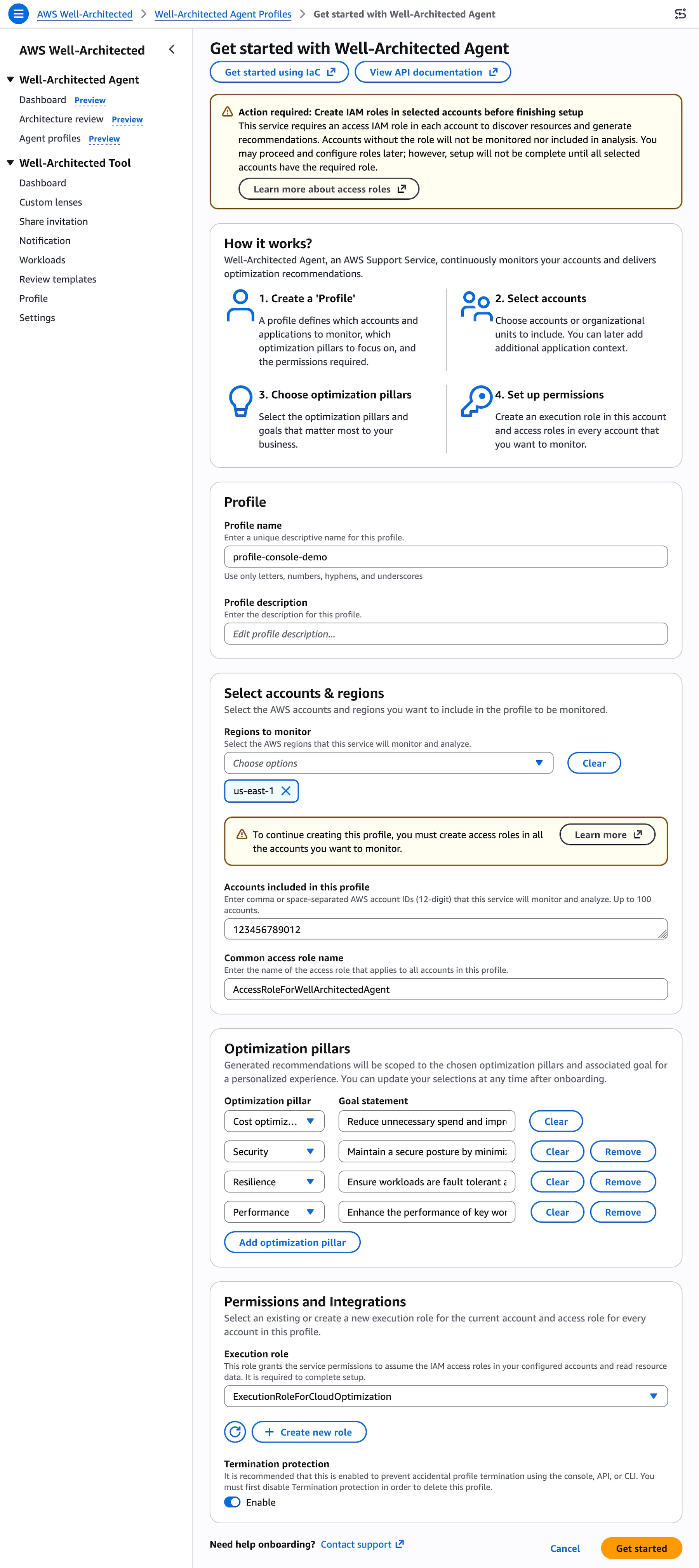
Operating the Well-Architected Agent requires a structured onboarding workflow designed to ensure secure access while maximizing analytical relevance.
1. Creating an Agent Profile
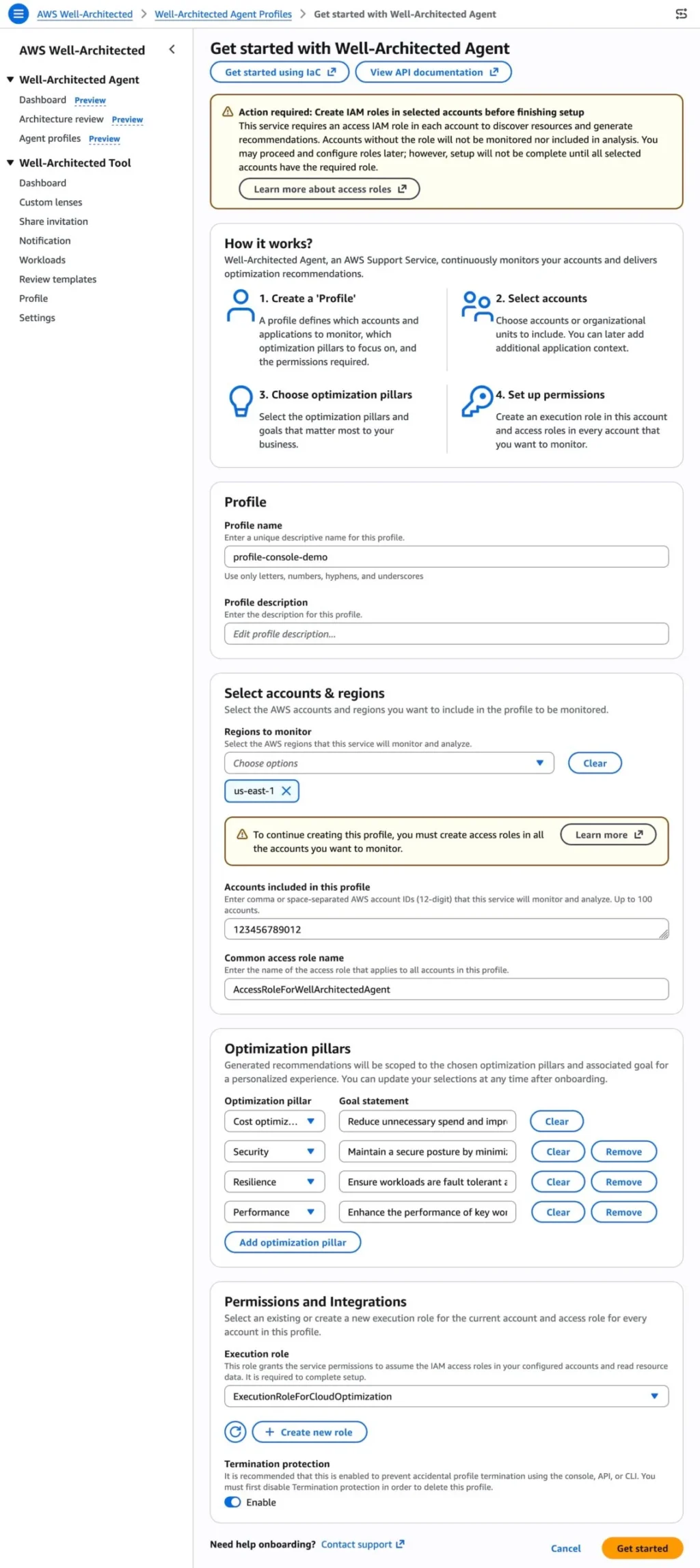
Administrators begin within the AWS Well-Architected console by selecting Get started with Well-Architected Agent. This process involves:
- Defining Scope: Selecting specific AWS accounts, individual Regions, and target optimization pillars.
- Setting Objectives: Declaring specific business targets for each pillar (e.g., aggressive cost reduction vs. maximum fault tolerance).
- Establishing IAM Permissions: Provisioning customer-managed AWS Identity and Access Management (IAM) roles that grant the agent read-only access to resource configurations, utilization metrics, and application topologies.
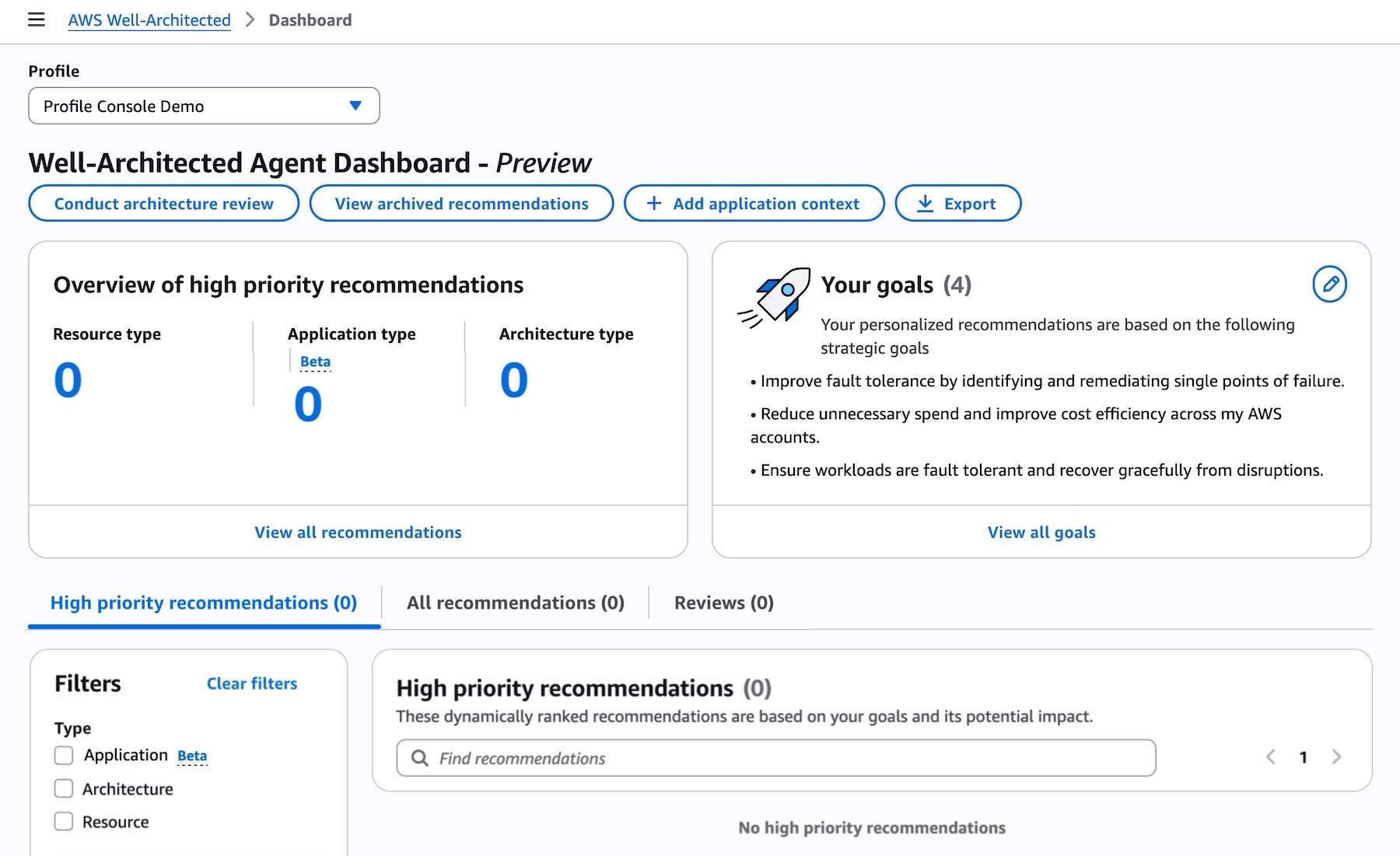
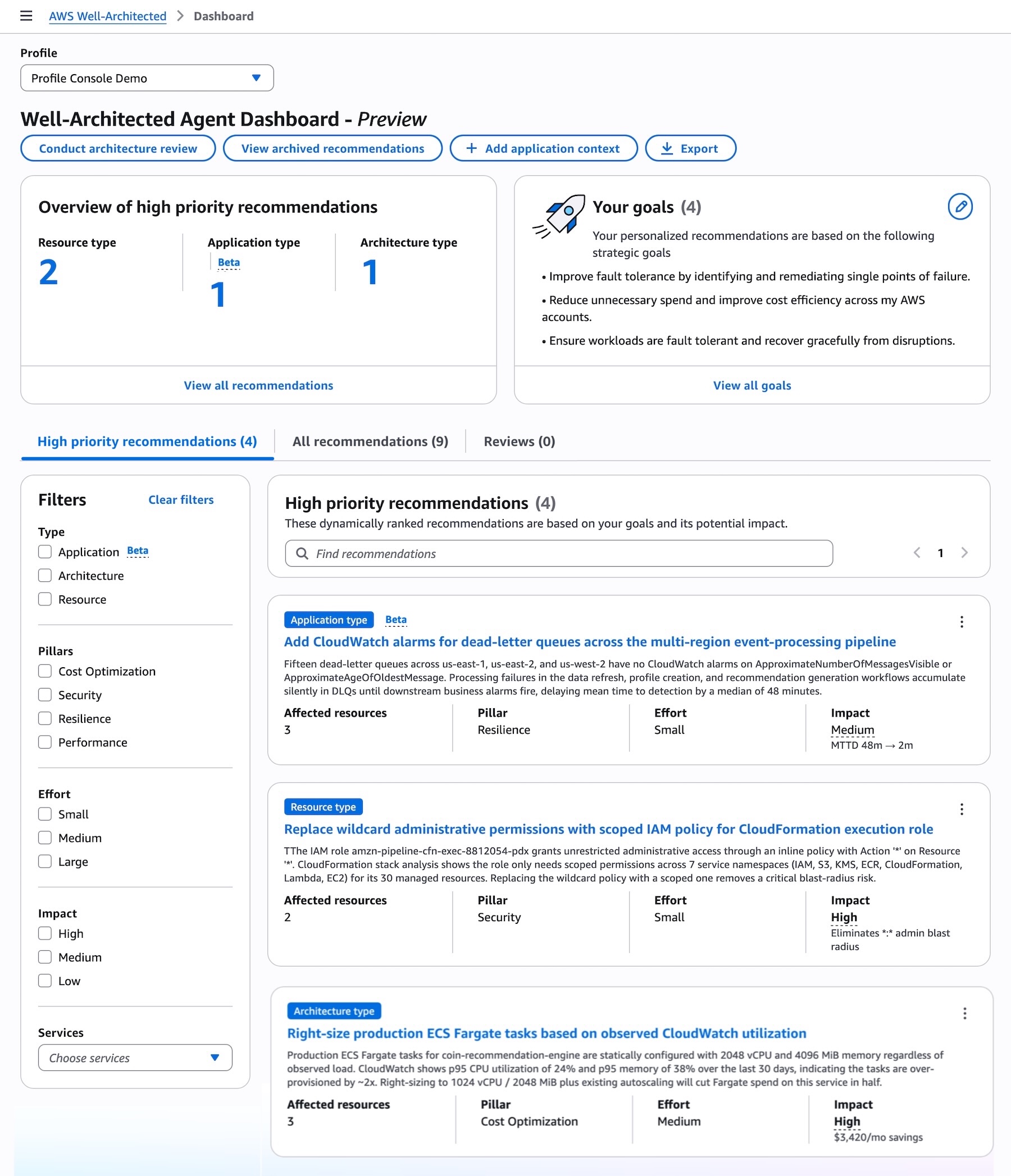
Once the profile is established, the agent generates its initial set of prioritized resource and application recommendations within 24 hours.
2. Pre-Deployment Infrastructure Review
A standout technical feature of the Well-Architected Agent is its ability to evaluate workloads before they are deployed to production. Engineering teams can upload a .zip archive containing an Infrastructure as Code (IaC) project written in Terraform, AWS CloudFormation, or the AWS Cloud Development Kit (CDK) directly into the dashboard. By selecting the appropriate Well-Architected lens, developers can catch security misalignments, architectural anti-patterns, and cost inefficiencies at the design phase.
3. Contextualizing Applications
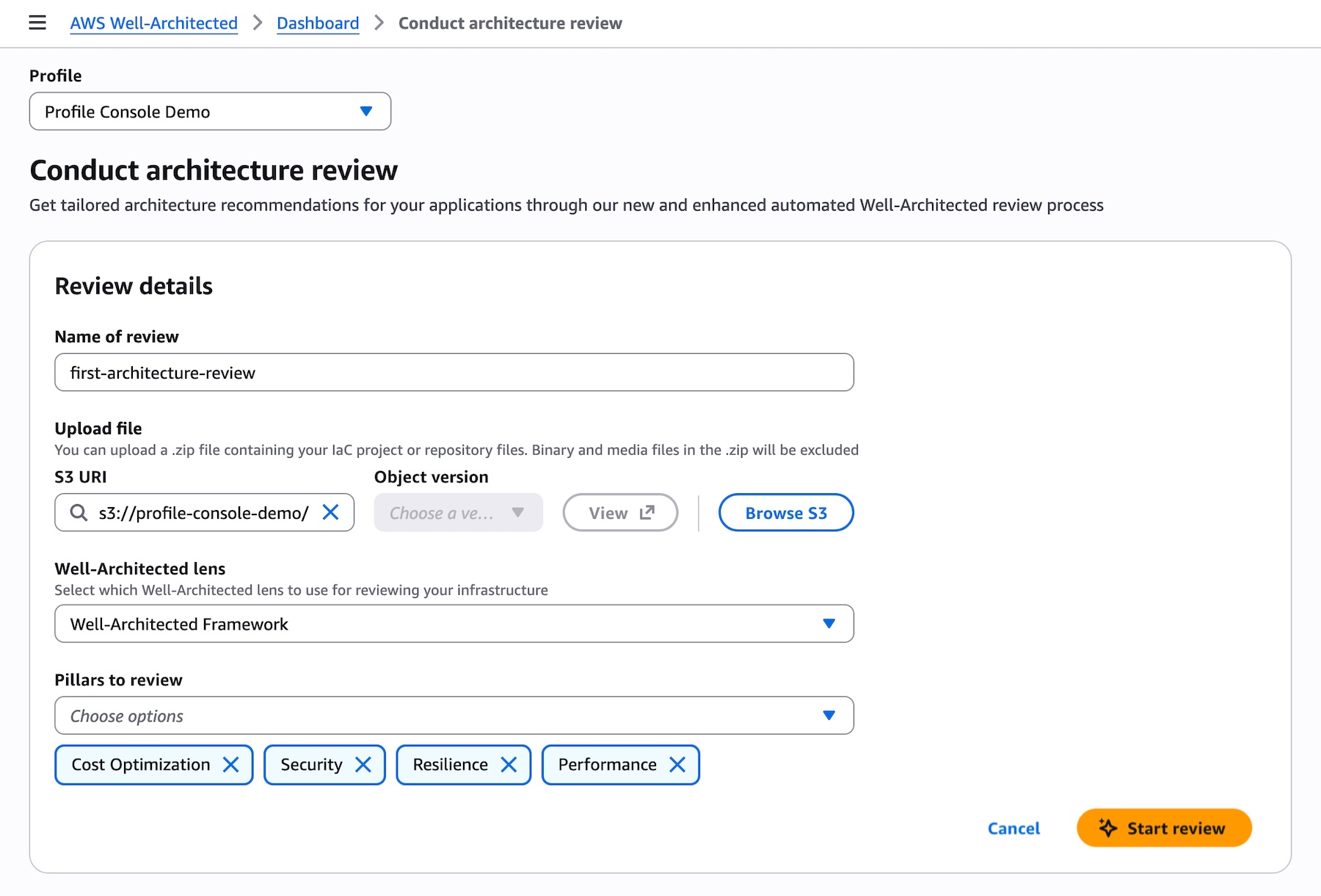
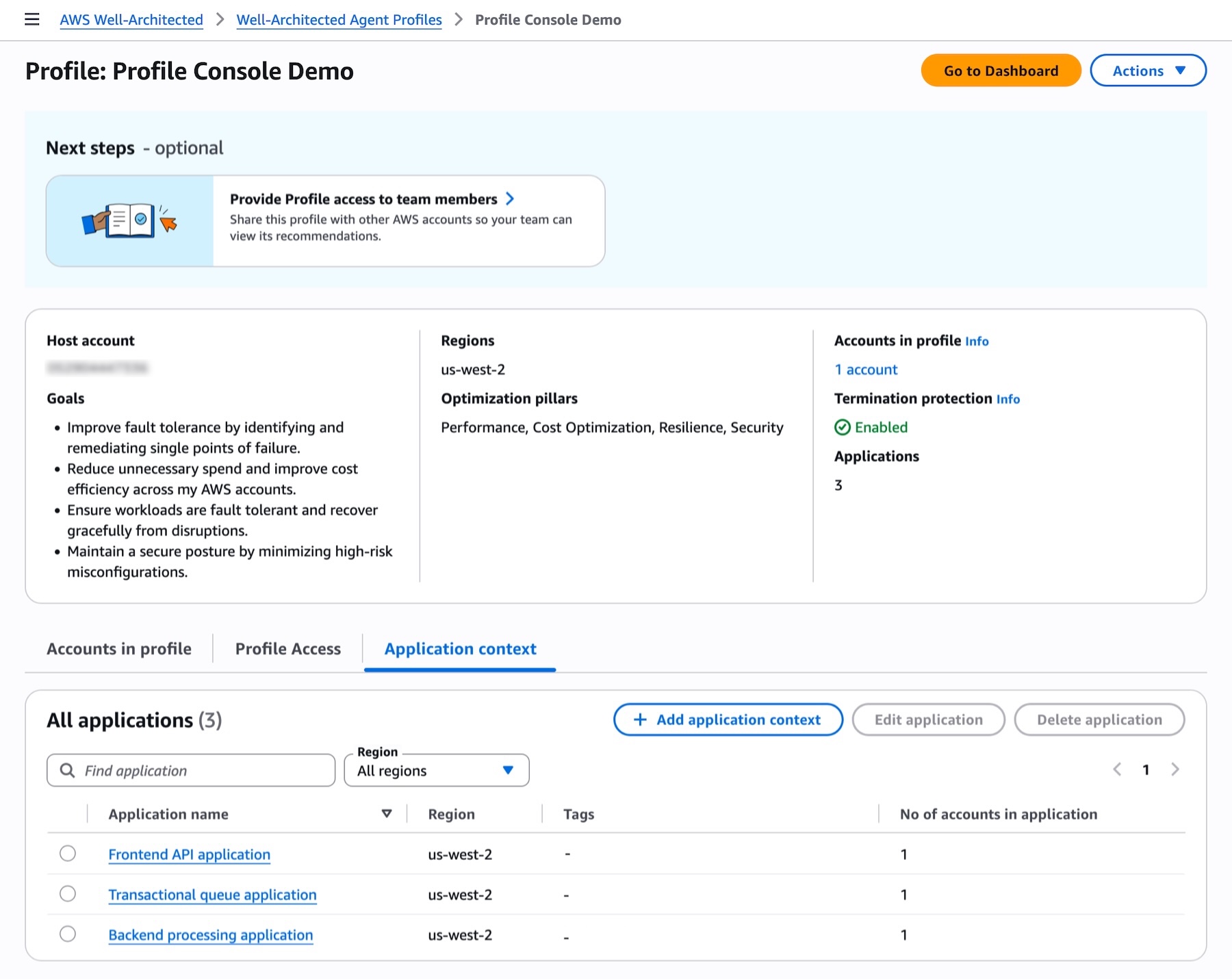
To ensure maximum relevance, users can add detailed application context through the dashboard. By associating specific AWS accounts, Regions, services, and resource tags, teams can narrow the agent’s analytical focus to critical business applications, filtering out non-production or test clutter.
4. Remediation and Developer Workflow Integration
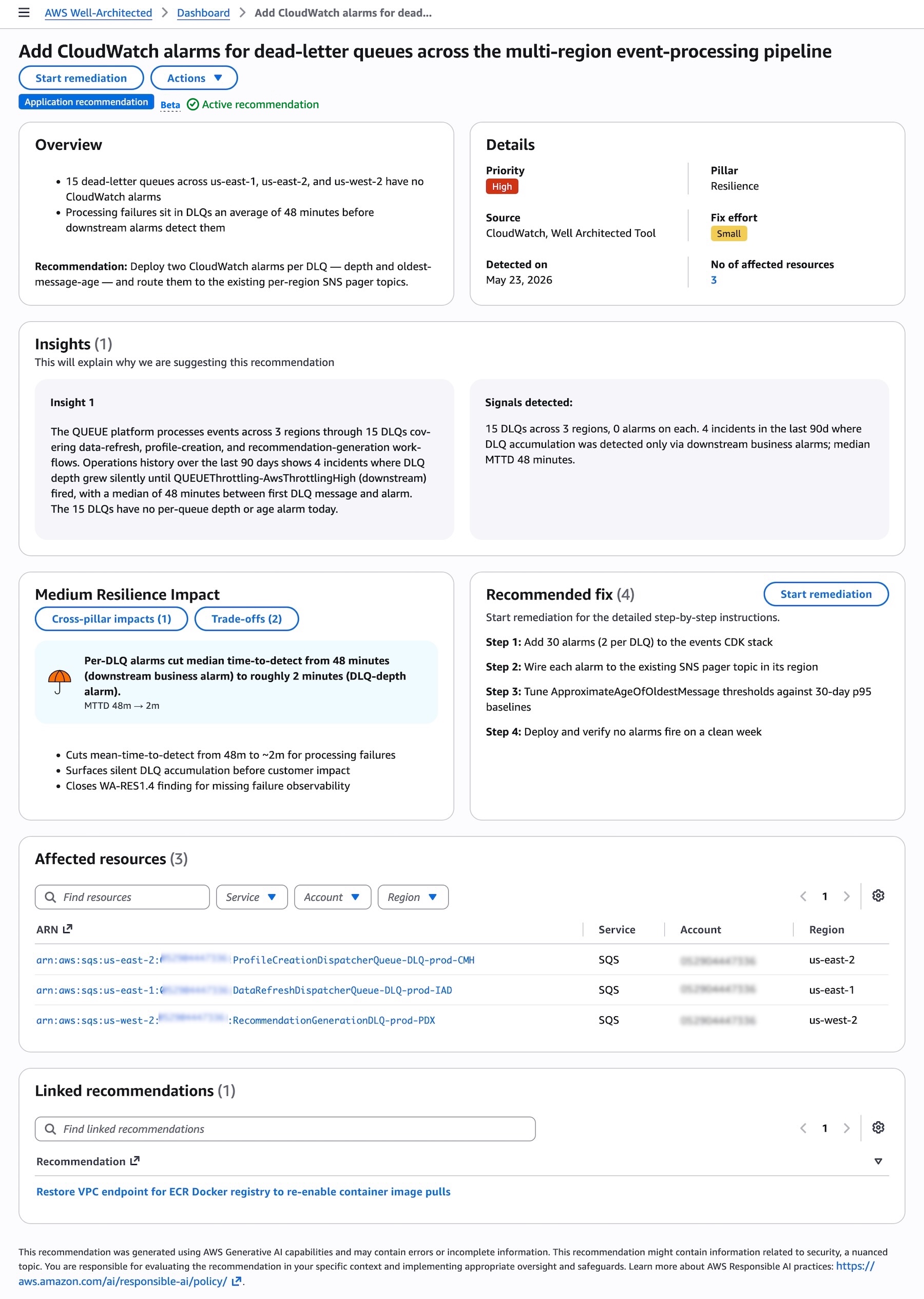
When a recommendation is selected, the agent presents a comprehensive breakdown detailing:
- The root cause of the finding.
- The rationale behind the suggestion.
- Cross-pillar trade-off analysis (e.g., how a performance boost impacts monthly expenditure).
Remediation can be executed via multiple resolution types:
- Console Guidance: Step-by-step instructions for manual updates.
- CLI Execution Scripts: Ready-to-run AWS CLI commands.
- Updated IaC Templates: Direct code changes (such as updated CDK functions or CloudFormation snippets) that developers can copy and paste straight into their source control repositories.
Furthermore, by integrating the AWS MCP Server and developer plugins, engineering teams can query the Well-Architected Agent programmatically from AI-powered coding assistants, embedding cloud governance directly into the software development lifecycle (SDLC).
Official Responses and Industry Perspectives
Speaking on the release, internal AWS engineering leads emphasized that the Well-Architected Agent is designed to empower engineers rather than replace human judgment.
"Modern cloud environments are too expansive and fast-moving for static checklists and manual reviews to suffice," noted a senior product spokesperson during the rollout. "By harnessing advanced reasoning capabilities, the Well-Architected Agent acts as a force multiplier for cloud engineering teams. It understands not just what the infrastructure looks like, but what the business is trying to achieve—delivering precision guidance that balances cost, security, and performance seamlessly."
Early adopters in the public preview have echoed these sentiments, highlighting the value of the cross-pillar trade-off analysis. In enterprise environments where cost optimization teams and security officers frequently pull in opposite directions, having an autonomous agent evaluate the holistic impact of a change has dramatically accelerated review cycles.
Implications for Cloud Engineering and Enterprise Governance
The introduction of the AWS Well-Architected Agent carries profound implications for cloud management, FinOps, SecOps, and DevOps practices across industries.
1. Shift-Left Security and Cost Optimization
By enabling pre-deployment IaC audits, the agent encourages a true "shift-left" mentality. Catching an over-provisioned database instance or an overly permissive security group in a Terraform script before terraform apply saves organizations countless hours of remediation and eliminates potential vulnerability exposure windows in production.
2. Bridging the Expertise Gap
As cloud infrastructure grows increasingly complex, finding and retaining senior cloud architects proficient across all 65+ AWS services remains a persistent challenge for growing enterprises. The Well-Architected Agent democratizes deep architectural expertise, allowing junior and mid-level engineers to design, review, and maintain enterprise-grade workloads with confidence.
3. Redefining Cloud Support and Advisory Services
Bundled as part of AWS Support, the agent signals a shift toward proactive, AI-native customer enablement. Rather than waiting for support tickets to be filed after an outage or a budget overrun, AWS is equipping its customers with continuous, automated diagnostic capabilities that prevent issues before they manifest.
How to Get Started
The public preview of the AWS Well-Architected Agent is open to all AWS customers maintaining an eligible AWS Support plan. While workloads can be onboarded from any commercial AWS Region, initial management and profile configuration are hosted in:
- US East (N. Virginia)
us-east-1 - US East (Ohio)
us-east-2 - US West (Oregon)
us-west-2
To begin exploring the service, administrators can navigate to the AWS Well-Architected console, configure their agent profile, and submit feedback through standard AWS Support channels as the service evolves toward general availability. Existing users can continue utilizing the traditional AWS Well-Architected Tool for manual evaluations and user-defined custom lenses alongside the new AI agent.