Beyond the Algorithm: Why Modern Marketing Requires a Strategic Shift Away from "Safe" Data
In the contemporary digital landscape, marketing teams have become increasingly reliant on a familiar, standardized playbook: funneling budget into Google Ads, LinkedIn Sponsored Content, and Facebook retargeting pixels. These platforms offer a seductive promise—immediate, measurable, and highly attributable return on investment (ROI). However, this obsession with "safe bets" may be blinding marketers to a more potent reality: the most valuable audience interactions often happen far outside the reach of these traditional advertising giants.
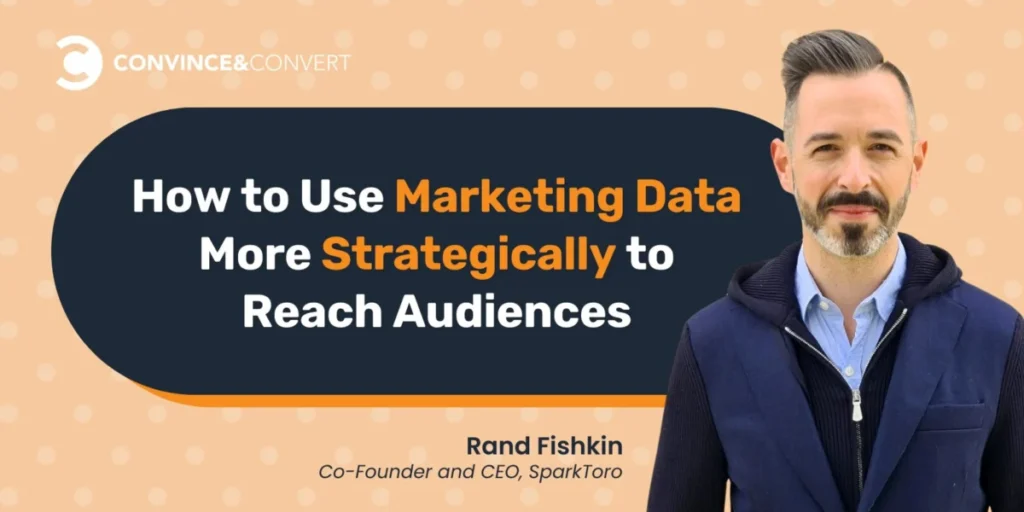
On a recent episode of the Data-Driven Decisions podcast, Rand Fishkin, co-founder of audience research tool SparkToro, argued that the marketing industry is currently suffering from a crisis of attribution, leading to an over-investment in platforms that function merely as "middlemen" rather than originators of demand.
The Myth of the "First Touch" Attribution
For years, the industry has worshipped at the altar of last-click attribution. When a prospective customer performs a Google search for a product and clicks a paid ad, the platform takes the credit. Yet, as Fishkin points out, that search query is rarely a spontaneous event.
"A ton of what happens in Google is actually a response to something else," Fishkin explains. "People who performed a search query… very rarely was that a spontaneous first-touch thing. It was, ‘Oh, I heard about this software, so I went to Google and searched for it.’ The attribution looks like Google drove all the value. No, Google was just the middleman."
This systemic bias toward easily measurable channels creates a dangerous feedback loop. Marketers optimize for what is easy to track rather than what is actually influencing the buyer’s journey. By ignoring the "dark social" spaces—the industry podcasts, niche forums, and influencer conversations where consumers first discover a brand—organizations are effectively leaving money on the table, misattributing their success, and failing to nurture leads before they reach the bottom of the funnel.
The Evolution of Audience Intelligence: Finding the "Where"
The shift in strategy that Fishkin advocates is rooted in granular audience intelligence. Instead of buying visibility on a platform based on broad demographic filters, marketers must identify the specific communities where their target audience already resides.
SparkToro, the tool developed by Fishkin’s team, serves as a mechanism to reveal these high-relevance pockets. By analyzing the online habits of specific target segments, the tool identifies the websites, podcasts, and influencers that command the audience’s attention.
Strategic Success Stories
The efficacy of this redirected approach is best illustrated through real-world applications:
- The Podcasting Pivot: A podcaster seeking to increase sponsorship revenue shifted away from broad social ad campaigns. Instead, they utilized audience data to identify influential figures with high engagement on YouTube and X (formerly Twitter). By inviting these influencers as guests, the podcaster leveraged their existing reach, which in turn attracted high-value sponsors eager to access that specific, engaged community.
- The Tech Event Organizer: By using data to find speakers who held genuine influence over the event’s target demographic, an organizer was able to curate a speaker list that acted as a magnet for sponsors. This approach focused on the context of the audience’s interests rather than the cost-per-click of a banner ad.
In both instances, the marketing effort reached the audience earlier in their decision-making process. By engaging prospects while they were still in the research or discovery phase—rather than waiting for them to enter the high-competition environment of a Google search—these organizations achieved higher conversion rates at a lower total cost.
The Rise of "Zero-Click" Marketing
Perhaps the most disruptive concept to emerge from this shift is "Zero-Click Marketing," a strategy championed by Amanda Natividad, VP of Marketing at SparkToro.
The traditional digital marketing ethos has long been: Create content to drive traffic to your website. However, modern users are increasingly wary of being funneled. Zero-click marketing flips this logic by providing value directly on the platform where the user is currently browsing.
Consider the example of Chartr, a data storytelling firm. Rather than using Reddit as a lead-generation funnel, they began contributing high-quality data visualizations directly to the "r/dataisbeautiful" subreddit. They did not include intrusive CTAs or heavy-handed branding. They simply provided value. The result was a massive increase in brand recognition and trust within a highly qualified community.
When users eventually need data-driven insights, they don’t search for a generic provider; they search for Chartr. This strategy prioritizes "top-of-mind" awareness over immediate click-through rates, a long-term play that is far more sustainable than renting attention through paid ads.
Navigating the Limitations of Data
While data is the backbone of these modern strategies, Fishkin issues a stark warning: data is not a panacea.
"I’m not saying don’t be data-informed, but I think it pays to be responsible in your recognition of what problems data can solve and what it can’t," Fishkin notes.
Marketing teams often make the mistake of using quantitative data to answer qualitative questions. For example, if a brand wants to understand the psychological motivations behind a product purchase, relying on website click-tracking is futile. Quantitative data tells you what happened; it rarely explains why.
The Hybrid Approach
To avoid "data blind spots," companies should adopt a bifurcated research strategy:
- Quantitative Behavioral Analysis: Use tools like SparkToro or site analytics to map out the channels of influence—the podcasts, forums, and influencers that matter.
- Qualitative Human Insight: Supplement this with direct customer interviews and surveys to understand the sentiment and frustration points that automated tracking cannot detect.
This hybrid approach ensures that the marketing strategy is not only data-driven but also human-centered. It acknowledges that while machines can track where a user clicks, they cannot measure the nuances of human loyalty or the emotional resonance of a brand’s message.
Implications for Future Strategy
As organizations look toward the next fiscal year, the pressure to "prove" marketing value will only intensify. However, those who continue to rely solely on the metrics provided by Meta or Google will find themselves caught in a cycle of diminishing returns. The "safe" channels are increasingly saturated and expensive, with a significant percentage of spend failing to produce incremental growth.
The path forward requires a shift in mindset:
- Redirecting Budget: Shift the "top 10% of spend" that yields no incremental customers away from broad paid search and toward creative, community-led initiatives.
- Prioritizing Trust over Clicks: Invest in platforms where your audience learns, solves problems, and engages in discourse, rather than just where they shop.
- Embracing "Invisible" ROI: Recognize that a brand’s presence in a niche newsletter or a relevant industry podcast may be the catalyst for the search query that eventually leads to a conversion.
Ultimately, effective marketing is not about mastering the algorithms of the largest platforms; it is about understanding where your audience lives, what they value, and how to meet them there with authenticity. By moving beyond the comfort of the "safe" dashboard, marketers can build more resilient, high-trust, and ultimately more profitable brands.
As the industry continues to evolve, the most successful leaders will be those who balance the precision of data with the strategic courage to venture into the communities where their customers actually spend their time. The data, if used responsibly, serves as the map—but it is the marketer’s job to choose the right path to the destination.