Beyond the Vendor: Why Global and Indian Banks Are Transforming AI Startups into Co-Owned Assets
By Financial Tech Desk
Published: October 2026
Main Facts
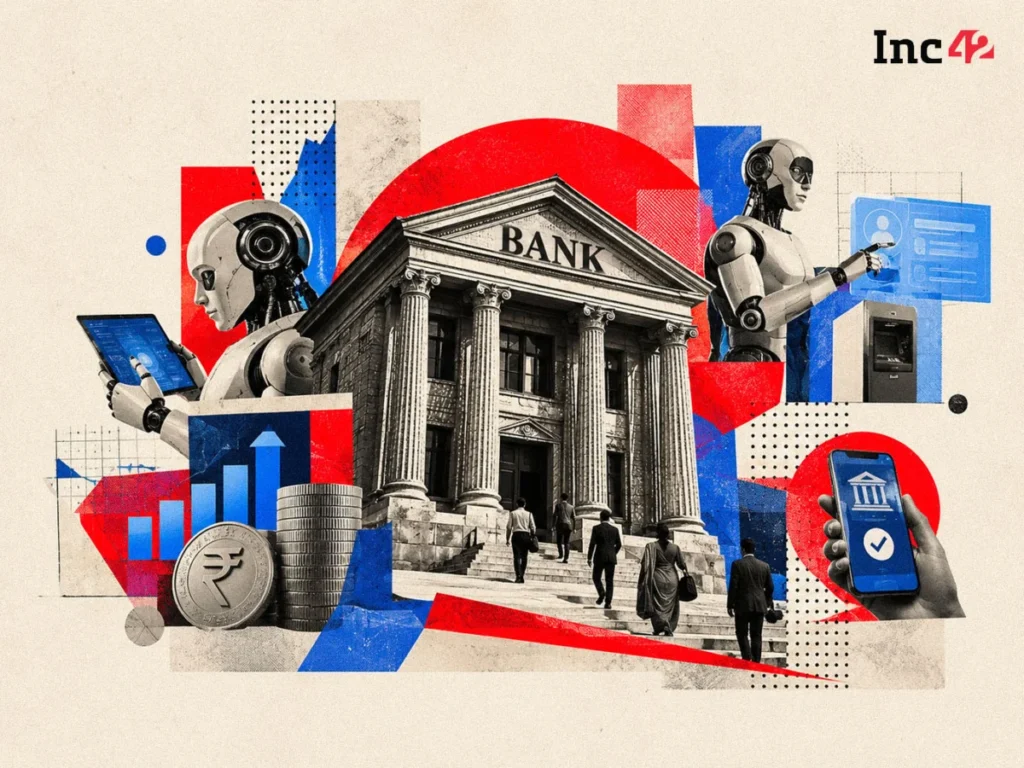
The intersection of artificial intelligence and the Banking, Financial Services, and Insurance (BFSI) sector has crossed a critical threshold. Financial institutions are no longer content with acting as passive, arm’s-length customers purchasing standard enterprise software licenses. Instead, the world’s leading banks—spanning Wall Street, Europe, and India—are aggressively buying equity stakes, co-building research and development laboratories, and positioning themselves as foundational stakeholders in the very AI startups powering their future operations.
This paradigm shift was underscored this month when U.S.-based financial-services AI startup Rogo secured a $30 million funding round. What set Rogo apart was not merely its venture capital backing, but the roster of participating strategic investors: a coalition of the world’s largest banks, including Barclays, BNP Paribas, Citi, MUFG, and Société Générale. Today, nine global financial institutions—representing a staggering combined asset pool of nearly $20 trillion—sit on Rogo’s cap table.
This trend is mirrored in emerging markets like India. Major lenders such as HDFC Bank, Axis Bank, IDFC FIRST Bank, and NBFC giants like Bajaj Finance are systematically breaking down the traditional barrier between vendor and client. By taking direct equity stakes in model-makers and conversational AI pioneers like CoRover and Sarvam, these institutions are moving from traditional procurement to deep cocreation, fundamentally altering how financial technology is architected, tested, and deployed.
Chronology and Market Evolution
To understand how traditional banking evolved into an aggressive venture capital engine for frontier AI, it is necessary to examine the trajectory of tech adoption within the industry over the past several years:
- Pre-2023: Banks relied primarily on off-the-shelf software solutions or outsourced tech contracts. AI was utilized in siloes—predominantly for basic rule-based fraud detection or isolated back-office automation—with little input from banks into foundational model architectures.
- 2023–2024 (The Acceleration): According to data from an Evident AI analysis of the world’s 50 biggest global banks, investments by banks and their corporate venture capital (CVC) arms into AI startups began growing at a compounded annual rate of 21%. Institutions like Wells Fargo, Citi, and Goldman Sachs emerged as the most active U.S. bank investors.
- Late 2024–2025 (Cross-Border Investments): The playbook expanded globally. Citigroup and Spain’s Santander took strategic stakes in Tokyo-based Sakana AI, a pioneer building foundational models tailored specifically for financial workflows. Meanwhile, Indian financial institutions began formalizing direct investments in homegrown AI infrastructure.
- 2026 (The Co-Development Era): The relationship reached a mature state. Deals like HDFC Bank’s investment in CoRover (the firm behind BharatGPT) and IDFC FIRST Bank’s joint R&D lab partnership with Sarvam redefined banks as active co-creators of foundational models. Concurrently, efficiency pressures led to measurable workforce shifts across major Indian banks, marking the dawn of the "self-improving bank."
Supporting Data and Quantitative Metrics
The scale of capital deployment into artificial intelligence by financial institutions reflects an industry undergoing structural transformation:
- Combined Assets on Cap Tables: The nine global banks invested in Rogo alone command nearly $20 trillion in combined assets.
- Market Growth Rate: Bank-led investments in AI startups have maintained a 21% compound annual growth rate (CAGR) since 2023, according to Evident AI.
- India’s BFSI AI Market: The Indian BFSI sector commands the largest share of the country’s AI market. Having surpassed $1 billion in market size in 2025, research firm IMARC Group projects the market will skyrocket to $9.4 billion by 2034, expanding at a robust CAGR of 26.5%.
- Venture Programs: Bajaj Finance initiated its Finserv Intelligence programme, allocating between INR 1,500 Cr and INR 2,000 Cr (~$180M–$240M USD) to early-stage investments in AI, cybersecurity, and fintech startups—highlighted by its recent 5% equity acquisition in generative-video startup TrueFan AI.
- Headcount Realignments: Axis Bank reported a reduction of over 3,100 employees in FY26, attributing the contraction directly to technological investments and productivity enhancements driven by automation.
Official Responses and Industry Perspectives
Industry leaders and startup founders are increasingly vocal about the necessity of moving past standard vendor agreements to forge tighter, equity-backed alignments.
Mukesh Pandey, Founder of Rupyaa Paisa:

"A license provides a means to access technology, while investment or co-development may result in a more profound collaboration between a bank and a startup. Cocreation gives the bank an ability to affect product architecture and workflows instead of simply fitting the bank’s processes into a ready-made solution."
Ankush Sabhrawal, Founder and CEO of CoRover:
Speaking on the evolution of CoRover’s relationship with the banking sector—which includes investments from HDFC Bank and Canara Bank’s venture arm—Sabhrawal noted that the association has transcended a typical startup-investor dynamic:
"The feedback provided by banks becomes useful for determining specific areas where AI needs more accuracy, context, security, and compliance. It is crucial for BharatGPT, as the majority of banking transactions involve multilingual clients and difficult financial terms. The company views the controlled customization as a use of the client’s approved knowledge reference points, algorithms, and mechanisms instead of utilizing proprietary information in a standard solution."
Prasad Lad, Head of Business Intelligence Unit, Axis Bank:
Outlining the bank’s strategy regarding external tech partnerships, Lad emphasized that financial institutions cannot build every frontier capability internally:
"Startups such as Sarvam bring capabilities, particularly across Indian languages, that would be difficult for a bank to develop internally."
Vijay Narayanan, Head of Innovation and AI, Kotak Mahindra Bank:
Highlighting a hybrid execution model, Narayanan explained that while core internal teams build much of the bank’s proprietary AI architecture, Kotak deliberately leans on agile startup partners to solve specialized enterprise requirements.
Salee S. Nair, MD and CEO, Tamil Nadu Small Mercantile Bank:

Addressing workforce evolution amid technological automation, Nair stated:
"We expect 50% to 60% of our employees to be repurposed into sales and relationship roles over the next two years, with no layoffs as part of this transition, but we continue to hire, especially for specialised technology talent."
Implications and Strategic Analysis
1. The Death of the Standard Vendor Relationship
For highly regulated industries like BFSI, generic off-the-shelf AI models present severe compliance, data privacy, and security risks. Deep integration into core workflows requires absolute trust. By acquiring equity stakes or co-founding R&D labs, banks secure direct influence over product roadmaps. They are no longer adapting their legacy systems to fit software; they are engineering the software to fit their exact operational parameters.
2. The Rise of the "Self-Improving Bank"
Partnerships such as the one between IDFC FIRST Bank and Sarvam—aimed at building the world’s first self-improving bank—signal a radical shift. By establishing collaborative R&D environments focused on post-training, frontier research, and AI safety, these systems are designed to learn directly from customer interactions, operational exceptions, and human corrections in real time. Proprietary data and distribution muscle give banks unparalleled leverage in training these systems.
3. The Dilemma for Standalone Startups
While co-investments are a boon for funded startups, they present a complex competitive landscape. Smaller AI startups that lack bank partnerships or strategic CVC backing may find themselves systematically locked out. If banks preferentially channel their proprietary data, distribution channels, and validation trust toward startups on their own cap tables, unbacked competitors may struggle to survive.
4. Headcounts, Productivity, and the Human Element
Perhaps the most immediate socioeconomic implication of the bank-AI convergence is its impact on human capital. Sustained technology investments are already yielding measurable headcount declines across major Indian lenders like Axis Bank, HDFC Bank, ICICI Bank, and Kotak Mahindra Bank.
While executives emphasize that automation is driving efficiency rather than mass terminations—with many institutions retraining staff for high-value sales and relationship-management roles—the reality remains stark: fewer humans are required to run the foundational machinery of banking.
As bank operations scale exponentially while hiring slows, the ultimate responsibility shifts back to leadership. With fewer humans in the operational loop, governance, accountability, and ethical oversight must mature at the same rapid clip as the algorithms driving tomorrow’s financial ecosystem.