The Architecture of Resilience: Building Portable AI Workflows in an Era of Platform Volatility
In the rapidly evolving landscape of generative artificial intelligence, a silent but significant risk is emerging for the modern enterprise: platform dependency. As businesses integrate tools like OpenAI’s ChatGPT, Anthropic’s Claude, and Google’s Gemini into their core operations, they often inadvertently build "walled gardens" of proprietary prompts and localized data.
In a recent deep-dive exploration, AI experts Nicole Leffer and Michael Stelzner argued that the next phase of professional AI maturity is not about mastering a single tool, but about building "portable" workflows. By decoupling instructions and data from specific platforms, organizations can protect themselves against service outages, sudden pricing shifts, and the inevitable fluctuations in model performance.
Main Facts: The Case for Platform Agnosticism
The current AI market is characterized by intense competition and rapid iteration. However, for the end-user—particularly marketers and business owners—this volatility presents three primary risks:
- Operational Stability: If a business’s entire content supply chain is built inside Claude’s "Projects" or ChatGPT’s "GPTs," a single platform outage becomes a total operational shutdown.
- Model Performance "Drift": AI models are not static. Updates can lead to "model drift," where a previously high-performing prompt suddenly produces subpar results. Portability allows a user to switch to a competitor’s model the moment quality drops.
- Financial Leverage: While current pricing is competitive, the "subsidized" era of AI may eventually give way to higher enterprise costs. Companies locked into one ecosystem lose their ability to negotiate or migrate to more cost-effective alternatives.
To combat these risks, Leffer proposes a transition from platform-specific building to the creation of an independent "AI infrastructure." This infrastructure consists of three pillars: externalized context storage, standardized instruction files (Markdown), and self-briefing agents.
Chronology: The Evolution of a Portable Workflow
The journey from platform lock-in to total portability follows a specific developmental path.
Phase 1: Decoupling Storage
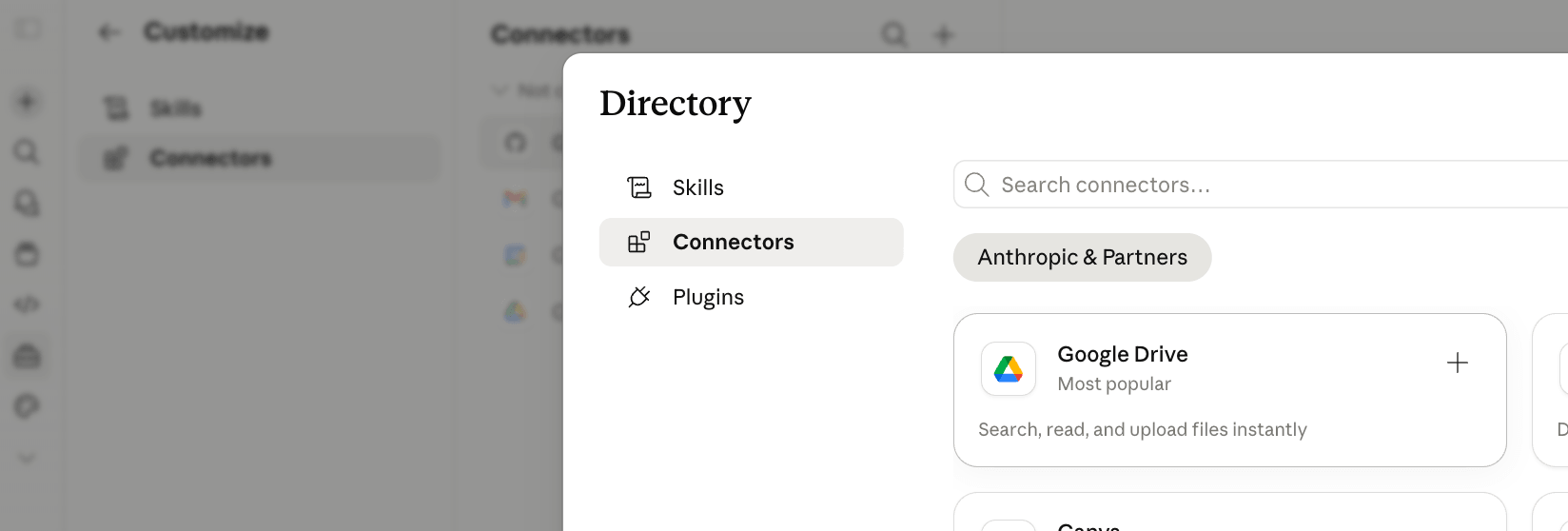
The first step in the chronology of portability is moving "knowledge" out of the AI’s internal memory. Historically, users uploaded PDFs directly into a chat window. In the new portable paradigm, these documents live in a centralized, external repository—such as Google Drive, Dropbox, or a secure SharePoint server. By using Model Context Protocol (MCP) connectors, different AI models can "reach out" to the same data source, ensuring that when the data is updated once, every model sees the change simultaneously.
Phase 2: Standardizing Instructions
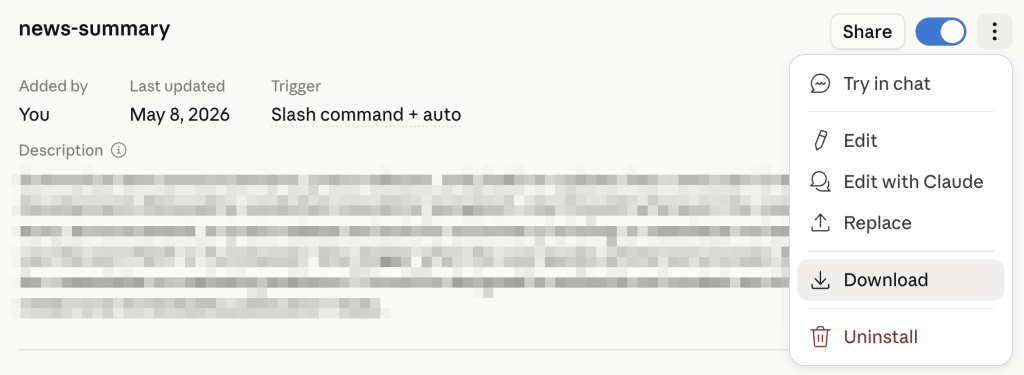
The second phase involves translating "prompts" into "skills." Rather than keeping instructions in the chat history, users convert them into .md (Markdown) files. This format is universally readable by virtually all large language models (LLMs). This transition allows a user to "hand" a skill to an AI—much like a software program—rather than re-explaining a task through trial and error.
Phase 3: The Deployment of Portable Agents
The final stage of the chronology is the creation of "self-briefing" environments. As demonstrated in Leffer’s Excel workflow, this involves building a workspace where the instructions are embedded within the project file itself. This ensures that any AI agent entering the file—regardless of its brand—is immediately "onboarded" by reading the internal instruction tabs.
Supporting Data and Techniques: The Mechanics of Portability
To achieve true portability, several technical components must work in tandem.
The Power of Markdown (.md)
At the heart of a portable workflow is the Markdown file, specifically a SKILL.md document. Markdown is a lightweight markup language with plain-text formatting syntax. It is the preferred "language" for instructing AI because it provides structure (headings, lists, code blocks) that LLMs can parse more efficiently than raw prose. A portable skill is essentially a "container" for:
- Core Instructions: The step-by-step logic of the task.
- Templates: Structured formats for the output.
- Brand Assets: Tone of voice guidelines and logos.
- Logic Scripts: Simple code or calculators the AI should use.
The Model Context Protocol (MCP)
MCP represents a significant shift in how AI interacts with data. Acting as an API (Application Programming Interface), MCP allows models to connect to external databases or file systems. Instead of a "walled garden" where the AI only knows what you’ve uploaded to its specific cloud, MCP creates a bridge to your own infrastructure. This ensures that your data remains yours, and the AI is merely a "visitor" processing it.
Curated vs. Massive Context
A common technical misconception is that AI performs better with more data. However, data indicates that "needle-in-a-haystack" problems persist; when an AI is given an entire document library, its accuracy can diminish. The technique for portability involves curated context. Instead of pointing an AI to a general Google Drive, portable workflows point it to a specific, task-targeted folder. This "narrow-casting" of data significantly improves output quality across all platforms.
Official Responses and Expert Insights: Security and Standardization
As the trend toward portability grows, industry experts are sounding the alarm on the security implications of third-party "skills."
The Security Gap
Nicole Leffer warns that while the portability of .md files and zipped "skills" is a productivity boon, it introduces new vectors for cyberattacks. Unlike a simple text prompt, a complex "skill" can contain scripts or hidden instructions.
"A skill can contain a virus or code that instructs the AI to connect to your CRM, extract customer data, and send it to an external destination," Leffer notes.
The expert consensus is to maintain a high "trust threshold." Currently, only skills generated internally or sourced from primary providers like Anthropic, OpenAI, or Google are considered safe for enterprise use. Downloading "prompt packs" or "skills" from unverified GitHub repositories or public marketplaces is increasingly viewed as a major security risk.
The "Matrix" Analogy
Michael Stelzner likens the installation of a portable skill to the character Neo in The Matrix downloading martial arts directly into his brain. In this analogy, the AI is the hardware, and the SKILL.md file is the software. This mental model shifts the user’s role from "chatter" to "systems architect," where the goal is to build a library of "knowledge modules" that can be plugged into any sufficiently powerful LLM.

Implications: The Future of the "AI-Native" Enterprise
The shift toward portable AI workflows has profound implications for the future of work and organizational structure.
1. The End of Platform Loyalty
As workflows become portable, the "stickiness" of AI platforms will decrease. Users will choose models based on daily performance or specific task strengths (e.g., using Claude for creative nuance and GPT-4o for logic-heavy data processing) rather than being forced to stay due to the "sunk cost" of their setup.
2. Standardized AI Onboarding
For teams, portability means that "institutional knowledge" is no longer trapped in the accounts of individual employees. If a marketing director builds a highly effective copywriting skill, they can zip that file and hand it to a new hire. The new hire can "install" that skill in their own AI environment and produce work at the director’s level of quality on day one.
3. The Rise of the "Self-Briefing" Document
The most advanced implication is the transition from static files to "active" files. As seen in the Excel workbook example, files will increasingly contain their own "operating manuals" for AI. A spreadsheet will no longer just be a collection of rows and columns; it will be a living environment that tells any AI plugin exactly how to manage it, how to log its history, and how to report its progress.
4. Resilience as a Competitive Advantage
In an era where AI-driven efficiency is the baseline, resilience becomes the differentiator. Companies that can pivot their entire AI operations from one provider to another in fifteen minutes will survive platform outages and market shifts that could paralyze their less-prepared competitors.
Conclusion
Building portable AI workflows is a move from a "renter" mindset to an "owner" mindset. By externalizing data, standardizing instructions via Markdown, and embedding logic within project files, businesses can ensure their AI infrastructure is as mobile and resilient as the people who run it. As Nicole Leffer and Michael Stelzner suggest, the goal is simple: to ensure that no single AI provider ever holds your business’s infrastructure hostage. The future of AI work isn’t just about what the models can do; it’s about where you can take them.