From Silos to Insights: The Strategic Guide to Integrating Facebook Ads with BigQuery
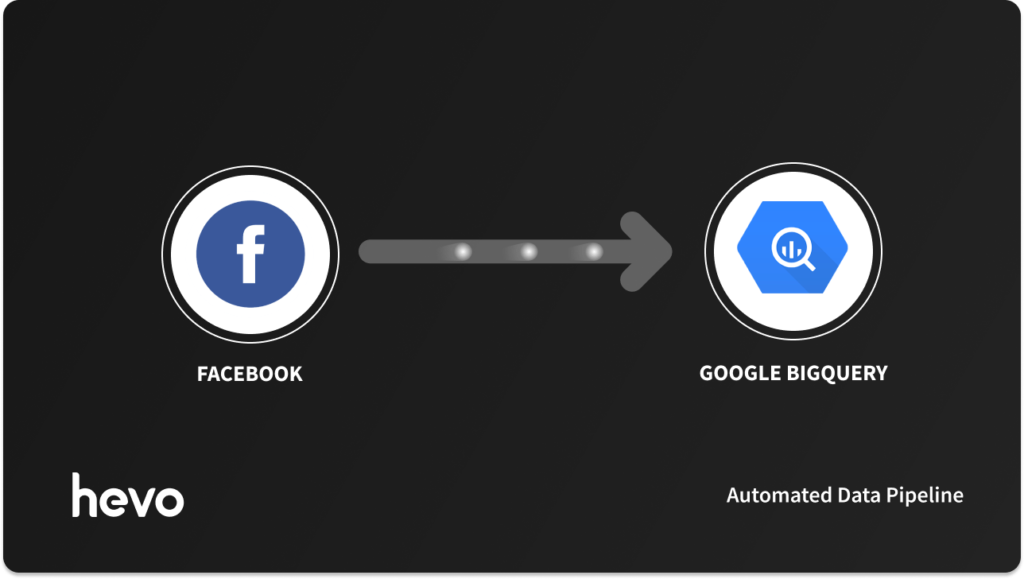
In the modern digital economy, data is the lifeblood of marketing strategy. However, for many growth-focused organizations, this lifeblood is trapped in "walled gardens." Facebook Ads Manager, while powerful for granular campaign execution, serves as a siloed environment. It restricts your ability to correlate advertising spend with long-term customer lifetime value (LTV), backend revenue streams, or multi-platform attribution.
To overcome these limitations, data-driven teams are increasingly migrating their advertising performance metrics into Google BigQuery. By centralizing Facebook Ads data within a robust cloud data warehouse, organizations can break free from the constraints of platform-native reporting, enabling sophisticated, cross-channel analytics at scale.
The Case for Data Centralization: Why Move to BigQuery?
The primary challenge for marketers is the fragmentation of the customer journey. When your Facebook ad data lives in isolation, you can see clicks and impressions, but you cannot easily map those interactions to the nuanced product usage or CRM data that defines true business success.
Moving data into BigQuery solves this fundamental problem. It allows for:
- Unified Source of Truth: By housing Facebook data alongside CRM, ERP, and product analytics, you create a cohesive view of the customer lifecycle.
- Cost-Efficient Scalability: BigQuery’s serverless architecture allows you to run complex queries on massive datasets without the need to manage infrastructure.
- Advanced Analytics Readiness: Once your data is in a warehouse, it becomes accessible to BI tools like Looker, Tableau, or Power BI, and ready for machine learning models to forecast ROI.
The Three Pillars of Data Integration
While the objective is clear, the path to implementation varies based on technical resources, budget, and the need for data freshness. Generally, organizations choose between three distinct methods:
1. Automated ETL Platforms (The "Hevo" Approach)
For teams that prioritize speed-to-insight and reliability, automated ETL (Extract, Transform, Load) platforms like Hevo represent the gold standard. These tools act as a managed pipeline, handling the technical heavy lifting—API authentication, schema mapping, and handling the inevitable changes to the Facebook Marketing API.
2. Custom-Coded Pipelines
Engineering-reliant teams may opt to build their own pipelines using Python, Node.js, or cloud functions. This provides total control over transformations but introduces significant technical debt. As Meta continues to deprecate legacy API versions, custom scripts require constant vigilance and maintenance.
3. Manual Extraction
The manual method—downloading CSV reports from Ads Manager and uploading them to BigQuery—is suitable only for ad-hoc analysis. It is inherently unscalable, prone to human error, and creates significant latency between the ad spend and the reporting update.
Technical Deep-Dive: Executing the Integration
Prerequisites for Success
Before initiating a transfer, you must ensure both environments are prepared. For Facebook Ads, you need an active Ad Account, a developer app with appropriate permissions (ads_read, ads_management), and a valid access token. For BigQuery, you require a project with the BigQuery API enabled, a dedicated dataset, and a service account with the necessary IAM roles (BigQuery Data Editor and BigQuery Job User).
Method #1: Automation with Hevo
Using a platform like Hevo streamlines the process into three logical steps:
- Source Configuration: Authenticate your Facebook Ad account within the Hevo interface. Select the specific Ad Accounts, report types (e.g., Campaign, AdSet, or Ad level), and the lookback window for historical data.
- Destination Setup: Connect your BigQuery project. Hevo automatically handles the creation of tables and the mapping of data types, ensuring the structure is optimized for analytical queries.
- Pipeline Activation: Once active, the platform manages incremental syncs. This ensures your BigQuery warehouse remains a "living" repository of your latest ad performance without requiring manual intervention.
Method #2: The Engineering Path (Custom Code)
For those building in-house, the process involves leveraging the Facebook Graph API.
- The Request: You can use a
curlrequest or an SDK to fetchinsights. The key is to structure your API calls to pull granular metrics likespend,impressions,clicks, andconversions. - Handling Webhooks: For near-real-time data, you can configure Webhooks. By setting up an HTTPS endpoint, your server can receive "pushes" from Meta whenever an ad metric changes, allowing for immediate ingestion into BigQuery via the
tabledata.insertAllAPI.
The Strategic Implications: From Data to Action
Integrating your data is only the first step. The true value lies in what you do once the data is accessible in BigQuery.
1. Multi-Channel Attribution
With all data in one place, you can finally move beyond the "last-click" bias inherent in social platforms. You can build attribution models that weight Facebook’s influence alongside organic search, email marketing, and direct traffic, providing a clearer picture of your ROAS (Return on Ad Spend).
2. Predictive Analytics and ML
BigQuery ML enables you to build machine learning models directly inside the warehouse. You can train models to predict which audience segments are most likely to convert, or identify the point at which ad spend hits a state of diminishing returns.
3. Competitive Intelligence
By enriching your internal data with publicly available industry benchmarks or competitor performance metrics, you can use SQL queries to identify gaps in your market presence. This turns your warehouse into a strategic war room rather than just a storage facility.
Addressing the Challenges of API Maintenance
One of the most overlooked aspects of this integration is API volatility. Meta frequently updates its Marketing API to improve privacy and security. These changes often result in breaking schema changes for custom-coded pipelines.
When a field is renamed or a metric is deprecated, custom scripts often fail silently, leading to gaps in your data. This is why many organizations that start with custom scripts eventually transition to managed platforms. An automated tool like Hevo essentially "buffers" your team against these changes. When Meta updates its API, the platform provider updates the connector, meaning your pipeline continues to function without your engineers needing to rewrite the underlying logic.
Frequently Asked Questions (FAQ)
Q: Can I achieve true real-time data?
A: While "real-time" in advertising usually means "near-real-time," using Webhooks is the closest method. However, keep in mind that Facebook’s own reporting latency—the time it takes for a click to be attributed—usually dictates the freshness of your data regardless of your pipeline speed.
Q: Is it better to use Google Cloud Data Transfer Service?
A: Google provides some native connectors, but they are often limited in scope. For comprehensive, high-frequency, and customizable Facebook Ads integration, third-party ETL tools offer more flexibility and deeper support for complex marketing schemas.
Q: How do I handle data formatting?
A: BigQuery requires specific data types (STRING, INTEGER, FLOAT, TIMESTAMP). Ensure that your extraction layer converts currency and date formats correctly. If using an automated tool, this mapping is usually handled automatically.
Conclusion
The transition from managing ads in a silo to analyzing them in a robust warehouse like BigQuery is a milestone in a company’s data maturity. It shifts the focus from simple tracking to deep, predictive intelligence.
While manual methods and custom code have their place, they often become bottlenecks as your organization scales. For teams aiming to maintain a competitive edge, automating the flow of Facebook Ads data into BigQuery is not just an operational convenience—it is a strategic necessity. By offloading the maintenance of these data pipelines to specialized tools, you empower your analysts to do what they do best: turn raw numbers into the insights that drive growth.
Disclaimer: This article provides general guidance on data integration. When implementing these solutions, ensure you are in compliance with Facebook’s Data Use Policy and all relevant privacy regulations such as GDPR and CCPA.