Honor Redefines Flagship Standards: The Magic9 and Magic9 Super Edition Unveiled

In a bold move that signals a paradigm shift in the smartphone industry, Honor has officially unveiled its latest flagship lineup. While the tech community has already turned its gaze toward the top-tier Pro Max model, the spotlight today firmly rests on two devices that challenge the conventional boundaries of battery capacity, thermal management, and mobile imaging: the Honor Magic9 and the Honor Magic9 Super Edition.

These devices represent a dual-pronged approach to the premium market. The Magic9 targets the user who demands a compact, "camera-first" powerhouse, while the Super Edition addresses the niche yet growing demand for sustained performance and endurance, featuring an industry-leading battery capacity and active cooling technology.

Main Facts: A Study in Contrasts
The Honor Magic9 and Magic9 Super Edition represent two distinct design philosophies, yet both are underpinned by Honor’s commitment to high-end hardware integration.

The Compact Powerhouse: Honor Magic9
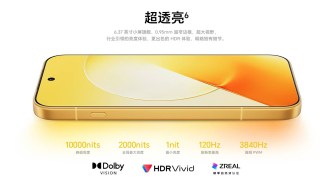
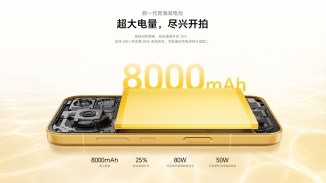
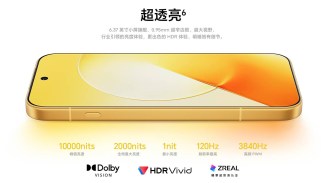
The standard Magic9 is designed for those who find modern smartphones unwieldy. Featuring a 6.37-inch OLED panel, it is a refined, palm-friendly device. Despite its smaller footprint, it houses a staggering 8,000mAh battery—a significant 1,000mAh leap over its predecessor, the Magic8. The device prioritizes display fidelity with 10-bit color depth, HDR, and Dolby Vision support, all while maintaining a peak brightness of 2,000 nits. Its camera array is nothing short of professional-grade, headlined by a 200MP main sensor and a 200MP periscope lens, both enhanced by Arri-certified cinema tuning.

The Endurance Titan: Honor Magic9 Super Edition
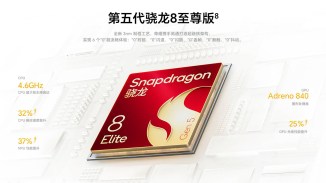
The "Super" in the Super Edition is not mere marketing hyperbole. The device scales up to a 6.81-inch display and features an unprecedented 11,000mAh battery—a figure that comfortably eclipses the competition. To manage the thermal output of the Snapdragon 8 Elite Gen 5 chipset during high-intensity tasks, Honor has integrated a proprietary active cooling fan system capable of 30,000 RPM, ensuring that the device maintains peak performance without thermal throttling.

Chronology of Development: From Concept to Launch
The development cycle of the Magic9 series has been characterized by an aggressive pursuit of hardware efficiency. Following the success of the Magic8, Honor’s engineering teams focused on two primary bottlenecks: battery density and image processing overhead.

- Phase I (Q1 2026): Honor solidified the partnership with German cinema giant Arri. The goal was to bridge the gap between computational photography and cinematic color science.
- Phase II (Q2 2026): The design phase for the proprietary H1 imaging chip reached maturity. This chip, delivering 18.8 TOPS per watt of AI performance, was specifically engineered to handle the massive data throughput required by the new 200MP sensor array.
- Phase III (Q3 2026): Field testing of the 11,000mAh battery and the active cooling module for the Super Edition. Engineers had to overcome significant integration challenges to keep the device thickness at a manageable 8.1mm.
- Phase IV (Launch Day, September 2026): Official unveiling in China, marking the commencement of global pre-order windows and the announcement of the ecosystem-interoperability features.
Supporting Data: Technical Specifications
To understand the positioning of these devices, one must look at the granular technical details that differentiate them from the broader market.
Display and Visuals
| Feature | Magic9 | Magic9 Super Edition |
|---|---|---|
| Display Size | 6.37" OLED | 6.81" LTPS |
| Resolution | 1,236 x 2,664px | 1,280 x 2,788px |
| Refresh Rate | 120Hz | 120Hz |
| Brightness | 2,000 nits (Global) | 2,000 nits (Global) |
| HDR/Vision | HDR + Dolby Vision | HDR |
Power and Thermals
The battery management in both devices is noteworthy. The Magic9 supports 80W wired charging and 50W wireless, while the Super Edition matches this, despite the significantly higher capacity. The Super Edition’s active cooling, utilizing a vapor chamber and a 30,000 RPM fan, is designed to dissipate 12W of heat, a critical addition for mobile gaming and sustained 4K 120fps video recording.
Imaging Capabilities
The Magic9’s camera system is the highlight of the series. The 200MP main sensor (1/1.4") and 200MP periscope (1/1.56") feature CIPA 7.5 stabilization, setting a new bar for handheld photography. In contrast, the Super Edition optimizes for versatility with a 200MP main, a 50MP 3x telephoto, and a 12MP ultra-wide lens. Both devices benefit from the Honor H1 imaging processor, which handles noise reduction and AI-driven image synthesis.

Official Responses and Strategic Vision
During the launch event, Honor’s leadership emphasized the "co-creation" aspect of the Magic9 series. "Our partnership with Arri is not just a branding exercise," stated a company spokesperson. "It is a fundamental rethinking of how light and color are processed at the hardware level."

Regarding the decision to include an 11,000mAh battery in the Super Edition, the engineering team noted that user feedback consistently highlighted "battery anxiety" as the primary pain point in modern flagships. By integrating active cooling, Honor believes they have solved the "performance-endurance" paradox, allowing users to leverage the power of the Snapdragon 8 Elite chipset for extended periods without compromising device longevity.
Furthermore, Honor has made a strategic pivot toward ecosystem inclusivity. The announcement that the Magic9 is fully integrated with the Apple ecosystem—allowing for cross-platform notification syncing and seamless file transfers—suggests that Honor is positioning itself as a platform-agnostic premium choice.

Implications: The Future of the Flagship Market
The launch of the Magic9 series carries profound implications for the industry.

1. The Battery Density War
With the Magic9 Super Edition reaching 11,000mAh, the industry is entering an era where "multi-day battery life" is no longer a marketing promise but a technical reality. Competitors will likely be forced to pivot their R&D toward higher-density battery chemistry or risk obsolescence in the face of Honor’s hardware advantage.

2. The Rise of Active Cooling
For years, passive cooling was considered sufficient for mobile devices. Honor’s inclusion of a 30,000 RPM fan in a sleek, 8.1mm chassis challenges the notion that active cooling requires bulky "gaming phone" aesthetics. This could lead to a wave of "pro-sumer" devices that prioritize sustained peak performance for video editors and mobile creators.
3. Ecosystem Openness
Honor’s decision to build in compatibility with Apple devices—including Apple Watch integration—is a significant departure from the "walled garden" approach. This signals a move toward a more interoperable future, where the quality of the hardware, rather than the exclusivity of the software ecosystem, dictates consumer choice.

4. Pricing and Accessibility
With a starting price of CNY 5,000 (~$745) for the base Magic9 and CNY 4,500 (~$670) for the Super Edition, Honor is aggressively undercutting competitors. By offering such high-spec hardware at a sub-flagship price point, Honor is effectively democratizing extreme performance, putting immense pressure on traditional premium players like Samsung and Apple.

Conclusion
The Honor Magic9 and Magic9 Super Edition are more than just incremental updates. They represent a deliberate attempt to break the status quo. Whether through the uncompromising imaging capabilities of the base Magic9 or the sheer, brute-force endurance of the Super Edition, Honor has provided a compelling vision of what the next generation of mobile technology looks like. As these devices begin to ship, the industry will undoubtedly watch to see if consumers prioritize these technical innovations as much as the market analysts expect. For now, Honor has secured its position as a disruptor, proving that in the world of high-end mobile tech, innovation is still very much alive.