Huawei’s Foldable Future: Mate XT2 and Mate X9 Set to Redefine the Market in H2 2024
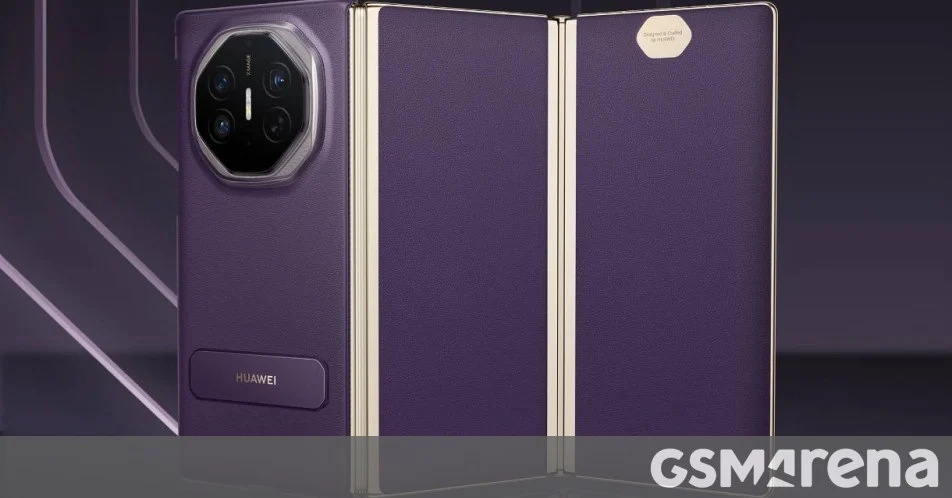
The landscape of mobile innovation is currently being reshaped by a single manufacturer: Huawei. Following the industry-shaking success of its inaugural tri-fold device, the company is preparing to solidify its dominance in the foldable segment. According to reports from the highly credible industry insider Digital Chat Station, Huawei is poised to launch two major foldable devices in the second half of this year. These releases—the successor to the tri-fold Mate XT and the introduction of the book-style Mate X9—represent a significant leap in both hardware capability and performance architecture.
Main Facts: A Dual-Front Assault on the Foldable Market
The core revelation from recent industry leaks confirms that Huawei will not be relying on a single form factor to carry its high-end portfolio through the end of the year. Instead, the company is pursuing a two-pronged strategy:
- The Huawei Mate XT2: Serving as the second iteration of the world’s first commercially available tri-fold smartphone, the XT2 is designed to refine the structural integrity and hinge mechanics of its predecessor. While the original XT captured the world’s attention with its unique folding capabilities, the XT2 is expected to focus on internal optimization and durability.
- The Huawei Mate X9: Positioned as the company’s flagship book-style foldable, the X9 is poised to replace the existing Mate X7. With a larger display footprint and a significant battery upgrade, it aims to challenge the traditional "power-user" foldable market dominated by competitors like Samsung and Honor.
Both devices are slated to integrate the cutting-edge Kirin 9050 Pro chipset. This processor is highly anticipated as it represents the latest evolution in Huawei’s silicon independence, promising performance levels that rival modern 3nm architectures, despite being produced via domestic advanced nodes.
Chronology: From Rumors to Reality
The journey toward these devices has been tracked closely by industry analysts.
- Early Q2 2024: Initial whispers on the Chinese social media platform Weibo suggested that Huawei was fast-tracking a successor to the Mate XT, with a tentative launch window set for October.
- Mid-2024: Digital Chat Station corroborated these reports, expanding the scope of the leaks to include the Mate X9. This shift in the narrative indicated that Huawei’s supply chain was preparing for a simultaneous development cycle for both a tri-fold and a book-style device.
- Late 2024 (Projected): The market expects a staggered rollout in the second half of the year. The Mate X9 is expected to lead the charge, likely arriving alongside the Mate 90 series, with the XT2 potentially following in Q4 to capitalize on the holiday season.
- Looking Ahead to 2025: Industry analysts are already looking toward the horizon, with reports suggesting that Huawei is preparing a "small wide" foldable—a successor to the Pura X series—to round out its portfolio in the following calendar year.
Supporting Data: Technical Specifications and Hardware Evolution
To understand the magnitude of these upcoming releases, one must look at the technical trajectory of Huawei’s hardware.
The Silicon Leap: Kirin 9050 Pro
The most compelling aspect of the upcoming releases is the silicon powering them. Currently, Huawei’s best-in-class performance comes from the Kirin 9030, manufactured on SMIC’s N+3 node (6nm-class). The transition to the Kirin 9050 Pro is a critical milestone. While the industry has moved to 3nm production, Huawei’s engineering prowess allows its N+3-derived chips to achieve comparable performance through architectural efficiency and optimized thermal management. This allows Huawei to maintain its performance lead without relying on restricted global foundry access.
The Huawei Mate X9: Specs Comparison
The Mate X9 is shaping up to be a powerhouse, specifically targeting battery endurance and camera fidelity.
| Feature | Mate X7 (Current) | Mate X9 (Expected) |
|---|---|---|
| Cover Display | 6.5 inches | 6.5 inches |
| Inner Display | 8.0 inches | 8.15 inches |
| Battery | 5,600 mAh | > 6,000 mAh |
| Main Sensor | 1/1.28" | 1/1.3" (Improved) |
| Chipset | Kirin 9030 Pro | Kirin 9050 Pro |
The inclusion of a 6,000mAh battery in a foldable form factor is a significant achievement in energy density, addressing one of the most persistent consumer complaints regarding foldable longevity. Furthermore, the updated 1/1.3-inch main sensor, combined with a dedicated telephoto periscope module, signals that Huawei is not willing to compromise on photography—a category where the company has historically set the standard.
Pricing and Market Positioning
Pricing remains a key differentiator in Huawei’s strategy. The Huawei Mate X9 is expected to hit the market in the CNY 10,000 range (approximately $1,475 USD). This represents a strategic price reduction compared to the base Mate X7, which launched at CNY 13,000. By lowering the entry point, Huawei is aggressively courting premium users who may have been hesitant to commit to the previous high price tag.
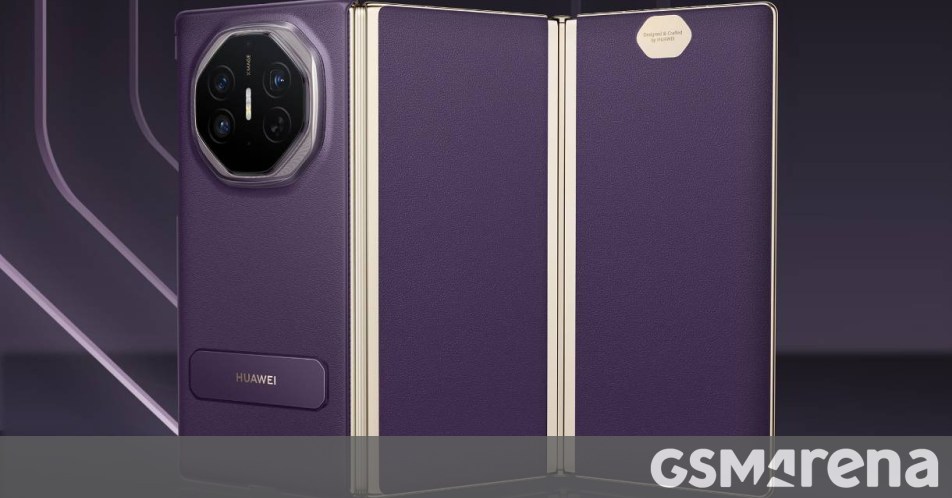
Conversely, the Mate XT2, as a niche luxury product, remains at the top of the pyramid. With the original XT launching at CNY 18,000, it is widely anticipated that the XT2 will command a similar, if not higher, price point, solidifying its status as a "halo" product rather than a mass-market device.
Official Responses and Corporate Strategy
While Huawei has not yet released official press statements regarding the specific hardware configurations of the XT2 or X9, the company’s recent trajectory confirms a shift toward "Aggressive Iteration." In public forums, Huawei executives have repeatedly emphasized their commitment to "pioneering hardware," a phrase often used to describe the company’s willingness to experiment with form factors like the tri-fold.
Industry analysts suggest that Huawei’s strategy is twofold:
- Technological Sovereignty: By leaning into the Kirin 9050 Pro, Huawei is proving that its internal semiconductor ecosystem is maturing rapidly.
- Segmentation: By offering a tri-fold for the ultra-premium market and a refined book-style foldable for the power-user, Huawei is effectively covering every segment of the high-end smartphone spectrum.
Implications: What This Means for the Global Market
The release of these devices has profound implications for the global smartphone market.
The End of the "Experimental" Phase
For years, foldables were considered "experimental" devices. By launching a second-generation tri-fold, Huawei is signaling that the technology has moved from a proof-of-concept to a viable, repeatable product category. This puts immense pressure on competitors like Samsung and Xiaomi to accelerate their own research into unconventional form factors.
Challenging the Status Quo
The focus on a larger battery (>6,000mAh) and improved sensor hardware in the Mate X9 forces a market-wide conversation about trade-offs. Historically, users have had to choose between the portability of a foldable and the battery/camera performance of a traditional flagship. Huawei’s upcoming releases suggest that this compromise is no longer necessary.
Domestic Ecosystem Dominance
Finally, the reliance on the Kirin 9050 Pro confirms that Huawei’s domestic supply chain is robust. For the global market, this highlights a growing divergence in technology stacks—where a significant portion of the Chinese market will be operating on an entirely independent hardware ecosystem, one that is becoming increasingly competitive with global giants like Qualcomm and Apple.
Conclusion
As we move into the second half of 2024, all eyes are on the Huawei supply chain. The upcoming release of the Mate XT2 and the Mate X9 is not merely a product launch; it is a declaration of intent. Huawei is betting heavily that by refining the mechanics of the tri-fold and maximizing the performance-per-watt of its domestic silicon, it can rewrite the rules of mobile technology. For the consumer, the result is a broader, more capable, and increasingly innovative set of choices that continue to push the boundaries of what a smartphone can be.