India’s New-Age Tech IPO Boom: Over 70 Startups Cross the Bourse Milestone with Cumulative Market Cap Exceeding $192 Billion
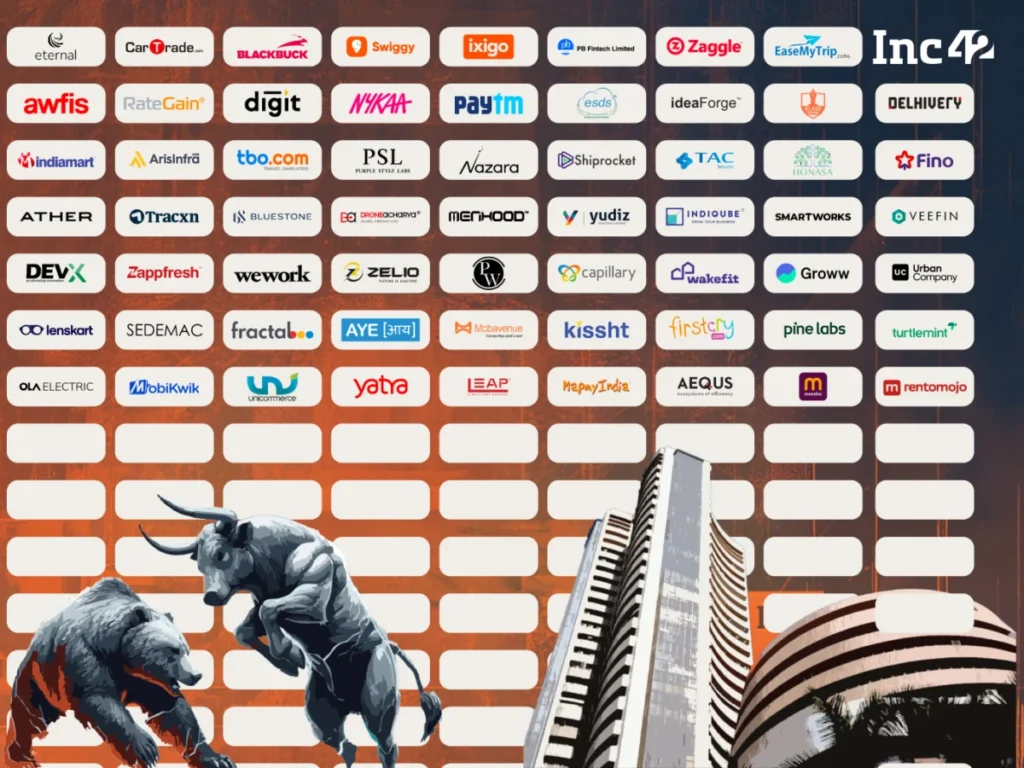
NEW DELHI / MUMBAI — For over a decade, the Indian tech startup ecosystem has transformed from an experimental frontier into a cornerstone of the nation’s modern economy. Among the most definitive barometers of this maturation is the aggressive, sustained wave of public market listings. Marking a historic structural shift, more than 70 Indian new-age technology companies have successfully crossed the initial public offering (IPO) milestone, establishing a collective market capitalization that now comfortably exceeds $192 billion.
This coming-of-age epoch—tracked extensively by industry intelligence platforms—illustrates how operational transparency, robust corporate governance, and a rigorous pivot toward structural profitability have replaced the era of "growth at all costs."
Main Facts: The Anatomy of India’s Tech Bourse Ascent
The public market journey of Indian startups has evolved from a rare novelty into a critical rite of passage. Historically characterized by cash-burning expansions fueled by the 2020–2022 private funding boom, the ecosystem underwent a reality check following the global liquidity tightening, commonly known as the "funding winter."

Key highlights of the current market landscape include:
- Market Capitalization: The cumulative market valuation of India’s listed new-age tech cohort exceeds $192 billion, driven by stellar performances from giants like Eternal (Zomato), PB Fintech (Policybazaar), and Info Edge.
- 2026 Momentum: Building on a banner year in 2025—which saw 18 tech startups list—2026 has already welcomed 13 new-age entities to the bourses. These include Turtlemint, Klassroom, Shiprocket, LEAP India, Kissht, Aye Finance, Fractal Analytics, Amagi, Shadowfax, SEDEMAC, Rentomojo, ESDS, and Purple Style Labs.
- Profitability Pivot: Data indicates that out of the 72 tracked tech companies, approximately 59 are currently reporting positive net income. Fintech major Groww leads the pack with an impressive net profit of ₹2,083 Cr in FY26, closely followed by digital payments pioneer Paytm (₹553 Cr) and Eternal (₹366 Cr).
- Geographic Hegemony: While Bengaluru remains India’s undisputed venture capital and startup capital, the Delhi National Capital Region (NCR)—comprising New Delhi, Gurugram, and Noida—has decisively outpaced it in the public listing race, housing the highest concentration of listed tech entities and contributing a staggering $113.3 billion to the cumulative market cap.
Chronology: From 2006 Pioneers to the 2026 IPO Wave
The timeline of Indian tech listings reveals a long-term maturation process across nearly two decades:
- The Early Pioneer (2006): Info Edge (India) Ltd became the foundational torchbearer of Indian internet listings, making its public debut in 2006. It proved that domestic digital consumer platforms could successfully navigate public governance and generate long-term stakeholder value.
- The Global Listings (2010–2021): Travel tech titan MakeMyTrip took the Nasdaq route in 2010, followed later by enterprise SaaS provider Freshworks in 2021. Domestically, companies like Justdial (2013), Matrimony.com (2017), and IndiaMart (2019) steadily paved the path.
- The Pandemic Wave (2021): A watershed year saw a flurry of mega-IPOs hit Dalal Street, including Paytm, Nykaa, PB Fintech, Zomato (now Eternal), CarTrade, and Fino Payments Bank. However, severe valuation corrections followed, forcing founders to prioritize unit economics over vanity metrics.
- The Profitability Correction (2022–2024): Following the macroeconomic shockwaves of 2022, listings slowed down temporarily as startups re-engineered business models. By 2024, resilient players like Awfis, Blackbuck, FirstCry, ixigo, Mobikwik, Swiggy, and TBO Tek successfully tested public waters under stricter investor scrutiny.
- The Peak and Current Surge (2025–2026): The IPO wave reached unprecedented volumes in 2025 with 18 listings—including Ather Energy, Lenskart, Meesho, Physics Wallah, and Urban Company. The momentum has sustained aggressively into 2026, with another 13 companies ringing the opening bell, and heavyweights like PhonePe, Zepto, and OYO preparing their papers for upcoming public debuts.
Supporting Data: Sectoral Breakdown and Financial Realities
An examination of the sectoral distribution reveals a direct correlation between historical private venture capital allocations and public market success.

Dominant Sectors
- Fintech: Housing some of the largest valuations and listings (Groww, Paytm, PB Fintech, Mobikwik, Digit Insurance, Pine Labs), fintech commands immense investor confidence due to India’s digital public infrastructure (UPI) tailwinds.
- Ecommerce & Direct-to-Consumer (D2C): Anchored by heavyweights like Eternal, Nykaa, FirstCry, Lenskart, Meesho, and Honasa (Mamaearth), consumer internet commerce represents the largest chunk of top-line revenue generation on the bourses.
- Enterprise Tech & SaaS: Featuring companies like Fractal Analytics, Amagi, Rategain, and Unicommerce, this sector provides resilient B2B cash flows despite global enterprise spending fluctuations.
Financial Turnarounds and Volatility
The journey to the public market demands rigorous financial discipline. Companies that successfully debut frequently demonstrate dramatic fiscal turnarounds:
- Lenskart: The eyewear retail giant transitioned from a ₹10 Cr loss in FY24 to post a robust net profit of ₹494 Cr in FY26, highlighting the scalability of its omnichannel model.
- Urban Company: After reporting its first consolidated net profit of roughly ₹240 Cr in FY25, the home-services marketplace faced renewed margin pressures, posting a net loss of ₹234.8 Cr in FY26 despite a 36% year-on-year revenue surge to ₹1,555.5 Cr. This underscores the perpetual balancing act between geographic expansion and bottom-line stability that public markets demand.
Official Perspectives and Industry Insights
Market analysts and venture capital leaders have noted that the maturation of India’s tech IPO market reflects a structural evolution in how institutional investors view emerging-market technology.
Industry veterans emphasize that a public listing is no longer viewed merely as an exit vehicle for early-stage venture capital funds, but rather as an institutional endorsement of corporate governance.

"For years, Indian startups were critiqued for importing Silicon Valley burn models without the corresponding domestic safety nets. Today, the ability of over 50 startups to sustain profitability post-listing proves that the Indian tech ecosystem has matured into a disciplined, self-sustaining financial engine," notes a senior market strategist tracking Dalal Street listings.
Furthermore, investment bankers handling major tech desks point out that public market investors have become increasingly discerning. Companies attempting to list without a clear path to operational efficiency face immediate valuation penalties, whereas those demonstrating reliable unit economics—such as logistics platform Shadowfax or embedded finance player Kissht—are rewarded with premium valuation multiples upon debut.
Implications: What the $192 Billion Milestone Means for the Future
The crossing of the $192 billion market capitalization threshold carries profound implications for the broader Indian economic landscape:

- Wealth Creation and Recycling: Public listings unlock substantial liquidity for founders, early angel investors, and ESOP (Employee Stock Ownership Plan) holders. This wealth is increasingly being recycled back into the early-stage ecosystem through a new generation of angel investors and micro-VC funds.
- Shift in Institutional Capital: Domestic Institutional Investors (DIIs)—including mutual funds and insurance giants—now hold substantial stakes in new-age tech companies, reducing the ecosystem’s historic reliance on foreign institutional capital and foreign direct investment (FDI).
- Corporate Governance Benchmarks: Being listed on the National Stock Exchange (NSE) and Bombay Stock Exchange (BSE) subjects startups to rigorous regulatory frameworks enforced by SEBI. This forces tech firms to institutionalize compliance, transparent financial reporting, and independent board oversight much earlier in their corporate life cycles.
- The Road Ahead: As upcoming giants in quick-commerce, digital payments, and logistics prepare to file their Draft Red Herring Prospectus (DRHP) papers, India is firmly on track to cement its position as one of the top three global hubs for publicly listed technology companies.
As the Indian Listed New-Age Tech Company Tracker continues to log these historic transitions, Dalal Street’s embrace of digital disruption appears more permanent, mature, and economically resilient than ever before.