Massive Dark Web Data Breach: 153 Million North American Identity Records Exposed
A chilling new chapter in the ongoing saga of global cybercrime has unfolded this week with the launch of "Nexus," a dark web marketplace that has sent shockwaves through the cybersecurity community and federal law enforcement. The service, which surfaced on the Russian-language forum Exploit, claims to host a staggering cache of over 153 million digital scans of driver’s licenses and government-issued identification cards belonging to citizens across the United States and Canada.
The sheer scale of the repository—which includes high-resolution infrared and ultraviolet scans of identification documents—appears to be the result of a massive security failure at a Louisiana-based identity verification provider, IDScan.net. As the implications of the leak continue to ripple outward, the Federal Bureau of Investigation (FBI) has launched an official inquiry, underscoring the severity of a breach that has compromised the personal identities of millions, including high-ranking U.S. government officials.
The Nexus Discovery: A Digital Paper Trail
The existence of Nexus was first brought to light on Monday, August 31, when a source alerted security researcher Brian Krebs to the platform’s emergence. The marketplace’s operator did not attempt to hide the breadth of their inventory; instead, they used a "free sample" strategy to entice potential buyers, including listing the driver’s license of the reporter himself.
The data available on Nexus is granular and highly sensitive. A preliminary audit of the site’s database revealed roughly 11.5 million pages of search results, with each page containing approximately 15 individual records. While the breach impacts Canadians—notably with nearly half a million records originating from Ontario—the overwhelming majority of the 153 million records pertain to U.S. citizens.

Beyond standard driver’s licenses, the database includes a concerning array of other identification documents:
- Commercial Driver’s Licenses (CDL): Records marked with the "CDL" designation.
- Common Access Cards (CAC): Government-issued IDs that provide physical access to restricted federal facilities and secure rooms.
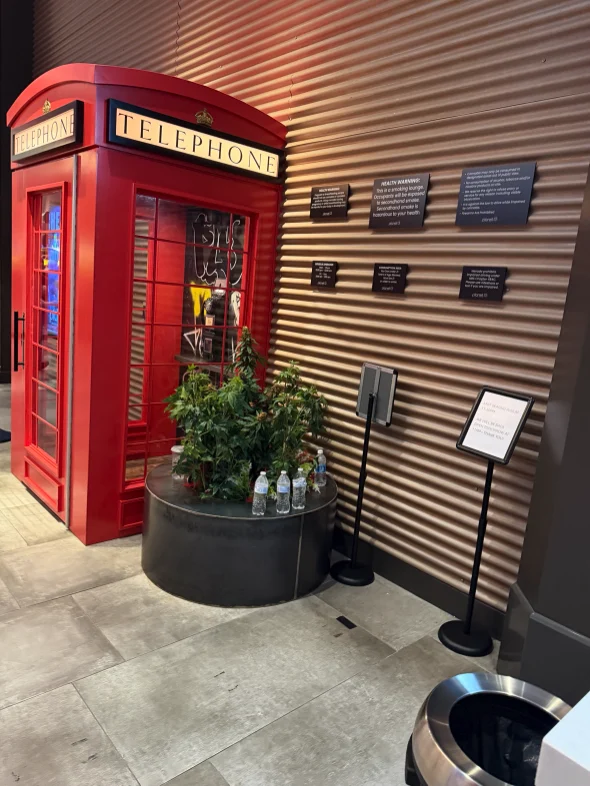
- Medical and Marijuana Dispensary Cards: Adding a layer of personal health and lifestyle exposure to the compromised data.
- Travel Documents: Over three million international IDs and travel-related identification files.
Chronology of a Catastrophe
The data appears to be part of a long-term, ongoing exfiltration operation. According to the operators of Nexus, they have been "continuously exfiltrating new data for over a year." The freshness of the stolen goods is evidenced by the rapid growth of the database; in a single 24-hour period, the number of records available for purchase surged by nearly 400,000, suggesting that the breach at the source provider may have remained active and undetected for a significant duration.
For victims, the breach is terrifyingly specific. The images associated with each record include front and back scans, often supplemented by infrared and ultraviolet versions used to verify security holograms. Each file is stamped with a date and time, allowing researchers to trace the "point of failure" by cross-referencing these timestamps with their own personal travel and transaction history.
For many, the timestamps aligned perfectly with visits to car rental agencies, specifically Hertz, or specialized retail environments like marijuana dispensaries that utilize third-party identity verification software.

The "IDScan.net" Connection
The investigation into the source of this data points squarely at IDScan.net, a Louisiana-based firm that positions itself as a leader in identity verification for high-traffic environments. The company’s technology is pervasive, processing over 21 million verifications monthly across 20,000 locations worldwide.
IDScan.net’s client list is a "who’s who" of American commerce and logistics, including major brands like Hertz, FedEx, Target, and Motorola Solutions. The firm’s "trust" documentation explicitly notes their capability to scan documents with infrared and ultraviolet light—the exact file types appearing in the Nexus database.
The correlation is striking. Security researcher Zach Edwards, who also found his license on the platform, noted that his timestamp aligned with a trip to a Planet13 marijuana dispensary in Las Vegas. Planet13 is a known partner of IDScan.net. When victims attempted to reconcile their timestamps, the common thread across various professional and personal trips was the moment they handed their physical ID to a clerk or rental agent who then fed that document into an IDScan-equipped device.
Official Responses and the FBI Inquiry
The discovery of the breach reached the highest levels of law enforcement rapidly. After it was confirmed that the assistant director of the FBI had his personal identification information exposed on the platform, the agency’s urgency intensified.

By midweek, a conference call involving half a dozen senior FBI agents from the agency’s cyber division confirmed that the New Orleans field office had opened an official investigation into IDScan.net. While the company initially remained silent, they eventually issued a brief public notice admitting that an "unauthorized third party" may have accessed or copied customer information.
The fallout has prompted swift disavowals from other corporate entities. Caesars Entertainment, for example, issued a statement clarifying that they had ceased using IDScan.net’s services as of February 2025 and that no active accounts were compromised during the incident, effectively distancing themselves from the fallout.
Implications: A Crisis of Trust
The implications of the Nexus breach are difficult to overstate. In the modern digital economy, the driver’s license has become the primary "anchor" for identity.
The Financial and Credit Risk
As Larry Baldwin, a principal intelligence researcher at Cybera, points out, driver’s licenses are the standard proof of identity required to open new lines of credit. With 153 million full-color, high-resolution scans available, fraudsters can easily bypass remote identity verification systems, potentially leading to a decade-long epidemic of synthetic identity fraud.

The Privacy and Security Threat
For the average citizen, this is a privacy nightmare. However, for vulnerable populations—such as victims of domestic violence or individuals in witness protection—this leak is potentially life-threatening. These individuals rely on the ability to move through society without their identity being exposed. Because these identity records include photos and metadata, they are easily ingested by AI-driven facial recognition tools, making it nearly impossible for victims to "hide" or change their appearance to evade pursuers.
The Regulatory Failure
Zach Edwards argues that this episode serves as a final warning regarding the lack of oversight for third-party vendors. "These systems are putting sensitive data into more and more third-party vendors, and we don’t have nearly the oversight to ensure they are safe," Edwards stated. The current trend of requiring physical IDs for everything from accessing online services to entering retail stores has created a "honey pot" of data that is now proving to be an irresistible target for global cyber-syndicates.
Conclusion: The Aftermath
Shortly after the publication of the initial report, the Nexus dark web portal vanished, replaced by a terse message: "This service is no longer available." While the immediate threat of the portal has subsided, the damage is already done. The data is undoubtedly circulating in private channels, and the 153 million records remain a ticking time bomb for the victims.
The breach serves as a stark reminder that the "security" provided by ID verification companies is only as strong as the weakest link in their infrastructure. As the FBI continues its probe, the question remains: How many other "Nexus-style" repositories are currently sitting in the dark, waiting for the right moment to surface? For now, the millions affected must prepare for a long, arduous process of credit monitoring and identity protection, as the digital age continues to prove that our most sensitive data is, ultimately, never truly private.