New York City Imposes Historic One-Year Ban on Generative AI in Schools, Sparking Global Debate on Education and Technology
NEW YORK — In what education policy experts are calling one of the most expansive and restrictive student-facing artificial intelligence policies in the United States, New York City has officially instituted a sweeping one-year moratorium on generative AI tools for public school students up to the eighth grade.
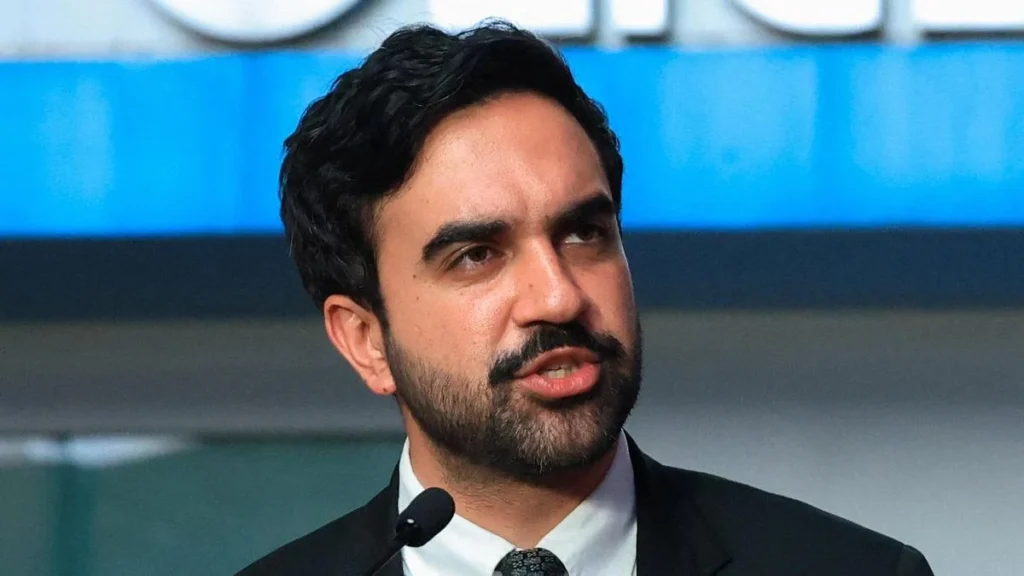
Announced jointly by New York’s Mayor Zohran Mamdani and Schools Chancellor Kamar H. Samuels, the policy takes effect for the 2026–27 academic year. It directly impacts nearly 600,000 public school students across the nation’s largest school district. Under the new guidelines, companion chatbots will be entirely prohibited across all grade levels, and more than 38 previously approved educational programs that fail to meet strict new alignment standards will have their AI components disabled or discontinued.
The move comes at a time of escalating global anxiety regarding the rapid integration of emerging technologies into the formative years of childhood. By drawing a firm line between age-appropriate technological literacy and the premature adoption of generative algorithms, New York City has positioned itself at the epicenter of a fierce international debate over the future of pedagogy, human connection, and cognitive development.
Main Facts: What the New York City Policy Entails
The sweeping directive does not represent a wholesale rejection of all digital infrastructure, but it draws a heavily fortified boundary around generative artificial intelligence.

- The Scope: The ban applies to all students up to the eighth grade for the upcoming 2026–27 academic year. Accompanying chatbots are banned across all grades.
- Program Cuts: Over 38 previously greenlit digital learning platforms featuring generative AI capabilities will have those specific modules disabled or pulled entirely unless they conform to the newly established regulatory framework.
- Exceptions for Accessibility and Administration: The policy carves out crucial exemptions. Teachers remain authorized to use approved AI platforms for lesson planning, administrative duties, and curriculum development. Furthermore, assistive technologies required by students with disabilities, as well as specialized tools tied to verified career-readiness programs, are safeguarded.
- High School Pilots: Rather than an absolute ban, high school classrooms will participate in five tightly controlled, limited AI pilots. These include:
- Quill: Restricted to 15 minutes per week for English language arts.
- Edia: Restricted to 20 minutes per week for mathematics.
- Brisk Teaching: Limited to 10 to 20 minutes once or twice weekly for teacher-led activities.
- Playlab: Capped at two assignments per marking period, or 45 minutes per week, for specific assignment applications.
- Intel AI-Ready Schools: Allocated one period per week to help students identify community issues and develop solutions via term-long projects.
- Critical Thinking Mandate: Every high school student will be required to complete two 45-minute educational modules annually, focusing explicitly on the risks, limitations, and critical analysis of AI systems.
- Screen-Time Restrictions: The initiative is paired with aggressive new individual screen-time limits. Children from 2-K through second grade are designated zero routine screen time. Grades three through five face a recommendation of no more than 30 minutes of individual screen use daily, while students in grades six to eight are capped at 45 minutes. These limits do not preclude teacher-led instructional computing, such as interactive whiteboards.
- Evaluation Panel: A diverse coalition consisting of students, educators, parents, elected officials, union representatives, and field experts will monitor the moratorium and pilot programs, culminating in a comprehensive impact report scheduled for release in April 2027.
Chronology: The Escalating Backlash Against Unregulated Tech
The road to New York City’s historic moratorium has been paved by a series of mounting scientific warnings, technological rollouts, and growing public concern over youth mental health.
- August 18, 2026: OpenAI rolls out a specialized teenage version of its flagship ChatGPT model, featuring parental controls and content restrictions targeting self-harm and suicide. The release underscores the tech sector’s aggressive push into younger demographics.
- August 26, 2026: Meta announces stricter protective measures for teenage accounts across Instagram and Facebook, introducing hard time limits, automatic night-time blocking, and muted notifications during school hours to curb compulsive usage.
- September 2, 2026: Mayor Zohran Mamdani and Schools Chancellor Kamar H. Samuels officially enact the one-year generative AI moratorium for New York City public schools, alongside tightened district-wide screen-time caps.
- April 2027 (Projected): An oversight panel comprising educators, parents, and industry experts is slated to publish its formal assessment of the moratorium, evaluating its impact on student academic performance and mental well-being to dictate future policy directions.
Supporting Data and Research: Do the Harms Outweigh the Benefits?
The decision by New York City officials is backed by a growing body of academic literature and international research that questions the long-term cognitive utility of generative AI in primary and secondary education.
A prominent 2026 Centre for Economic Policy Research (CEPR) discussion paper, authored by researchers at Stockholm University and the University of Hong Kong, tracked more than 26,000 students in China over a 30-month period. The findings revealed a troubling paradox: while student access to generative AI initially boosted homework scores by 18% and cut assignment completion times by 30%, closed-book examination scores for the exact same cohort plummeted by 20% after just six months of consistent use. The data suggested that over-reliance on automated problem-solving severely degrades genuine knowledge retention and foundational skill acquisition.
This perspective is reinforced by a sweeping review conducted by the Brookings Institution’s Center for Universal Education. Analyzing more than 400 separate studies and qualitative interviews with 500 educators and pupils spanning 50 countries, the review concluded that the current risks of generative AI in primary and secondary education—such as diminished attention spans, erosion of critical thinking, and heightened anxiety—outweigh its immediate benefits, save for strictly controlled and meticulously tailored applications.

Furthermore, public health concerns have intensified. While direct empirical links connecting AI chatbots to severe mental health crises remain heavily scrutinized, a wave of high-profile lawsuits alleging that chatbot interactions contributed to the tragic deaths of young people has forced school districts and lawmakers to re-evaluate the psychological safety of digital companions.
Official Responses: The Philosophy of the "Struggle"
Defending the administration’s bold stance, Mayor Mamdani invoked a powerful domestic analogy during the policy rollout.
“A six-year-old child is too young to slice an onion, to fry an egg or to use a stove safely. But once that child becomes 16, that knowledge becomes something they are mature enough to learn,” Mayor Mamdani stressed. “The tech industry wants us to believe that AI-powered early education is not only inevitable but necessary. We do not see it that way.”
Mamdani emphasized that children require authentic human connection, peer collaboration, and the unassisted friction of intellectual problem-solving to mature effectively.

“Children need teachers and human connection in order to learn and grow,” he added. “They need to develop skills alongside their peers, build relationships with educators, and wrestle with tough problems on their own.”
Echoing these sentiments, Schools Chancellor Kamar H. Samuels argued that modern educational technology frequently robs students of the vital mental friction required for genuine cognitive growth. Real learning, Samuels noted, inherently involves making mistakes, experiencing failure, trying again, and eventually achieving success independently.
“That struggle is not an inconvenience that technology should eliminate; it is part of the learning process,” Samuels said.
Global Implications: A Fragmented International Landscape
New York City’s drastic freeze on educational AI arrives as governments across the globe grapple with the same technological dilemma, adopting drastically different regulatory philosophies.

The Cautious and Restrictive Approach
- Norway: National education authorities have recommended that students in grades one through seven be barred from accessing generative AI tools entirely, while students in grades eight through ten should be introduced to the technology only through a slow, carefully monitored phase-in.
- Australia: Rather than implementing a blanket prohibition, Australia relies on a national framework centered on the responsible, ethical, and measured integration of generative AI within specific curricular parameters.
- European Union: Under the sweeping European Union AI Act, high-risk educational systems—specifically those utilized for automated learning assessment or determining institutional access—face stringent legal classifications, though the legislation stops short of a complete ban on classroom AI.
The Integration and Investment Approach
- United Arab Emirates: Choosing structure over suppression, the UAE has launched a comprehensive AI curriculum spanning both public and private schools. The program covers fundamental algorithmic literacy, ethical frameworks, and risk assessment, backed by a massive initiative to train roughly 22,000 educators in AI-assisted lesson planning and assessment.
- Poland: Moving aggressively in the opposite direction of New York City, Poland is investing nearly 1.9 billion zloty to equip 12,000 schools with dedicated AI laboratory sets as part of a national digital modernization campaign.
- India: India has firmly aligned itself with the integration camp. The landmark National Education Policy (NEP) 2020 explicitly identifies artificial intelligence and emerging technologies as critical drivers of the nation’s evolving economic and employment ecosystem, mandating computational thinking across appropriate developmental stages.
- The Central Board of Secondary Education (CBSE) introduced Artificial Intelligence as an optional sixth subject for Class IX as early as the 2019–20 academic year. More recently, for the 2026–27 session, the CBSE rolled out a dedicated Computational Thinking and Artificial Intelligence curriculum spanning Classes III through VIII, alongside finalized AI curricula for high school grades, cementing a national focus on logical reasoning, pattern recognition, data literacy, and ethical AI stewardship.
As New York City embarks on its one-year experiment, education ministers, policy makers, and technologists worldwide will be watching closely. Whether the moratorium serves as a blueprint for preserving human-centric education in an automated age or a temporary speed bump against an unstoppable technological tide remains one of the defining questions of modern pedagogy.
If you or someone you know is struggling or in crisis, help is available. Assistance for overcoming distress or suicidal thoughts can be found via local health helplines, Tele-MANAS (14416), or regional suicide prevention networks.