OpenAI Unveils "Dots": The Next Evolution in Autonomous AI Agents and Enterprise Workflows
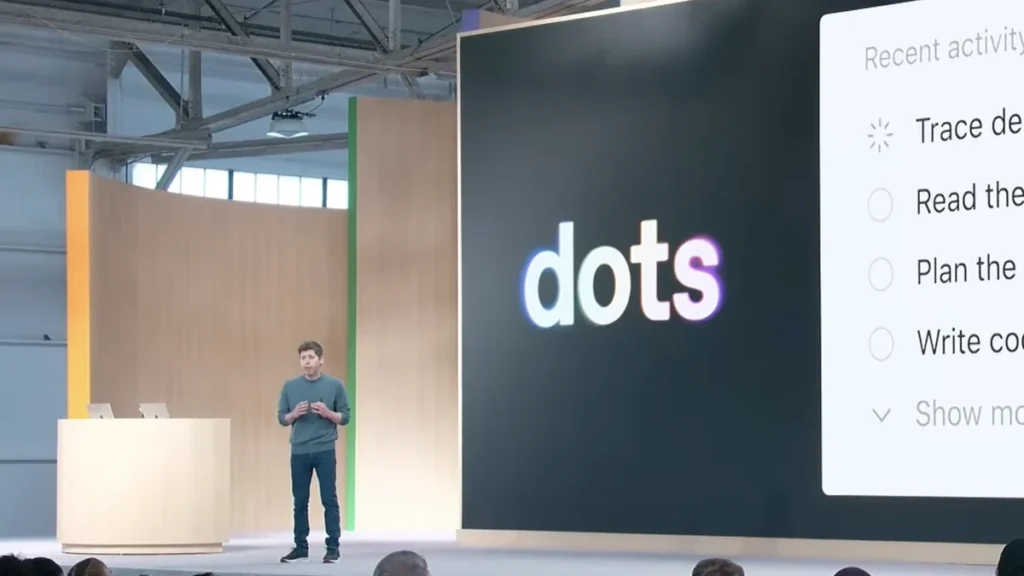
SAN FRANCISCO — In a major technological leap that signals the shift from conversational chatbots to autonomous execution, OpenAI unveiled Dots—a groundbreaking suite of agentic AI capabilities designed to act as digital chiefs of staff, software engineers, and administrative managers. Announced by CEO Sam Altman during the much-anticipated DevDay keynote, Dots represent a paradigm shift in how humans interact with artificial intelligence, moving users away from merely prompting for text and toward delegating complex, multi-step workflows.
Powered by Astra, OpenAI’s most advanced AI model to date, Dots are persistent, round-the-clock digital agents capable of accessing local files, enterprise applications, and deep contextual histories. Alongside Dots, the San Francisco-based AI pioneer rolled out a series of powerful developer tools, collaborative platforms like Spaces, cost-efficient models such as GPT-6.1 Sol, and a new commercial Marketplace, firmly cementing its ambition to dominate the future of workplace automation.
Main Facts
The introduction of Dots marks OpenAI’s aggressive entry into the autonomous agent market, an arena increasingly populated by both tech giants and nimble startups. Unlike traditional virtual assistants that require step-by-step human intervention for rudimentary tasks, Dots are engineered for high-level autonomy.
- Autonomous Agent Capabilities: Dots are always-on AI agents capable of monitoring bugs, drafting code, managing calendars, and independently executing complex, multi-step tasks.
- Deep Integration & Context: The agents gain context by accessing user files, apps, and thousands of platforms via existing connectors, operating out of their own cloud-based computers and browsers.
- Multi-Modal Access: Users can communicate with their Dots seamlessly via voice, text, or even phone calls, ensuring 24/7 accessibility.
- Powered by Astra: The intelligence driving Dots stems from Astra, OpenAI’s flagship high-tier model, ensuring advanced reasoning and safe execution within strict user-defined boundaries.
- Pricing and Availability: Dots are integrated directly into existing subscription frameworks at no additional cost for ChatGPT Pro, Business Premium, and Enterprise users. Furthermore, interactions with Dots do not deduct from standard ChatGPT usage caps.
- Ecosystem Expansion: OpenAI also introduced Spaces (a collaborative team workspace), GPT-6.1 Sol (a high-efficiency daily workhorse model), UltraFast (an optimized low-latency model), a fully cloud-based Codex, and a new enterprise Marketplace.
Chronology of the DevDay Announcements
The announcements unfolded during a fast-paced keynote presentation that traced OpenAI’s trajectory from consumer-facing text generators to deep enterprise infrastructure.
The Buildup and Reveal of Dots
As the keynote opened, OpenAI leadership highlighted the limitations of modern AI: while conversational models are exceptional at answering questions, they often stall when asked to execute tasks that span multiple days, applications, and documents. To solve this, OpenAI introduced Dots—a playful name nodding to "bots," yet signifying discrete points of intelligent automation working in harmony.
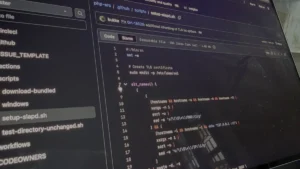
Sam Altman demonstrated how Dots can function in real-world organizational environments. Moving past simple prompt responses, Altman showcased an agent tasked with migrating an entire application from a legacy API. The Dot successfully traced dependencies within a codebase, wrote the required code, executed rigorous local tests, and ultimately submitted a pull request for human engineering review—all without manual hand-holding.
Collaboration and Workspace Evolution: Spaces
Following the demonstration of individual agent capabilities, OpenAI introduced Spaces. Recognizing that modern work is inherently collaborative, Spaces acts as a shared digital environment where human teams and their respective Dots can co-author documents, conduct deep research, and build dynamic data visualizations. The platform natively supports interactive charts and live prototypes, creating a symbiotic loop between human creativity and autonomous agent execution.

Model Architecture and Performance Updates
To support the heavy computational demands of agentic workflows while addressing cost concerns, OpenAI announced GPT-6.1 Sol. Pitched as a daily workhorse, Sol delivers near-Astra level intelligence at a significantly reduced price point.
Simultaneously, the company unveiled UltraFast, an optimized model variant built to slash latency across the API, ChatGPT, and Codex interfaces. Speaking on development workflows, Altman announced that Codex has transitioned into a fully cloud-based environment, allowing developers to pick up complex coding tasks seamlessly across multiple devices without local setup friction.
Monetization and Distribution: The Marketplace
The keynote concluded with a strategic play for the developer ecosystem: the launch of the OpenAI Marketplace. Designed as a centralized distribution hub, the platform allows independent developers to sell their AI products directly to enterprises. Corporate buyers can leverage their existing OpenAI commitments to purchase these tools, creating a streamlined B2B economy centered around the OpenAI infrastructure.
Supporting Data & Technical Architecture
Underneath the user-friendly interface of Dots lies a sophisticated architecture built for autonomous enterprise scaling.
- Cloud-Based Sandboxes: Each Dot operates within its own dedicated cloud-based computer and browser environment. This isolation ensures that when a Dot executes code, builds apps, or tests workflows, it does so securely without risking local system integrity.
- App Ecosystem Interoperability: Through pre-built connectors, Dots interface natively with over a thousand popular enterprise applications, including Slack, Microsoft Teams, various calendar suites, and advanced Integrated Development Environments (IDEs).
- Cost-Efficiency Metrics: By offering Dots at "no additional cost" to high-tier subscribers (Pro, Business Premium, and Enterprise), OpenAI is effectively subsidizing agent deployment to drive rapid enterprise adoption and lock users deeper into its proprietary ecosystem.
- Compute Optimization: The introduction of GPT-6.1 Sol and UltraFast demonstrates OpenAI’s ongoing refinement in model distillation and hardware utilization, ensuring that high-frequency enterprise tasks do not bottleneck server infrastructure.
Official Responses and Perspectives
OpenAI leadership emphasized that the rollout of Dots is designed to augment, rather than replace, human ingenuity.
"We are moving from an era where AI answers your questions to an era where AI does your work," Sam Altman stated during the keynote. He stressed that while Dots possess the autonomy of a "chief of staff" or a "high-level engineer," they remain strictly tethered to human oversight. "These intelligent bots operate within defined safety boundaries, allowing users to control their level of responsibility and governance at every step."
Industry analysts have noted that by packaging these complex agentic features into existing tiers—without driving up subscription costs—OpenAI is throwing down the gauntlet to enterprise software incumbents like Microsoft, Google, and Salesforce. By providing agents that can manage schedules, process testing feedback, and execute last-minute design changes directly via Codex, OpenAI is positioning ChatGPT not just as a chatbot, but as the foundational operating system of the modern digital workplace.

Implications for the Future of Work and Technology
The introduction of Dots and the broader DevDay 2026 announcements carry profound implications for the global labor market, enterprise software development, and cybersecurity.
1. The Rise of "Agentic" Productivity
For decades, productivity software has focused on making human workflows faster—shorter meetings, quicker emails, streamlined spreadsheets. Dots fundamentally change this equation by removing the human from the execution loop for repetitive or procedural tasks. By delegating project timelines, vendor communications, and bug monitoring to autonomous agents, knowledge workers can theoretically reclaim hours of deep-thinking time each week.
2. Shifting Paradigms in Software Development
The ability of an AI agent to autonomously migrate legacy codebases, write tests, and submit pull requests signals an existential shift for software engineering. Junior developers and QA specialists may find their daily responsibilities shifting entirely toward agent supervision and architecture design, raising questions about how the next generation of engineers will acquire foundational coding skills.
3. Security, Governance, and Control
Granting an AI agent persistent access to local files, corporate Slack channels, calendars, and source code repositories introduces significant security vectors. While OpenAI has emphasized Astra’s safety boundaries and user-defined permission controls, enterprise IT departments will face immense pressure to audit how Dots handle sensitive corporate data, intellectual property, and PII (Personally Identifiable Information).
4. Economic Disruption in the SaaS Landscape
With the launch of the OpenAI Marketplace and the native integration of thousands of app connectors, OpenAI is positioning itself as a meta-layer above traditional SaaS applications. If an enterprise user can instruct a Dot to handle a workflow across Slack, Teams, and specialized project management tools without ever opening those individual apps, the perceived value of standalone software subscriptions may begin to shift toward the underlying agentic platform.
As these tools roll out to Pro, Business, and Enterprise users, the coming months will test whether autonomous AI agents can truly live up to the promise of acting as reliable, safe, and indispensable organizational partners.