Political Coalition Stages Khammam Protest Over Indiramma Housing Scheme Transparency
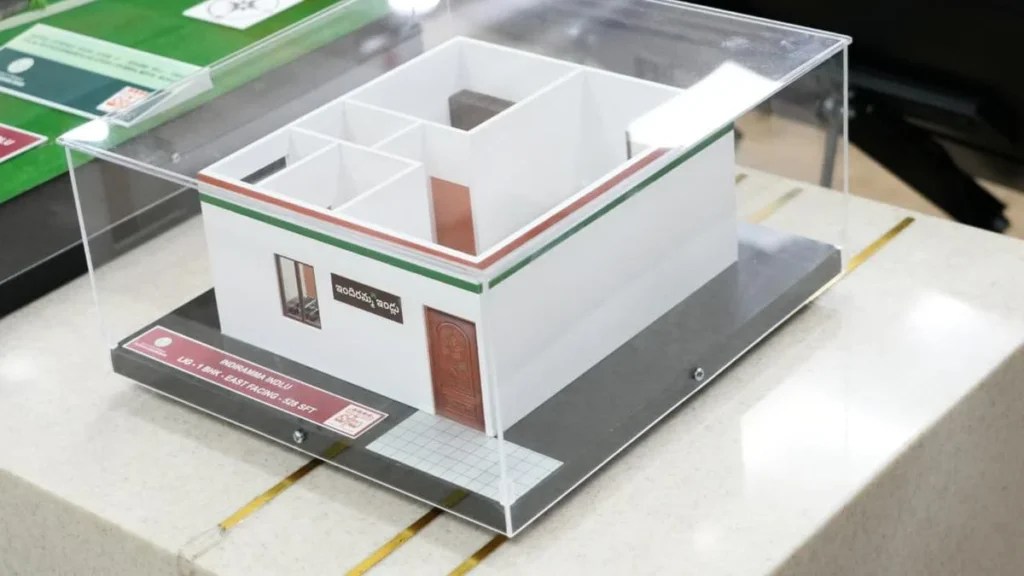
KHAMMAM, TELANGANA — A significant political mobilization unfolded in the district headquarters of Khammam on Thursday, as a coalition of opposition parties staged a high-profile dharna (sit-in protest) to challenge the implementation framework of the Telangana government’s flagship “Indiramma” housing scheme. The demonstration, which drew cadres from the Bharat Rashtra Samithi (BRS) and four prominent Left-wing parties, has cast a spotlight on the intensifying debate over bureaucratic transparency, political patronage, and the socio-economic welfare of the state’s most vulnerable populations.
The protest marks a pivotal moment in the ongoing discourse surrounding rural development in Telangana, as opposition groups coalesce to demand a radical restructuring of how the state identifies and qualifies its poorest citizens for housing aid.
The Core Grievances: A Demand for Grassroots Democracy
The central thrust of the protestors’ argument is that the current administrative process for selecting Indiramma housing beneficiaries is susceptible to political interference. By calling for the selection process to be shifted to Gram Sabhas (village assemblies), the coalition aims to decentralize the power of allotment.
“The current committee-based selection process is an invitation to partisanship,” stated a senior representative during the rally. “We are witnessing a system where local party influence—rather than genuine socio-economic need—dictates who receives a roof over their head. By moving the selection to open, transparent Gram Sabhas, we ensure that the community itself acts as the primary auditor of who is truly deserving.”
The demonstrators specifically demanded the immediate abolition of the existing "Indiramma Committees," which they claim have become conduits for political patronage. The coalition contends that these committees operate behind closed doors, often bypassing the most marginalized households in favor of those with political affiliations.
Chronology of the Housing Policy Impasse
To understand the current unrest, one must look at the timeline of housing initiatives in Telangana, which has long been a battleground for populist welfare politics.
- Pre-2014 Legacy: The foundation for rural housing was laid through legacy programs like the Indira Awaas Yojana (IAY). Thousands of families were sanctioned homes under these central and state-linked schemes, many of which remain incomplete or mired in legal and financial limbo.
- The Transition Period: Following the formation of Telangana, the BRS government launched its own initiatives, such as the Double Bedroom Housing Scheme. The transition between these regimes left many beneficiaries with "half-built" homes and unpaid bills.
- Launch of the Indiramma Housing Scheme: The current administration introduced the Indiramma scheme as a holistic solution to address the housing deficit. However, the rollout has been plagued by logistical delays and allegations of exclusionary practices.
- The Escalation (October 2026): Throughout early October, complaints regarding the second phase of beneficiary selection reached a boiling point. Local reports indicated that eligible families in Khammam were being omitted from lists, prompting the alliance between the BRS, CPI, CPI (M), CPI (ML) Mass Line, and CPI (ML) Praja Pandha.
- The October 23rd Dharna: The protest in Khammam solidified the opposition’s unified front, marking the first time in recent months that the BRS and various Left factions have coordinated a public demonstration of this scale specifically regarding housing policy.
Supporting Data: The Magnitude of the Crisis
The scale of the crisis in Telangana’s housing sector is substantial. While specific district-level data for Khammam is currently being audited by the coalition, the state-wide picture provides context for the frustration felt by the protestors:
- Pending Liabilities: Estimates suggest that thousands of homes sanctioned under the Indira Awaas Yojana remain unfinished. The government is currently grappling with a backlog of payments to contractors and laborers, which has effectively stalled progress for thousands of families who are living in temporary or dilapidated structures.
- The "Dream Home" Debt Trap: Many families, under the impression that they would receive subsidies, took out high-interest private loans to begin construction. When government installments failed to arrive, these families found themselves caught in a cycle of mounting debt.
- Housing Deficit: According to recent legislative assembly reports, the demand for housing among low-income households in both urban and rural Telangana exceeds the current allotment capacity by nearly 40%. The competition for these limited slots is the primary driver of the political tension observed in the selection process.
Official Responses and Administrative Stance
As of late Thursday afternoon, the state government had not issued a formal rebuttal to the specific demands of the protesters. However, administrative sources within the housing department have previously defended the committee-based selection process as a necessary safeguard against local corruption.

"The committee model is designed to ensure that data is verified against state and central databases to prevent fraud," an official stated on condition of anonymity. "Moving to Gram Sabhas, while democratic in theory, often leads to local power dynamics hijacking the process, where village heads or dominant factions might pressure the assembly into choosing their own loyalists."
The government maintains that it is committed to a "technologically-driven" approach to minimize human error and political bias. They point to the digital verification of beneficiary records as the gold standard for transparency, arguing that returning to the Gram Sabha model would be a regression in governance.
The Socio-Political Implications
The protest in Khammam is not merely about construction; it is a manifestation of the broader political struggle for the "rural vote." The Indiramma housing scheme is one of the most visible indicators of state performance; failure to deliver on these promises is seen as a direct hit to the government’s credibility.
1. The Consolidation of the Opposition
The cooperation between the BRS and the Left parties is highly significant. Historically, these groups have held disparate ideologies, yet the issue of housing has provided a common ground. This suggests that the opposition is moving toward a "single-issue" strategy—focusing on local welfare failures to undermine the ruling party’s narrative of inclusive development.
2. The Erosion of Trust in Local Governance
When citizens believe that their right to a basic necessity—a home—is being filtered through a political lens, it damages the social contract. The demand to abolish the Indiramma committees is a symptom of a deeper crisis of trust in local administrative institutions. If the government does not address the demand for transparency, it risks facing similar protests across other districts, potentially paralyzing the rollout of the second phase.
3. The Economic Toll on the Poor
The most immediate implication is the human cost. Families living in "dilapidated housing societies" or waiting for years for a government grant to finish a wall or roof are facing a precarious winter. The protestors’ demand for the immediate release of pending bills is not just a political bargaining chip—it is an urgent economic necessity for the thousands of households struggling to complete their construction projects.
Conclusion: What Lies Ahead?
The Khammam dharna serves as a warning to the state administration. While the government may view the housing scheme as an administrative task to be managed by committees, the opposition and the affected families view it as a fundamental right that requires public accountability.
As the state moves forward with the second phase of the Indiramma scheme, the pressure will only mount. Whether the government chooses to integrate the Gram Sabha mechanism as a compromise, or stands by its committee-based system, the incident in Khammam highlights that housing in Telangana is no longer just a matter of civil engineering—it is the central pillar of the state’s political discourse. The coming weeks will likely see an escalation in protests unless the administration can provide a clearer, more transparent pathway for the thousands of families still waiting for their dream homes to become a reality.