Strategic Pivot: Anthropic and Samsung in Early Negotiations for Custom AI Silicon
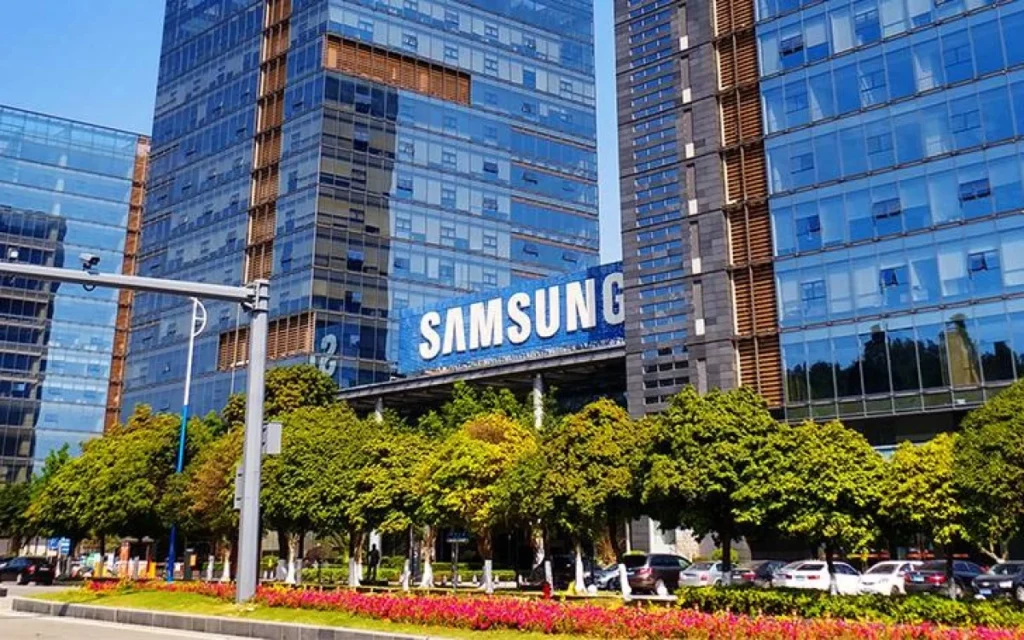
The landscape of artificial intelligence is currently undergoing a structural transformation, shifting from a software-first race to a battle for physical infrastructure. In a move that signals the intensifying demand for specialized hardware, reports have emerged that AI powerhouse Anthropic is in the early stages of negotiations with South Korean conglomerate Samsung Electronics. The partnership, if finalized, would see Samsung’s foundry division tasked with the high-stakes manufacturing of Anthropic’s proprietary custom AI chips.
This development, first brought to light by The Information, underscores a critical industry trend: the push for "vertical integration" among AI labs. As Anthropic seeks to scale its frontier models—such as the Claude series—the company is looking to move beyond off-the-shelf silicon to optimize its computational efficiency.
Main Facts: The Shift Toward Custom Silicon
The core of the potential agreement rests on Samsung Foundry’s capacity to handle advanced-node semiconductor fabrication. For Anthropic, the motivation is clear: reliance on third-party hardware from industry titans like Nvidia or Google creates both a supply chain bottleneck and a cost burden that grows exponentially with model complexity.
While details of the potential manufacturing process remain confidential, the industry consensus suggests that Anthropic is looking toward cutting-edge nodes—likely 3nm or even 2nm processes—to maximize the performance-per-watt ratio of their future AI accelerators. By designing its own chips, Anthropic joins a growing cohort of AI-native companies, including OpenAI and Meta, that are attempting to de-risk their infrastructure by developing internal hardware architectures tailored specifically to the mathematical requirements of Large Language Models (LLMs).
Chronology: The Industry’s Pivot to Diversification
To understand why a collaboration between Anthropic and Samsung is making waves, one must examine the broader timeline of the semiconductor industry over the last five years.
2020–2022: The TSMC Hegemony
For years, Taiwan Semiconductor Manufacturing Company (TSMC) maintained an almost uncontested grip on the high-end chip market. Apple, Nvidia, AMD, and Qualcomm relied almost exclusively on TSMC’s superior yield rates and process technology. During this era, Samsung Foundry struggled with yield consistency, and Intel’s foundry business faced significant delays in transitioning to next-generation lithography.
2023: The Generative AI Explosion
The release of ChatGPT and subsequent competitive pressures from Anthropic’s Claude accelerated demand for GPUs to an unprecedented degree. The sudden scarcity of H100s and similar hardware forced AI companies to wait months for fulfillment. It became clear that the global supply chain was too brittle to support the hyper-growth phase of the AI revolution.
2024: The Search for Alternatives
Throughout the current year, market dynamics have shifted. Major players began expressing "TSMC fatigue." The geopolitical risks associated with Taiwan, combined with the sheer manufacturing capacity required to sustain the AI boom, pushed giants like Apple and Microsoft to explore alternative foundries. Reports emerged suggesting Apple was testing Intel Foundry for potential chip production, while Samsung began aggressive marketing of its Gate-All-Around (GAA) transistor technology to lure clients away from TSMC.
Late 2024–Present: The Anthropic-Samsung Talks
The current discussions between Anthropic and Samsung represent the latest chapter in this shift. As Anthropic prepares for the next generation of model training, it is clear that the company views custom silicon as a prerequisite for long-term survival.
Supporting Data: Why Samsung and Why Now?
The semiconductor market is defined by "yield"—the number of functional chips per silicon wafer. Historically, Samsung has trailed TSMC in this metric for the most advanced nodes. However, Samsung’s aggressive investment in 3nm GAA (Gate-All-Around) technology offers a compelling value proposition.
Market Dynamics
- Capacity Constraints: Global demand for AI chips is projected to grow at a CAGR (Compound Annual Growth Rate) of over 25% through 2030. TSMC is currently operating near maximum capacity, leading to long lead times.
- Cost Efficiency: By diversifying manufacturing to Samsung, Anthropic can negotiate more competitive pricing through foundry competition.
- The "Broadcom" Precedent: Anthropic is reportedly following a playbook similar to that of OpenAI, which has been in deep discussions with Broadcom to facilitate custom silicon design. The model is simple: AI companies handle the architecture design, while Broadcom handles the complex design-for-manufacturability (DFM), and a foundry like Samsung handles the physical fabrication.
Technical Advantages of Custom Chips
Custom chips allow for:
- Memory Bandwidth Optimization: Standard GPUs are general-purpose. Custom chips can be optimized for the specific tensor operations used in Transformer-based architectures.
- Energy Efficiency: AI data centers are massive energy consumers. Custom silicon allows for lower power consumption, which translates to massive operational expenditure (OpEx) savings at scale.
Official Responses and Current Dependencies
In the wake of these reports, Anthropic has been quick to manage expectations regarding its current hardware pipeline. The company has explicitly stated that its short-to-medium-term operations remain tethered to its existing partners.
"Our data centers continue to rely on the robust performance of Amazon’s Titanium chips, Google’s Tensor Processing Units (TPUs), and Nvidia’s industry-standard GPUs," an Anthropic spokesperson noted in internal communications.
This is a critical distinction. Anthropic is not abandoning its current partners; rather, it is hedging against future scarcity. The company’s partnership with Amazon (AWS) and Google Cloud provides the necessary compute infrastructure for its current workloads, but these partnerships are also commercial in nature. Developing internal silicon is an insurance policy against the possibility of these cloud providers becoming competitors or restricting access to their proprietary hardware.
Implications: The New Era of Vertical Integration
The potential partnership between Anthropic and Samsung carries profound implications for the tech industry at large.
1. The Death of the General-Purpose Era
For decades, the CPU and later the GPU were the standard. We are now entering an era where software-defined silicon is the standard. If Anthropic successfully deploys custom chips, it validates the strategy that AI companies must become hardware companies to remain competitive.
2. A Boon for Samsung Foundry
For Samsung, securing an AI powerhouse like Anthropic would be a massive validation of their foundry business. If Samsung can prove that their 3nm or 2nm processes can reliably produce high-performance AI chips for a company as demanding as Anthropic, it would effectively re-establish Samsung as a tier-one foundry competitor, potentially siphoning away business from TSMC and Intel.
3. Geopolitical Implications
As the U.S. and its allies seek to secure semiconductor supply chains, the diversification of manufacturing—away from the concentrated risk of Taiwan—is a primary objective. A partnership between a U.S.-based AI firm and a South Korean manufacturer aligns with the broader strategic interests of the "Chip 4" alliance, strengthening the semiconductor ecosystem outside of mainland China.
4. The Barrier to Entry
The cost of designing and manufacturing a custom AI chip is astronomical, often running into the hundreds of millions of dollars before a single unit is produced. This trend suggests that the AI industry will continue to consolidate. Only companies with massive capital reserves—backed by investors like Amazon, Google, and Microsoft—can afford the "admission price" of designing their own silicon. Smaller AI startups may find themselves increasingly dependent on the remaining general-purpose cloud providers, creating a two-tiered industry.
Conclusion: The Long Road Ahead
While the talks between Anthropic and Samsung are reportedly in the early stages, they serve as a bellwether for the future of artificial intelligence. The transition from off-the-shelf components to custom, proprietary silicon is the next logical step in the maturing AI market.
For Samsung, this is a chance to prove its technological relevance in the post-mobile era. For Anthropic, it is a strategic move to ensure that their model development is never bottlenecked by the limitations of public-market hardware. As the industry watches closely, the success of this potential collaboration could redefine the relationship between the companies that create intelligence and the foundries that provide the physical substrate upon which that intelligence resides.
The "silicon race" is no longer just about who can build the best model; it is about who can build the most efficient machine to run it. If Anthropic and Samsung successfully align their interests, the ripple effects will be felt across the entire global technology supply chain for years to come.