The 2026 AI Reality Check: How Small Businesses Are Transforming Marketing Without Corporate Budgets
By the Editorial Desk
Published: August 2026
Main Facts
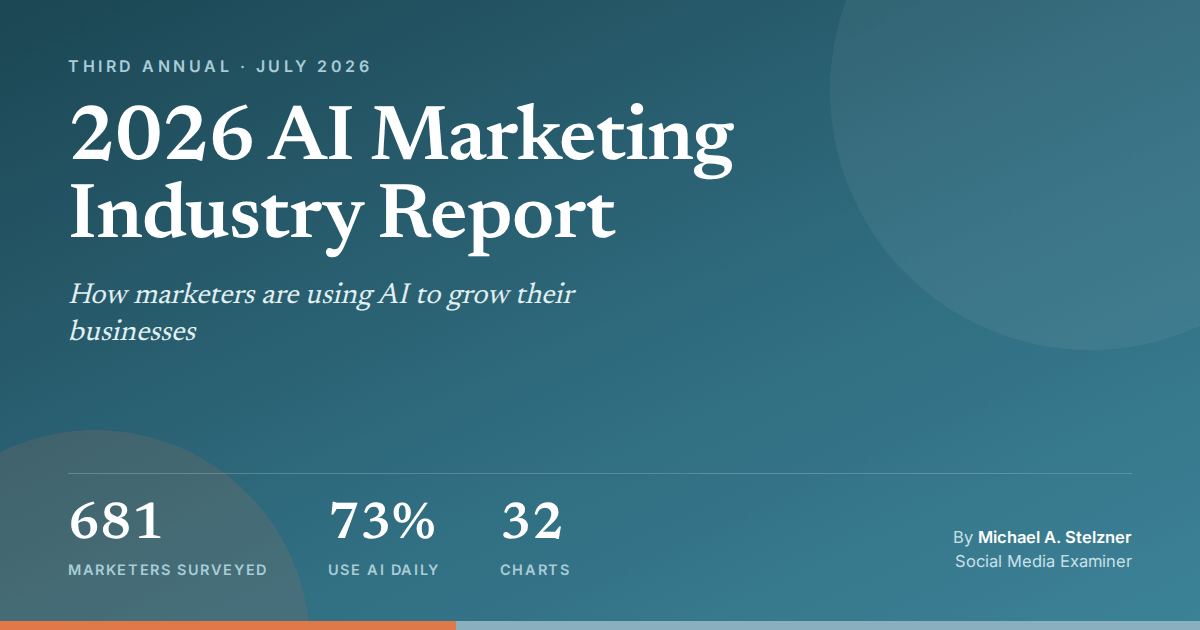
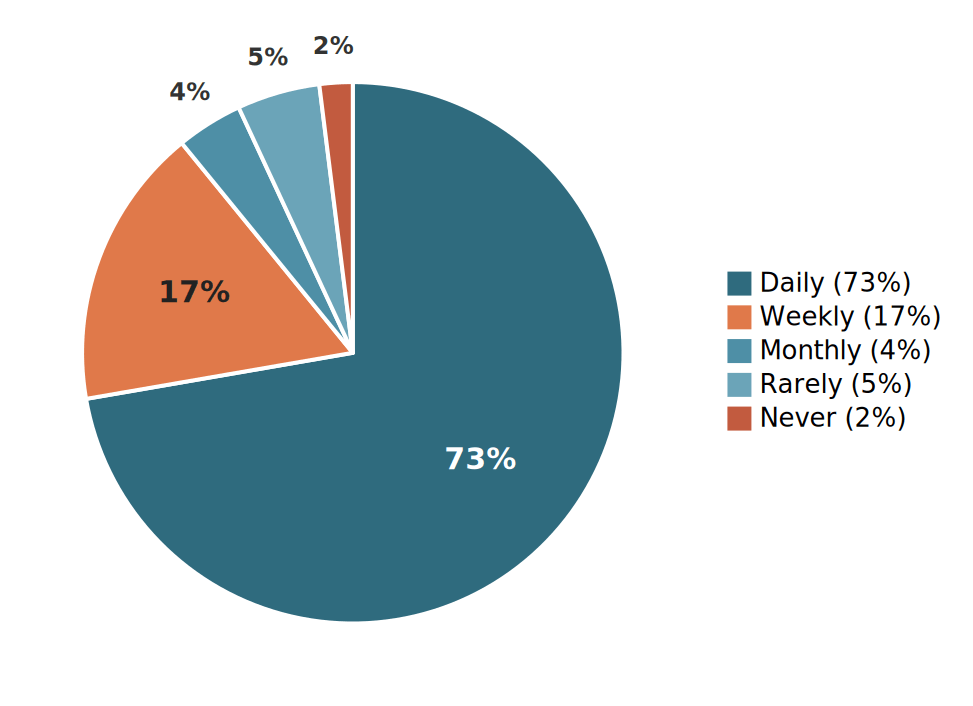
Artificial intelligence has officially crossed the threshold from an experimental tech-sector novelty into the operational backbone of modern business. According to the newly released 2026 AI Marketing Industry Report by Social Media Examiner, daily utilization of artificial intelligence among marketers has surged from roughly one-third just two years ago to nearly three-quarters today.
Crucially, this is not a phenomenon driven exclusively by massive corporate conglomerates with deep pockets and dedicated research-and-development wings. Sixty percent of the respondents in the 2026 survey hail from lean organizations operating with ten or fewer employees.
The data dismantles the myth that succeeding with AI requires enterprise-level infrastructure. Instead, the report paints a picture of a scrappy, highly adaptive small-business community that is learning by doing, self-funding tool subscriptions, and aggressively positioning itself for the next wave of automation—specifically, autonomous AI agents and video production.
Chronology: The Rapid Ascent of Marketing AI
To understand where small business marketing stands today, it is essential to trace how quickly the landscape has evolved over the past 24 months:
- 2024 (The Emerging Era): Only 37% of marketers utilized AI tools on a daily basis. At this stage, nearly a quarter of professionals (23%) reported rarely or never interacting with generative AI tools. The technology was largely viewed as an interesting alternative for rough-draft generation, surrounded by high levels of industry hype and widespread uncertainty.
- 2025 (The Integration Phase): Businesses began moving past the novelty phase. Companies experimented heavily with free-tier text and basic image generators. Free tools dominated budgets as professionals tested the waters to find legitimate use cases for daily workflows.
- 2026 (The Operational Normal): Daily usage has nearly doubled to 73%. Furthermore, 90% of marketers now engage with AI platforms at least on a weekly basis. The cohort of complete non-users has shrunken to a negligible 7%. The conversation has shifted entirely away from whether to use AI and toward how to extract maximum leverage from it.
Supporting Data: 5 Eye-Opening Findings from the 2026 Report
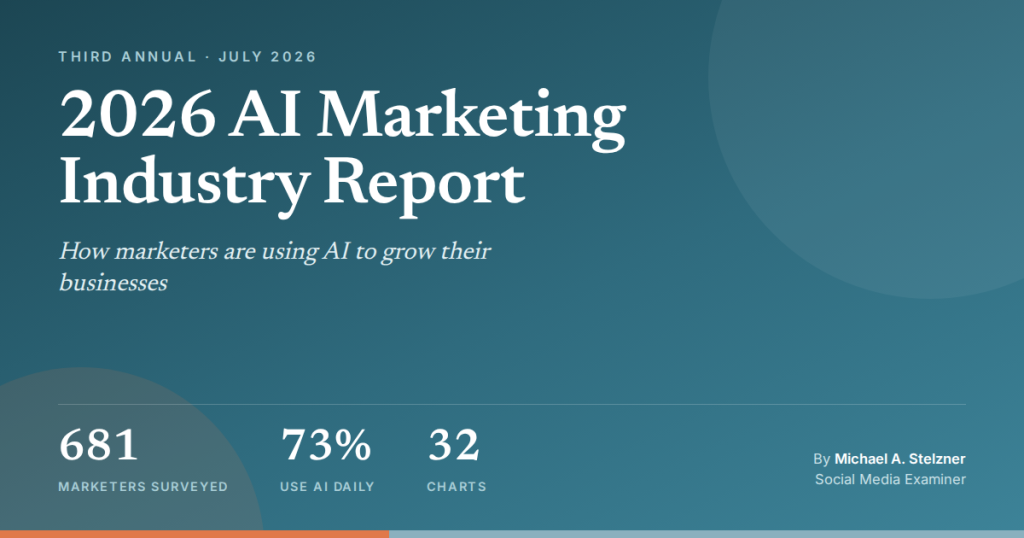
The 2026 AI Marketing Industry Report includes 32 detailed charts tracking year-over-year shifts. Five core findings stand out as particularly transformative for small business owners and lean marketing teams:
1. AI Is the New Normal, Not a "Nice-to-Have"
The days of viewing artificial intelligence as an optional experimental gadget are over. With 73% of professionals using AI daily and 90% utilizing it weekly, the technology has achieved near-universal saturation.
- The Momentum Continues: 84% of respondents reported that their overall AI usage increased over the past year, while 78% expect their reliance on these tools to grow even further in the months ahead.
- The Closing Window: For the remaining holdouts, industry analysts warn that the competitive advantage of being an early adopter is closing rapidly, transforming AI literacy into a fundamental baseline requirement for market survival.
2. The Death of Corporate Training and Big Budgets
One of the most persistent barriers to technology adoption has historically been the cost of training staff and procuring enterprise software licenses. The 2026 data shows that small businesses are sidestepping traditional corporate hurdles entirely:
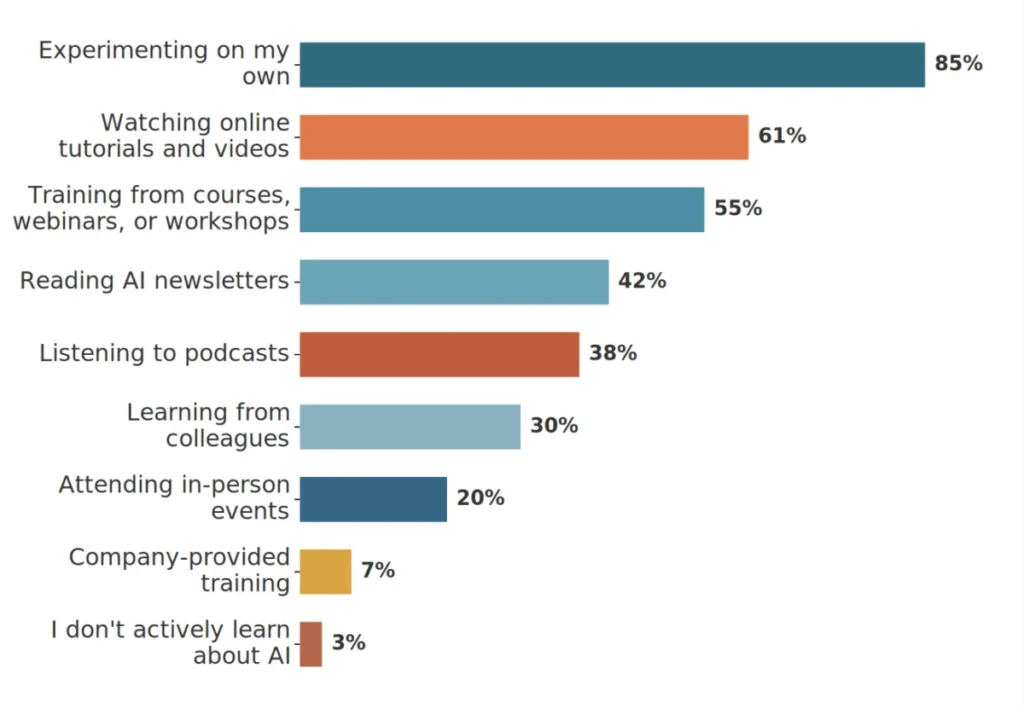
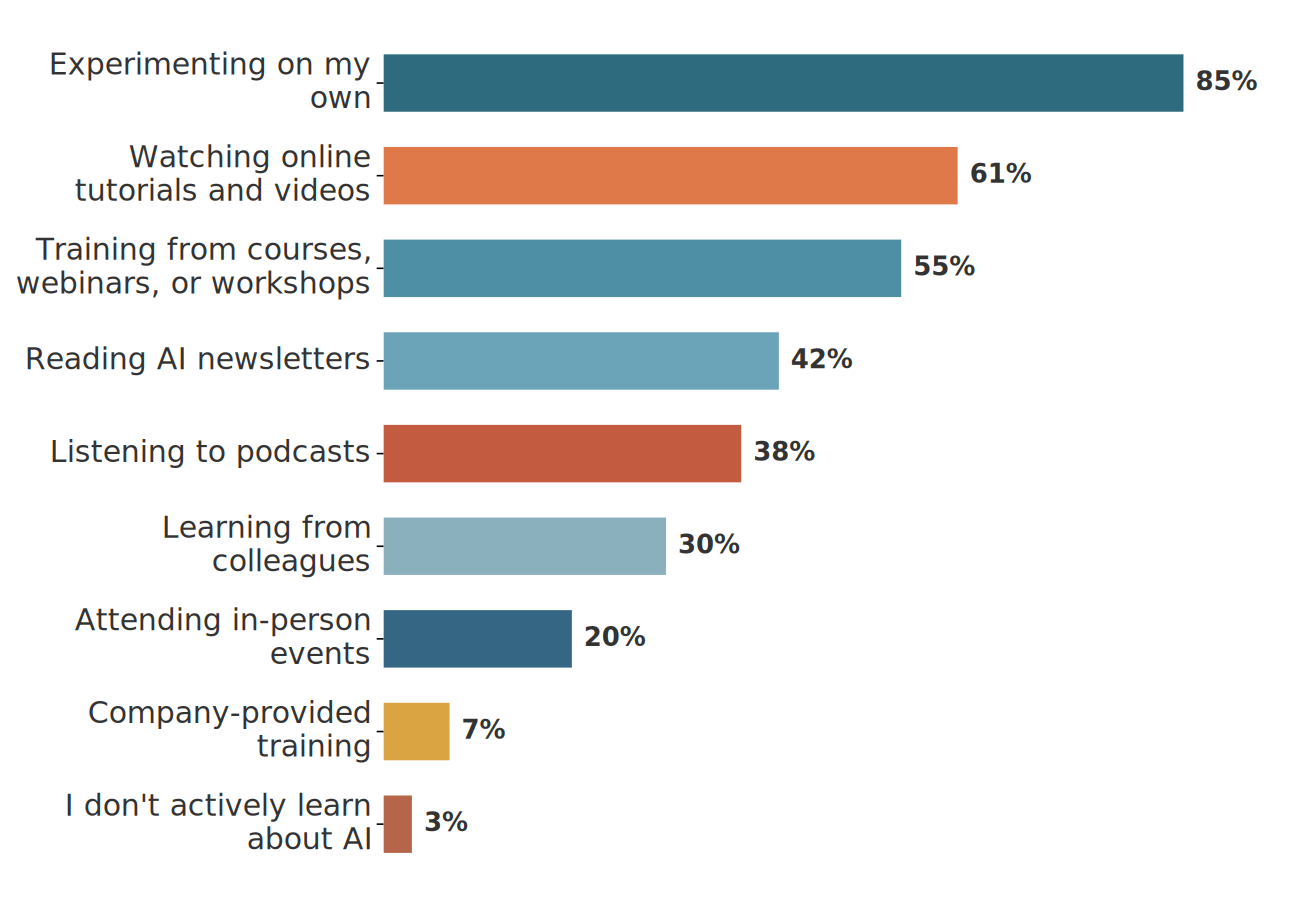
- Self-Taught Mastery: An overwhelming 85% of marketers learn how to use AI through independent experimentation. Just 7% receive formal, company-provided training.
- Out-of-Pocket Investment: The era of relying exclusively on free tiers is fading. Fully 85% of marketers now pay for AI tools in some capacity, with 53% funding these subscriptions directly out of their own pockets.
- Ownership: When asked who spearheads AI adoption within their organizations, 55% of respondents answered simply: "Me."
3. The Great Measurement Gap: Value Without Metrics
While the qualitative consensus on AI is overwhelmingly positive, a glaring structural deficiency remains in how businesses track return on investment (ROI):
- Productivity Gains: 86% of surveyed marketers agree that AI saves them valuable time, and an identical 86% report measurable boosts in day-to-day productivity.
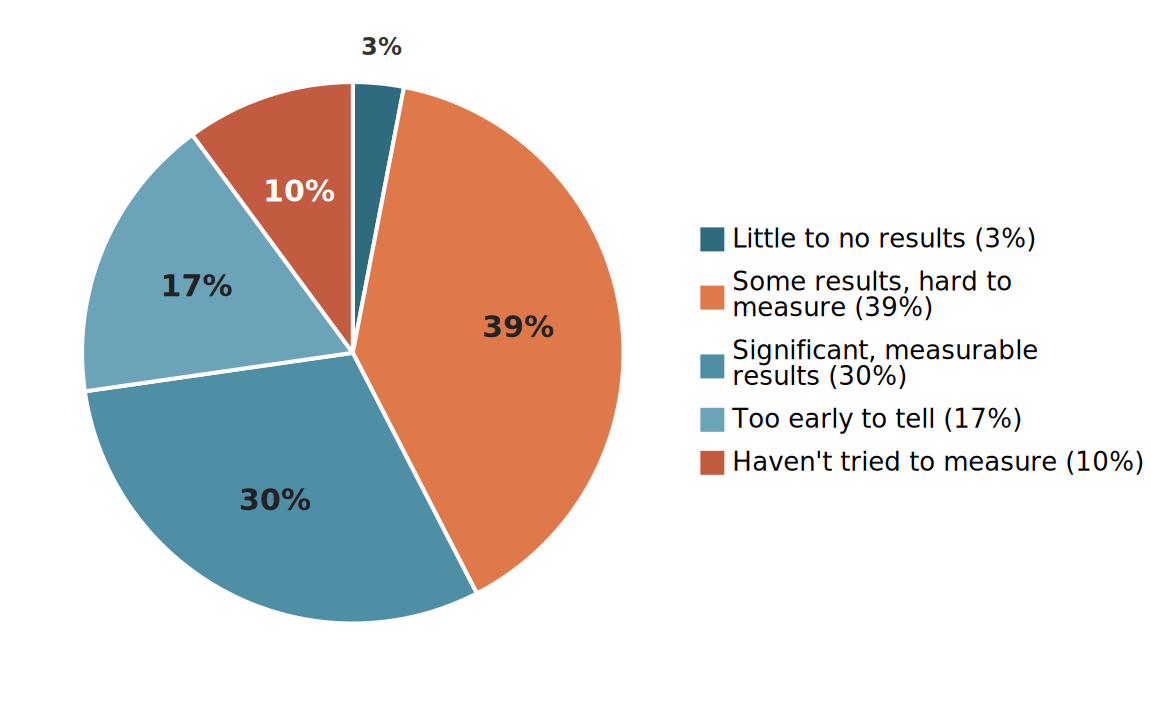
- The Tracking Void: Despite these glowing subjective reviews, only 30% of professionals can point to hard, quantifiable business results tied to their AI usage. An additional 39% acknowledge seeing positive outcomes but admit they cannot accurately measure them, while 10% have made no attempt to track results whatsoever.
- The Opportunity: For small business owners willing to implement basic tracking—such as hours saved per week or content pieces generated—this widespread measurement gap represents an immediate opportunity to outperform competitors who rely solely on gut feelings.
4. AI Video: The Ultimate Untapped Frontier
Content creation via AI is heavily skewed toward text, with 95% of marketers utilizing tools for written content. However, visual and multimedia formats present a vastly different adoption curve:
- The Video Lag: Only 37% of marketers currently use AI for video production.
- The Demand Surge: Conversely, 74% of respondents stated that video is the number one content type they want to learn how to create using AI.
- The 37-Point Gap: This represents the largest delta between demand and adoption measured in the report. While image creation has surged dramatically (jumping from 39% to 67% since 2024), video remains wide open. Early movers who master basic AI video tools today stand to capture disproportionate attention in crowded digital feeds.
5. Autonomous AI Agents Are the Next Horizon
As generative text and image tools become commoditized, the industry’s focus is pivoting rapidly toward agentic workflows:
- Current Adoption: Only 11% of marketers currently use autonomous AI agents regularly, with another 24% actively experimenting.
- Future Intent: A massive 44% plan to adopt AI agents soon, bringing total current and prospective adoption to 79%. Furthermore, 74% of marketers identified learning how to use AI agents as their top educational priority.
- Small Team Leverage: For lean businesses, AI agents—systems capable of executing multi-step workflows autonomously without constant human prompting—promise the operational capacity of a full-scale department, handling routine inquiries, monitoring analytics, and managing email drip campaigns independently.
Official Responses and Industry Insights
Michael Stelzner, founder of Social Media Examiner and the driving force behind the 2026 research, emphasized that the data was compiled specifically to give independent business owners an unvarnished look at reality rather than industry hype.
"We surveyed marketers to find out how they’re actually using AI," Stelzner noted upon the report’s release. "Not the hype. Not the headlines. The real story. And since 60% of our respondents come from businesses with 10 or fewer people, this isn’t enterprise research. This is your world."
Stelzner highlighted that the rapid migration from foundational tools like ChatGPT toward more nuanced platforms like Claude indicates a maturing user base. Professionals are no longer settling for generic output; they are demanding higher-order reasoning, strategic planning capabilities, and seamless integration into daily operations.
Industry analysts responding to the report have echoed these sentiments, pointing out that small businesses possess a distinct structural advantage over large enterprises: agility. While Fortune 500 companies remain bogged down by compliance reviews, committee approvals, and mandatory multi-tier training rollouts, individual entrepreneurs and small teams are free to experiment, fail, adapt, and scale their AI use cases in real time.
Implications for Small Business Owners
The findings of the 2026 AI Marketing Industry Report carry profound implications for entrepreneurs, solopreneurs, and small marketing agencies navigating an increasingly automated economy:
- Democratized Competitiveness: Because 85% of successful AI users are self-taught and funding tools independently, lack of budget is no longer a valid excuse for falling behind. The barrier to entry is curiosity and time investment, not capital.
- The Need for Rigorous Metrics: Businesses that bridge the measurement gap—moving beyond generalized feelings of "saving time" to tracking exact labor-hour reductions and output volume—will make smarter financial decisions regarding which software subscriptions to maintain and scale.
- First-Mover Advantage in Video: With a 37-point gap between the desire to create AI video and actual adoption, small businesses that invest time now into learning basic AI video generation tools can secure an immediate visual edge over competitors stuck in text-only formats.
- Preparing for Agentic Workflows: The impending wave of autonomous AI agents will redefine lean operations. Business owners who begin researching and testing agent-based systems today will be uniquely positioned to automate routine administrative and marketing tasks, freeing up human capital for high-level creative and relational work.
Ultimately, the 2026 data confirms that the AI revolution is no longer a speculative future event. It is the current operating environment—and for nimble small businesses, it offers unprecedented leverage to punch well above their weight class.