The Agentic Revolution: Building Autonomous Workflows with Manus AI
The landscape of artificial intelligence is currently undergoing a fundamental shift. For the past two years, the industry has been dominated by "chatbots"—Large Language Models (LLMs) like ChatGPT and Claude that operate on a conversational, prompt-response basis. However, a new era of "agentic AI" has arrived, led by platforms like Manus. This shift moves the technology from a passive assistant that tells you how to do something to an active agent that simply does it for you.
In a recent deep dive featuring marketing expert Kate vanderVoort and Michael Stelzner, the mechanics of building agentic workflows using Manus were unveiled. The core promise of Manus is the elimination of manual "copy-paste" labor between AI tools, replacing it with multi-step, autonomous processes that require minimal human intervention.
Main Facts: The Distinction Between Chatbots and Agents
To understand the value of Manus, one must first distinguish between a standard AI chatbot and an AI agent. Most users are accustomed to the "How can I help you?" model of ChatGPT. In this scenario, the AI provides information or drafts content, but the human remains the "project manager," manually moving data from the AI into a CRM, a research tool, or a document editor.
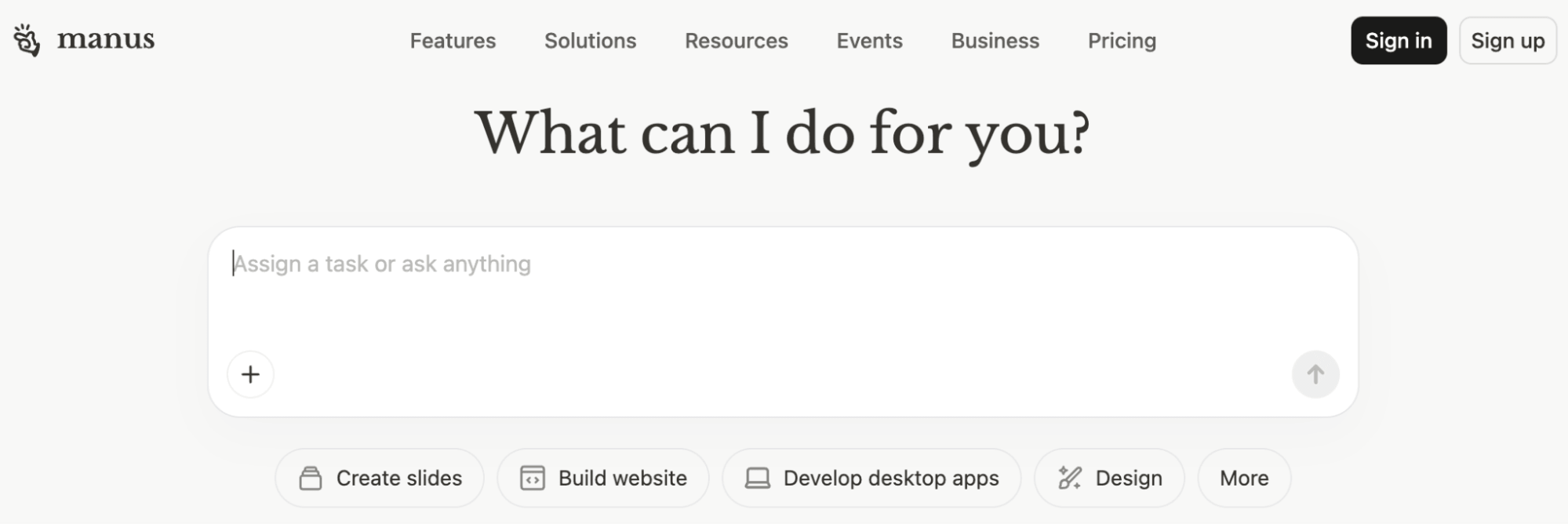
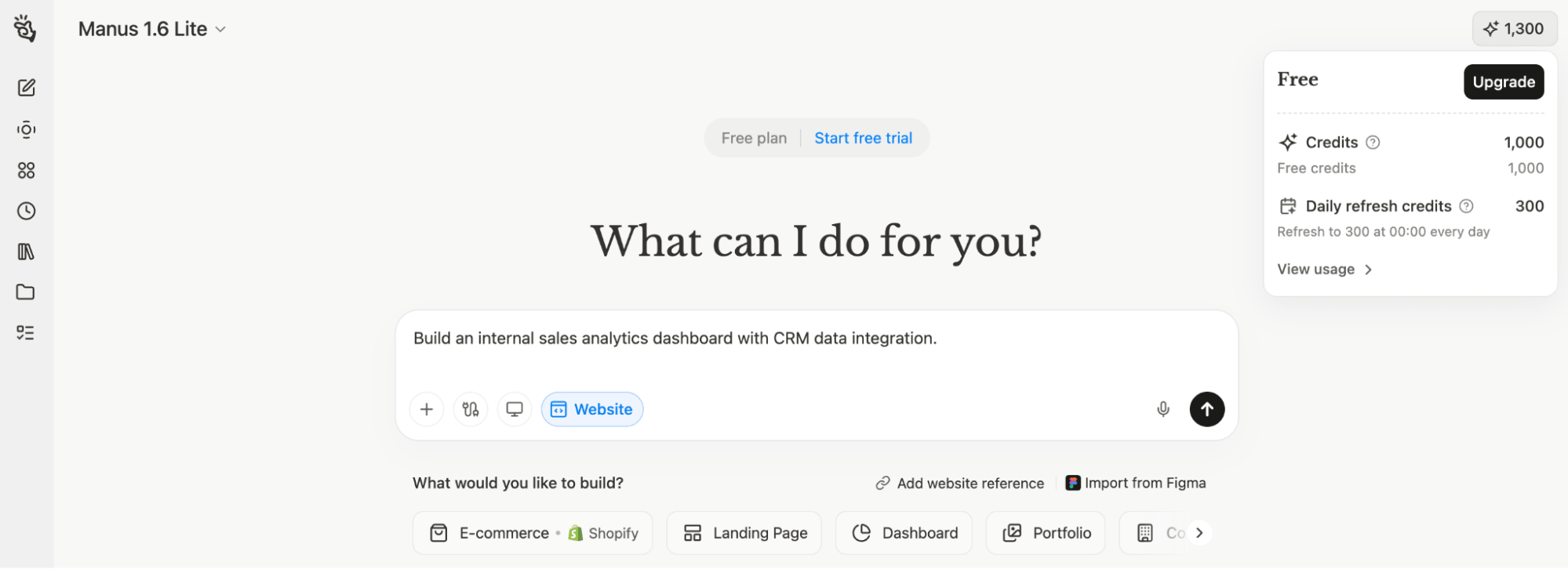
Kate vanderVoort identifies Manus as a departure from this labor-intensive cycle. Instead of asking how to help, Manus asks, "What can I do for you?" It then executes the request by accessing the web, logging into third-party platforms, and working through complex sequences without requiring a prompt at every stage.
The Credit-Based Economy of Agentic AI
Unlike the flat-rate monthly subscriptions typical of SaaS products, Manus utilizes a hybrid credit-based model. This reflects the high computational cost of running autonomous agents that may browse dozens of websites and run code for nearly an hour to complete a single task.
- Free Tier: Includes 300 refresh credits daily (resetting every 24 hours).
- Paid Tiers: Starting at $20/month for 4,000 credits, scaling up to $200/month for 40,000 credits.
- Consumption Rates: A simple query may cost only 5 credits, but a deep-dive autonomous workflow—such as a market research report synthesized from multiple sources—can consume 900 credits or more in one execution.
Chronology: Implementing Manus into a Business Ecosystem
Adopting an agentic workflow is not a matter of simply "switching on" a tool; it requires a structured approach to integration across four distinct access modes offered by the platform.
Step 1: Selecting the Access Mode
Manus provides four ways to interact with its agent, depending on the sensitivity and complexity of the task:
- Browser-Based Access: The most common entry point. Manus operates within a browser and can interact with online platforms (like LinkedIn or a CRM) using the user’s existing sessions.
- Desktop Application ("My Computer"): In this mode, the AI is granted direct access to local files on the user’s machine. This allows for the manipulation of internal spreadsheets, PDFs, and local databases without the need for manual uploads.
- Telegram Integration: For professionals on the move, Manus can be accessed via a Telegram channel. This allows a user to monitor the progress of a long-running desktop task and provide input or approvals from their phone.
- Manus Cloud Computer: This is the most advanced implementation. It is a persistent virtual environment that runs 24/7. Unlike standard sessions that "evaporate" once a task is done, the Cloud Computer maintains a persistent database, making it ideal for continuous monitoring of news cycles or social media interactions.
Step 2: Transitioning from Brainstorming to Briefing
A critical chronological step in moving to agentic AI is changing the user’s mental model. VanderVoort notes that users often waste credits by "brainstorming" with Manus. Because Manus is an execution engine, the "planning" phase should occur in a cheaper environment, such as a standard LLM. The professional workflow involves using a tool like Perplexity or Claude to draft a "highly optimized brief" before ever opening Manus.
Supporting Data: Case Studies in Efficiency and ROI
The power of Manus is best illustrated through real-world applications where multi-hour manual processes were condensed into minutes of autonomous execution.
Case Study A: The Client Proposal Workflow
In traditional consulting, generating a high-quality client proposal involves a fragmented chain of tools:
- Step 1: Researching the client (Perplexity/Google).
- Step 2: Deep-dive analysis (Gemini Deep Research).
- Step 3: Drafting the proposal (Claude).
- Step 4: Formatting and mapping KPIs (Manual).
This process typically requires 3 to 4 hours of human labor. By building an agentic workflow in Manus, the agent performs the research, synthesizes the findings, and drafts the proposal autonomously. The human only enters the loop to upload a call transcript. The financial cost is approximately $5 in credits per proposal, representing a massive reduction in billable hours spent on administration.
Case Study B: The $150,000 Training Program
One of the most staggering examples of Manus’s capability occurred during a workshop for a global food and beverage manufacturer. The company’s Learning and Development (L&D) team had spent two years and $150,000 on an external agency to build a training program, yet they were only at "step four" of their plan.
Using Manus, a prompt was initiated to build the entire program. The agent:
- Ran an autonomous 42-step task list for 50 minutes.
- Determined that the requested six modules were insufficient and expanded the curriculum to seven.
- Produced a 150-page training manual, experiential exercises, and an interactive quiz system.
The result was a comprehensive training suite delivered in under an hour, highlighting the potential for agentic AI to disrupt traditional agency models.
Expert Insights: The Architecture of "Skills" and SOPs
Expert Kate vanderVoort emphasizes that the secret to long-term success with Manus lies in "Skills." In the Manus ecosystem, a Skill is a stored, reusable workflow—essentially a package containing instructions, brand voice documents, and examples of successful outputs.
The SOP-to-Skill Pipeline
The most robust way to use Manus is to base its Skills on Standard Operating Procedures (SOPs). VanderVoort utilizes a 14-category SOP generation skill that captures the "why" behind business decisions, not just the "what."
"If you document the reasoning behind a sequence or a format choice," vanderVoort explains, "the AI output starts to reflect how your business actually operates, rather than just following a generic script."
The process for creating these high-level Skills follows a specific hierarchy:
- Voice-to-Text Brain Dump: The human narrates a task using a tool like Wispr Flow.
- LLM Structuring: A standard LLM (like Claude) takes that raw audio and organizes it into a structured SOP.
- Manus Skill Creation: That SOP is uploaded into Manus as a "Skill." Once saved, the agent can replicate that exact process on demand with perfect consistency.
Implications: The Future of the AI-Augmented Workforce
The emergence of tools like Manus suggests a future where the "value" of a human professional shifts from execution to architecture. When an AI agent can handle 42 steps of a training program or conduct 30 pages of market research autonomously, the human’s role becomes that of a "Workflow Designer" and "Quality Controller."
Security and Ethical Considerations
With great autonomy comes significant risk. Because Manus can log into accounts and interact with local files, security is paramount. VanderVoort offers a "Pro Tip" for the burgeoning community: Never download "Skills" from untrusted libraries or social media posts. Because a Skill is a zip file containing instructions, it could theoretically contain malicious directives. Users are advised to build their own Skills or source them from verified experts.
The End of the "Blank Page"
The broader implication of agentic AI is the total elimination of the "blank page" problem. Businesses can now move from an idea to a fully realized, multi-platform execution in the time it takes to grab a cup of coffee. As persistent agents like the Manus Cloud Computer become more common, we will see the rise of "Digital Employees"—AI systems that monitor trends, update CRMs, and manage social interactions 24/7 without human prompting.
In conclusion, Manus represents a bridge to a more efficient future. By moving away from the chatbot mindset and embracing autonomous, skill-based workflows, businesses can reclaim thousands of hours of manual labor, allowing human creativity to focus on high-level strategy rather than the friction of moving data between tabs.