The Collapse of a Cyber Empire: Scattered Spider Key Players Plead Guilty
In a landmark development for international cybersecurity enforcement, two young British men—Thalha Jubair, 20, and Owen Flowers, 18—have pleaded guilty to criminal charges stemming from a devastating August 2024 cyberattack on Transport for London (TfL). The attack, which crippled the public transport infrastructure of the Greater London area, served as the catalyst for a high-stakes legal confrontation.
The guilty pleas, entered this week on the first day of what was anticipated to be a grueling six-week trial, mark a significant victory for law enforcement agencies on both sides of the Atlantic. Both Jubair and Flowers were identified as pivotal members of "Scattered Spider," a prolific and sophisticated cybercrime syndicate that has wreaked havoc on global corporations, healthcare providers, and critical infrastructure for years.
The Scope of the Charges
Thalha Jubair, of East London, and Owen Flowers, of Walsall, stood before a UK court to answer for their roles in the TfL breach. Both defendants admitted to conspiring to commit unauthorized acts against Transport for London’s computer systems—an act that prosecutors argued posed a "risk of serious damage to human welfare."
The legal peril for the duo extends far beyond British borders. While Jubair faces potential extradition and prosecution in the United States, Flowers has already begun to account for his broader criminal footprint. During the proceedings, Flowers admitted to participating in a separate, equally sinister conspiracy: a targeted hack into U.S.-based healthcare providers SSM Health Care Corporation and Sutter Health in September 2024.
The US Department of Justice has been building a massive case against these individuals. In September 2025, federal prosecutors in New Jersey unsealed an indictment alleging that Jubair and his associates were involved in a staggering 120 network intrusions across 47 U.S. entities between 2022 and 2025. The economic damage attributed to the group is immense, with victims reportedly paying at least $115 million in ransom demands to regain access to their own encrypted data.
Chronology of a Cyber-Insurgency
To understand the rise and fall of Scattered Spider, one must look at the timeline of their operations, which evolved from petty digital theft to large-scale, enterprise-level extortion.
- Summer 2022: The group launches a massive SMS phishing campaign targeting employees at hundreds of major organizations. This campaign, which involved stealing single sign-on (SSO) credentials, led to the compromise of corporate giants such as LastPass, DoorDash, Mailchimp, Plex, and Signal.
- September 2023: Scattered Spider executes high-profile ransomware attacks on MGM Resorts and Caesars Entertainment in Las Vegas. Investigative reports later identified Owen Flowers as the individual who anonymously engaged with the media to brag about the group’s successes during the chaos.
- August 2024: The group strikes Transport for London, leading to widespread disruption of public transit services.
- September 2024: The group pivots to healthcare, targeting US providers SSM Health and Sutter Health.
- July 2025: UK authorities arrest Flowers and Jubair, linking them to earlier ransomware attacks on British retailers, including Marks & Spencer, Harrods, and the Co-op Group.
- September 2025: A sweeping U.S. indictment is unsealed, detailing the full extent of the group’s financial fraud and money laundering schemes.
- April 2026: Fellow Scattered Spider member Tyler "Tylerb" Buchanan pleads guilty to wire fraud conspiracy, admitting to his role in the 2022 SMS phishing spree.
- July 2026: Flowers and Jubair are scheduled to face sentencing in London.
The Infrastructure of Fraud: Star Chat and Beyond
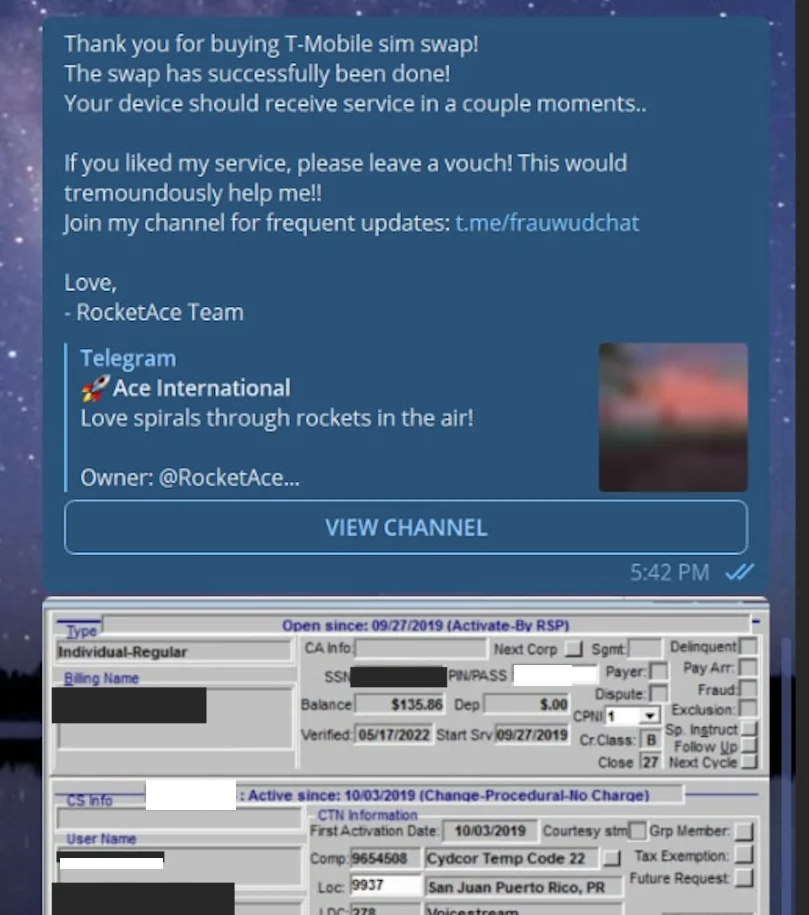
The success of Scattered Spider was not merely the result of technical prowess but of a highly organized, "as-a-service" business model. Jubair, in particular, was identified by prosecutors as a co-manager of "Star Chat," a Telegram channel that functioned as a clearinghouse for cybercrime.
Star Chat specialized in SIM-swapping—a technique where attackers phish employees at major wireless providers to gain control over a target’s phone number. Once the number is ported to an attacker-controlled device, the criminals can bypass multi-factor authentication (MFA) codes, effectively hijacking the victim’s digital identity. The group’s "Rocket Ace" handle became notorious for selling these services, providing a roadmap for other criminals to infiltrate secure corporate networks.
Furthermore, investigative reports have surfaced details regarding Jubair’s early start in the cyber-underworld. At age 15, operating under the alias "Everlynn," he reportedly sold "emergency data requests" (EDRs). These fraudulent requests, crafted to look like urgent law enforcement inquiries, were sent to major tech companies, demanding sensitive user data under the guise of life-and-death emergencies.

The Web of Accountability
The collapse of Scattered Spider is the result of unprecedented cooperation between the UK’s National Crime Agency (NCA) and U.S. federal authorities. The legal web surrounding the group is vast, and the sentences handed down reflect the severity of the crimes.
In August 2025, Noah Michael Urban, a 20-year-old Florida resident and key member of the group, was sentenced to 10 years in federal prison and ordered to pay $13 million in restitution. The conviction of Tyler Buchanan in April 2026 served as a further blow to the group’s remaining leadership.
Despite these successes, the U.S. Department of Justice maintains that the investigation is far from over. Three other defendants named in the original indictment remain targets: Ahmed Hossam Eldin Elbadawy ("AD") of Texas, Evans Onyeaka Osiebo of Texas, and Joel Martin Evans ("joeleoli") of North Carolina.
Implications for Global Security
The implications of the Scattered Spider case are profound. For corporate and public infrastructure entities, the shift toward "identity-first" attacks—where hackers target the human element through SMS phishing and SIM-swapping—represents a critical vulnerability.
The TfL attack demonstrated that even public institutions with high security standards are not immune when an attacker successfully harvests an employee’s credentials. The group’s ability to bypass MFA by controlling the underlying communication hardware (the phone) underscores the need for more resilient authentication methods, such as hardware security keys (FIDO2) that are resistant to phishing.
Furthermore, the "Star Chat" model highlights the professionalization of cybercrime. By selling access and specialized tools to other bad actors, Scattered Spider essentially acted as a multiplier for digital chaos. The disruption of this ecosystem, while significant, raises questions about how quickly the void will be filled by emerging groups.
As the sentencing date of July 15, 2026, approaches for Flowers and Jubair, the international community is watching closely. These cases serve as a stark reminder that the digital realm is no longer a "wild west" where youthful hackers can operate with impunity. Through sophisticated forensics and cross-border collaboration, law enforcement is finally catching up to the architects of the modern ransomware economy.
The downfall of Scattered Spider is not just a story of technical defeat; it is a story of human accountability. From the Telegram channels of London to the corporate boardrooms of Las Vegas, the message is clear: the digital walls are closing in on those who seek to profit from the disruption of society’s essential services.