The Dawn of the Agentic Era: AWS Summit NYC 2026 Defines the Future of Cloud Innovation
Last week, the heartbeat of the global technology industry pulsed through the Javits Center in New York City as thousands of developers, enterprise leaders, and cloud architects converged for the AWS Summit New York City. The one-day event served as more than just a regional gathering; it functioned as a definitive statement on the future of artificial intelligence. With a focus shifting from simple generative models to complex, autonomous systems, AWS is signaling a fundamental change in how businesses will interact with the cloud.
Main Facts: The Rise of Agentic AI
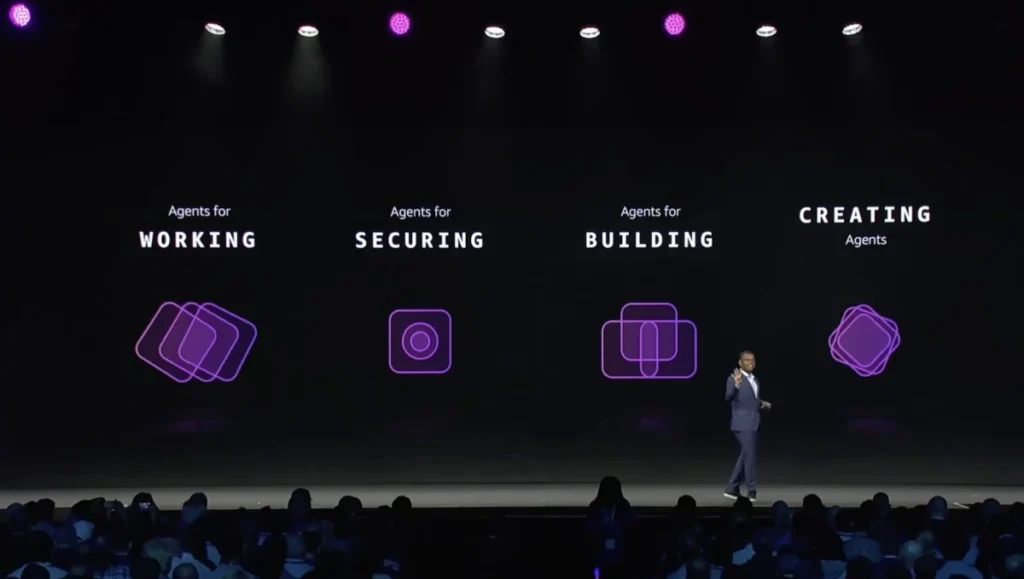
The centerpiece of the summit was the keynote address delivered by Dr. Swami Sivasubramanian, VP of Agentic AI at AWS. In a presentation that captivated a packed auditorium, Dr. Sivasubramanian introduced a new paradigm for machine learning: "Agentic AI."
The core thesis presented at the summit is that AI must evolve beyond mere content generation to become a "compounding" force. According to AWS, the next generation of AI agents will not merely answer prompts; they will be capable of reasoning through multi-step workflows, managing complex enterprise data, and executing tasks autonomously over time. These agents are designed to learn from their interactions, effectively compounding their value to an organization the longer they are deployed.
This shift represents a transition from "Chatbot AI"—where the human provides the intent and the AI provides the response—to "Agentic AI," where the human provides the goal and the agent orchestrates the necessary AWS services, API calls, and data processing to achieve the desired outcome.
Chronology: A Day of Innovation
The summit began with a high-energy plenary session, setting the stage for what would be a series of rapid-fire announcements. Throughout the day, the following sequence of events underscored the AWS roadmap:
- Morning Keynote (09:00 AM): Dr. Sivasubramanian unveiled the "Agentic Stack," a collection of new tools designed to lower the barrier for developers building autonomous AI applications. The focus was on scalability and security—two pillars that have long defined the AWS ecosystem.
- Technical Deep Dives (11:00 AM – 02:00 PM): Breakout sessions explored the practical implementation of agentic workflows. Engineers showcased how businesses could integrate these new agents into existing CI/CD pipelines, allowing for automated bug detection, remediation, and infrastructure scaling without human intervention.
- Partner Ecosystem Showcase (02:00 PM – 04:00 PM): AWS partners demonstrated early-stage implementations of these agents. From retail supply chain optimization to automated financial auditing, the use cases highlighted the versatility of the new framework.
- Closing Remarks (04:30 PM): The event concluded with a summary of the "Top Announcements," reinforcing the commitment to developer accessibility and cost-efficiency.
Supporting Data: Infrastructure and Efficiency
Behind the buzz of the keynote lies a massive commitment to infrastructure. AWS remains relentless in its pursuit of increasing performance while simultaneously lowering costs for its customers. During the summit, the company highlighted recent optimizations in its compute instances and serverless offerings.
The data presented suggests that as AI models become more complex, the cost of inference is a growing concern for enterprises. AWS addressed this head-on by announcing targeted price reductions across several key services. These reductions are not merely cosmetic; they are the result of better hardware utilization and the deployment of custom silicon, such as the latest generation of Trainium and Inferentia chips. By optimizing the underlying metal, AWS is providing the financial runway companies need to experiment with agentic AI at scale.
Official Responses: The Strategic Vision
In his remarks, Dr. Sivasubramanian emphasized that the "agentic" approach is not a standalone product but an evolution of the entire AWS portfolio. "Our goal," he noted, "is to make the complexity of building autonomous agents invisible."
The official stance from AWS leadership is that the cloud of the future is an "intelligent fabric." Instead of users manually configuring databases, load balancers, and security groups, they will describe their desired state to an agent. The agent, drawing on the vast, secure repository of AWS best practices, will then construct the architecture, optimize for cost, and monitor for performance.
This vision has been met with significant enthusiasm from the developer community. During the "Builder Center" sessions, participants were eager to understand how these agents handle data sovereignty and security—concerns that AWS has addressed by embedding compliance guardrails directly into the agentic framework.
Implications for the Tech Landscape
The pivot toward Agentic AI has profound implications for the industry at large.
1. The Death of Manual Configuration
For years, the "undifferentiated heavy lifting" of cloud computing has been the primary pain point for developers. If the vision presented at the summit holds true, the next three to five years will see a drastic reduction in manual infrastructure management. As agents become more capable, the role of the cloud engineer will shift from "builder of infrastructure" to "architect of outcomes."
2. Compounding Enterprise Value
The "compounding value" thesis is particularly compelling for the C-suite. In a traditional software model, an application’s utility is largely static until a developer pushes an update. With agentic systems, the software improves its own efficiency and effectiveness as it encounters more data and more edge cases. This creates a competitive moat for companies that adopt these technologies early.
3. Democratization of Complexity
By providing a robust stack for building agents, AWS is effectively democratizing advanced automation. A startup with two developers can now theoretically build an application with the same autonomous capabilities as a tech giant, provided they leverage the right agentic frameworks. This levels the playing field, potentially sparking a new wave of innovation in sectors that have historically been slow to adopt AI, such as manufacturing, logistics, and healthcare.

Looking Ahead: The Weekly Roundup
While the summit provided the "wow" factor, the daily business of AWS continues. The "What’s New with AWS" page remains the primary source of truth for developers navigating these rapid changes. As we look to the coming months, the focus will undoubtedly be on how these agentic capabilities move from experimental labs to production-grade environments.
For those who missed the sessions in New York, AWS has provided a wealth of resources, including the full keynote recording, deep-dive blog posts, and documentation on the new AI stack. Additionally, the upcoming calendar of AWS-led events, startup mixers, and community days offers numerous opportunities for builders to get hands-on experience with these new tools.
As Channy Yun, the AWS evangelist, noted at the conclusion of the event, the "Weekly Roundup" will continue to track these developments. The pace of innovation in the cloud is not slowing down; if anything, the advent of Agentic AI is accelerating it.
Conclusion
The AWS Summit New York City 2026 was more than a trade show; it was a pivot point. By grounding their future in the concept of agents that learn, reason, and compound value, AWS has set the agenda for the next phase of the digital revolution. For businesses and developers, the message is clear: the future is autonomous, it is intelligent, and it is ready to be built.
As we look toward the next horizon, the integration of these agentic systems into the everyday fabric of cloud operations will be the story to watch. Whether it is through further cost reductions, enhanced security protocols, or the release of more sophisticated agent-orchestration tools, the path forward is defined by a commitment to helping builders achieve more with less.
Stay tuned to the AWS News Blog and the Builder Center for continuous updates as these tools move into general availability. The era of the agent is here—are you ready to build?