The Living Room Takeover: What YouTube’s Pivot to Connected TVs Means for Content Creators and Marketers

As internet-connected televisions become the dominant canvas for digital media, YouTube’s aggressive push into the living room is fundamentally reshaping how video content is created, distributed, and monetized. For years, digital video strategy was dictated by the constraints and behaviors of the mobile phone screen—fast cuts, vertical framing, low expectations for production polish, and short attention spans.
Today, that playbook is obsolete. With connected TVs (CTVs) serving as YouTube’s primary strategic horizon, creators and marketers must adapt to a couch-based audience whose viewing mindset borrows heavily from traditional streaming platforms like Netflix and HBO.
Drawing from expert insights shared by digital strategist Liron Segev alongside Michael Stelzner and Jerry Potter, this deep dive explores the mechanics of optimizing for the 65-inch screen. We examine the platform’s new analytics metrics, AI-driven search integration, and frictionless e-commerce tools, mapping out a roadmap for brands navigating this paradigm shift.
Main Facts: The Great Migration to the Big Screen
The core narrative of modern digital video is simple: YouTube has conquered mobile, and its sights are now locked firmly on the living room. Connected TVs represent the platform’s primary growth engine, with TV screens frequently ranking as the single largest traffic source for established channels.

This migration forces a psychological pivot for marketers. A consumer viewing a video on a smartphone during a crowded morning train commute maintains low production expectations. However, that same consumer, transitioning from a cinematic streaming series to YouTube on a 65-inch television, unconsciously applies studio-level production standards.
Crucially, experts emphasize that meeting this higher standard does not require Hollywood budgets or clinical perfection. Instead, it demands an understanding of context:
- The Couch Mindset: Viewers on TVs are relaxed, often multitasking with a phone in hand, and seeking longer, immersive experiences rather than rushed, bite-sized tutorials.
- The Reality Check: Segev’s cardinal rule for marketers is simple yet frequently ignored—watch your own content on an actual television from couch distance. This zero-cost audit immediately exposes visual clutter, poorly scaled text, and pacing flaws invisible on a desktop monitor.
- Low-Hanging Visual Assets: Channel banners and thumbnails require immediate re-engineering. YouTube’s expanded support for 50-megabyte, 4K-resolution thumbnails means high-definition fidelity, but clarity and clean design must still take precedence over visual crowding. Furthermore, channel banners display hidden top and bottom real estate on TVs that remains cropped on mobile devices, offering prime, underutilized space for brand messaging.
Chronology of a Shift: From Mobile Micro-Moments to Cinematic Episodic Content
The evolution of YouTube’s ecosystem can be tracked across distinct eras of user behavior and algorithmic design:
- The Early Mobile Era: Characterized by rapid growth on smartphones, where the primary objective was capturing attention within the first three seconds through aggressive jump cuts and frantic pacing.
- The Rise of the Connected TV: As smart TVs saturated households, watch times lengthened. YouTube responded by championing longer-form content, transforming the historical 10-minute threshold into a baseline rather than an ambitious ceiling.
- The Integration of AI Discovery and Voice Search: With the rollout of generative AI capabilities—such as Gemini-powered Ask YouTube search on smart TVs—the discovery mechanism evolved from keyword matching to contextual, conversational voice queries.
- The Advent of Living Room Commerce: Most recently, YouTube introduced Buy with Google Pay integrations for smart TVs, turning passive viewing environments into transactional shopping ecosystems via frictionless remote controls.
Supporting Data and Analytics: Understanding "Unique Reach"
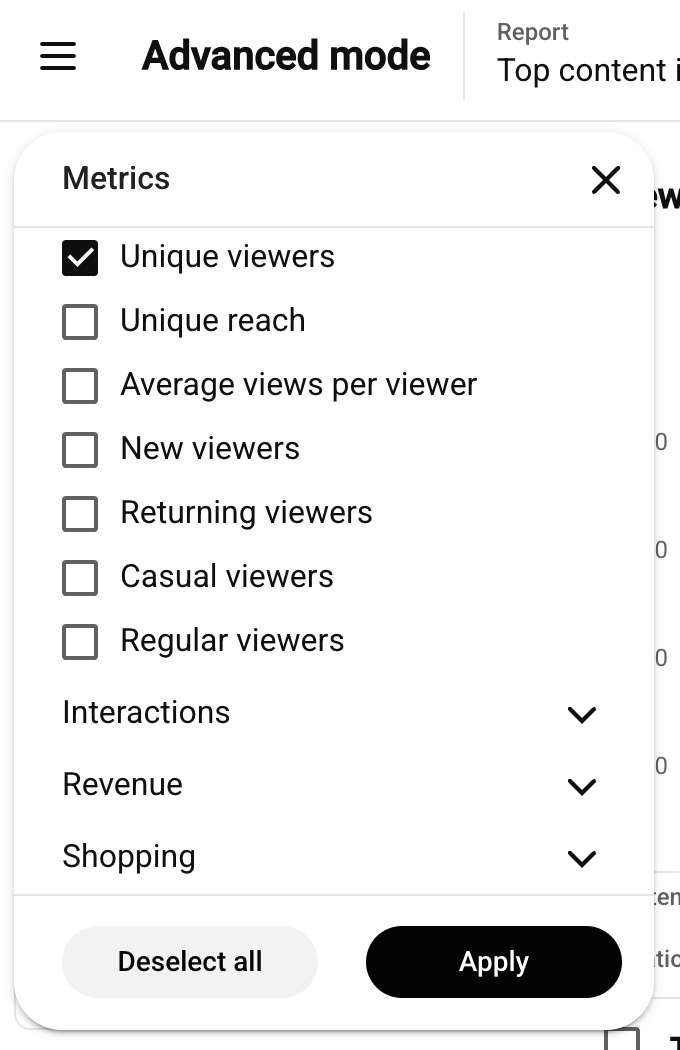
As viewing habits shift toward shared household environments, traditional metrics like individual "views" or logged-in "unique viewers" fail to capture the true footprint of a connected TV audience.
To bridge this gap, YouTube has rolled out Unique Reach, an advanced analytics metric designed to estimate the total aggregate audience watching a given video—including co-viewers on shared living room screens who may not be logged into individual accounts.
How Unique Reach Works
Modeled similarly to broadcast television measurement systems like Nielsen ratings, Unique Reach synthesizes multiple signals:
- Time of day (evening hours traditionally signal multi-viewer households).
- Device architecture (TV versus mobile or desktop).
- Audience demographics and general video genre trends.
Strategic Implications for Sponsors and Brands
While Unique Reach provides a powerful indicator of broader brand exposure, marketers must exercise caution during financial evaluations. If a video records 5,000 standard views but boasts 15,000 in Unique Reach, brands should utilize baseline view counts for strict performance calculations while treating the reach multiplier as a valuable bonus signal of communal appeal.
As Jerry Potter notes, context is paramount: family-oriented or entertainment channels naturally skew toward high co-viewing rates, whereas hyper-niche technical tutorials may not experience the same household amplification.

Official Responses and Platform Innovations
Google and YouTube leadership have systematically introduced features engineered explicitly for the living room hardware ecosystem. These tools aim to solidify YouTube’s dominance across smart TVs, gaming consoles, and streaming devices.
1. Ask YouTube and Multimodal AI Discovery
The expansion of Ask YouTube to smart TVs allows viewers to use their remote control microphones to query the platform conversationally. Powered by Gemini, the AI chatbot can answer complex questions, summarize content, and search within videos without requiring the user to touch a smartphone.
Because Gemini functions as a multimodal vision model—capable of analyzing both audio transcripts and visual on-screen elements like lower thirds and text overlays—marketers must adapt. Clear, verbalized website URLs, natural-language phrasing in video scripts, and structured visual assets ensure that AI systems can accurately cite and surface brand content.
2. Frictionless TV E-Commerce
Mirroring the checkout flows popularized by social shopping platforms, YouTube’s new Buy with Google Pay feature allows living room audiences to complete purchases in just two clicks using their TV remote. With data indicating that audiences consume tens of billions of hours of shopping-related content on the platform—a vast proportion of which occurs in the living room—this innovation bridges the gap between entertainment and direct-to-consumer sales for low-ticket items and merchandise.
Implications for Marketers and Creators
Adapting to YouTube’s living room revolution requires a comprehensive overhaul of digital content strategies. To thrive in this new landscape, brands must implement the following operational shifts:
Pivot to Episodic Storytelling and "Infotainment"
Standalone, transactional how-to videos should be supplemented with structured, episodic content. Viewers settling onto a couch appreciate a relaxed pacing style that blends education with entertainment. Leaving in humanizing elements—such as authentic behind-the-scenes interactions, minor bloopers, or natural conversational flows—fosters a deeper connection than sterile, over-edited corporate scripts.
Build Natural Re-Hooks
Because TV viewers frequently multitask with mobile devices in hand, longer videos require intentional pacing structures. Creators should embed natural re-engagement markers—subtle verbal transitions or periodic progress recaps—to pull distracted viewers back into the narrative arc without sounding condescending.
Optimize for Conversational Search
With voice search and AI discovery taking center stage, keyword stuffing is dead. Creators should weave natural human questions into their video transcripts (e.g., phrasing points as conversational inquiries) and structure titles around how people actually speak when searching for solutions. Furthermore, maintaining a dedicated Shorts FAQ playlist establishes a long-tail search asset that continues to capture organic traffic years after initial publication.

Elevate Authority with Proprietary Insights
As generative AI systems increasingly synthesize and summarize web content, repeating generic industry facts will no longer suffice. As Segev notes, AI will never cite content it could have written itself. The ultimate differentiator for marketers is injecting proprietary data, personal anecdotes, and unique case studies into every video, transforming the transcript into a truly authoritative source that AI models must reference.
Conclusion
YouTube’s aggressive transition into the living room is not a temporary trend; it is the definitive future of digital video. By aligning production standards with the expectations of a couch-based audience, leveraging advanced metrics like Unique Reach, optimizing for multimodal AI discovery, and integrating frictionless e-commerce, marketers can unlock unprecedented brand visibility. The screen size has expanded from five inches to sixty-five—and the strategies driving digital success must scale right along with it.