The Silent Hill: How Climate Exhaustion Erased an Andhra Pradesh Village
By A.D. Rangarajan
In the arid hinterlands of Andhra Pradesh’s Annamayya district, 125 kilometers from the bustling urban center of Tirupati, lies a profound silence. Gattumeedapalle, once a vibrant agrarian settlement sprawling across 1,000 acres, has become a map of absence. In just a decade, the village has transitioned from a productive groundnut-growing hub to a "ghost village," where the only residents are dust, shadows, and the skeletal structures of homes left behind.
The erasure of Gattumeedapalle is not the result of war or sudden catastrophe, but a slow, agonizing surrender to the vagaries of climate change. As groundwater levels plummeted and rainfall patterns became increasingly erratic, the land—which once sustained generations—turned against its stewards. Today, the village serves as a haunting case study of the human cost of climate-induced migration.
The Anatomy of an Exodus: A Chronological Descent
The collapse of Gattumeedapalle did not happen overnight; it was a rhythmic, decade-long attrition.
2015: The First Cracks in Stability
The downward spiral began in 2015. For years, the village had thrived on its 300 acres of groundnut cultivation. However, as the monsoon cycles became unpredictable, the dependence on rain-fed agriculture turned into a liability. The first families, sensing the economic instability, began to trickle out, relocating to the nearby Kosuvaripalle panchayat or migrating to the town of Madanapalle in search of more reliable, non-agricultural livelihoods.
2018–2022: The Last Stand
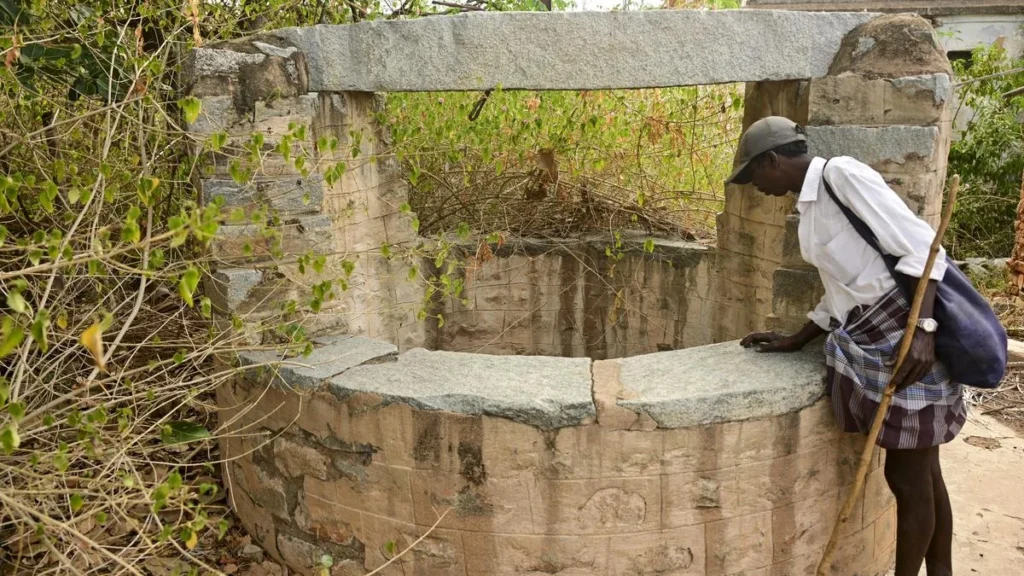
By 2018, the core of the community remained, driven by a stubborn, ancestral attachment to their land. They attempted to adapt, drilling deeper for water, but the aquifers—the lifeblood of the region—were drying up. The village eventually fell back on a single, shared borewell for all drinking water needs. It was a precarious existence. The school, the Mandal Parishad Primary School, saw its enrollment dwindle as parents prioritized migration to towns where their children could access better infrastructure and consistent water supplies.
2024: The Final Vacancy
The final phase of the exodus was triggered by a collective psychological tipping point. When the last few families observed their neighbors departing, a panic set in. "An exodus triggered panic among the few who were finally left," recalls Thimmakkagari Subbi Reddy, a former farmer. "Then, everyone decided to move." By the middle of the decade, the last of the residents locked their doors and walked away, leaving behind not just their land, but their memories and their possessions.
The Landscape of Abandonment: A Post-Mortem
Walking through Gattumeedapalle today is a surreal experience. It is a place frozen in time. Unlike a village destroyed by fire or flood, this settlement remains structurally intact, yet spiritually hollow.
Homes stand with furniture still inside—televisions, kitchen utensils, and clothing left behind as if the owners were merely stepping out for a short errand. A satellite dish clings to a rooftop, pointed at a sky that no longer brings rain. In the primary school, the classrooms are silent, the blackboards collecting dust, waiting for children who will likely never return.
The village has also fallen victim to scavengers. Once word spread that the village was empty, theft became rampant. Even the temple bell, once the rhythmic heartbeat of the village, has been stolen. Subbi Reddy notes with a heavy heart, "I would once hear the temple bell while grazing cattle. I did not think that even that would get stolen."
The irony is sharp: the only functional piece of modern infrastructure in the village is a towering mobile phone mast, standing like a silent sentinel over the ruins, offering connectivity to a place that no longer has anyone to call.
The Socio-Economic Toll: From Landowners to Daily Wage Laborers
The migration from Gattumeedapalle has resulted in a permanent decline in the socio-economic status of its former residents. Men like Thimmakkagari Subbi Reddy, who were once independent landowners and producers, have been forced into the lowest rungs of the urban labor market.

Subbi Reddy, now working as a shepherd, represents a demographic shift occurring across rural India. The transition from being a farmer—a person of status and land—to a daily wage worker is not merely a change in profession; it is a profound loss of agency. Most of the former villagers now cluster on the fringes of nearby towns, performing manual labor for daily wages. Their lives are now dictated by the uncertainty of the job market rather than the uncertainty of the clouds, yet the underlying fragility remains the same.
The Data of Disappearance: Why Groundwater Matters
The meteorological and hydrological data of the Annamayya district provides a bleak explanation for the village’s death.
- Groundwater Depletion: Over-extraction combined with insufficient recharge cycles has lowered the water table beyond the reach of traditional agricultural borewells.
- Agricultural Failure: With 30% of the village land dedicated to groundnut, a water-sensitive crop, the crop failures were not seasonal anomalies but a systemic trend.
- Demographic Collapse: The school closure indicates a failure to maintain the "minimum threshold" of residents required to keep government services operational.
When the water stopped flowing, the social contract of the village dissolved. The government, noting the lack of "takers" for the school and the absence of residents, effectively de-registered the village as a functional entity.
Official Responses and Policy Blind Spots
The tragedy of Gattumeedapalle highlights a significant gap in regional development policy. While government schemes for drought relief exist, they are often designed to provide temporary support rather than long-term, structural climate resilience.
Local officials from the Kosuvaripalle panchayat acknowledge the situation but note that there is little that can be done for a village that has voluntarily depopulated. The focus of the district administration has largely shifted toward providing relief to the families who have migrated to the urban centers, rather than attempting to rehabilitate the source village. This reactive approach—addressing the symptom (migration) rather than the disease (groundwater exhaustion and agricultural failure)—is a recurring theme in the administration of dry-land zones.
There is a glaring lack of a comprehensive "climate migration policy" that could facilitate sustainable resettlement or land-use conversion for dying villages. Currently, Gattumeedapalle is not a policy priority; it is a statistic of decline.
The Implications: A Harbinger of the Future?
Gattumeedapalle is not an isolated incident. Across the Rayalaseema region and much of rural India, small villages are facing similar pressures. The phenomenon of "climate-induced migration" is moving from the domain of scientific prediction to a tangible, localized reality.
The Loss of Cultural Heritage
When a village dies, it is not just the economy that suffers; it is the intangible culture—the oral histories, the local agricultural knowledge, and the community structures—that vanishes. The dispersal of these families means the erasure of a unique social ecosystem that has existed for generations.
The Strain on Urban Infrastructure
As villagers like those from Gattumeedapalle move to town centers like Madanapalle, they place an unsustainable strain on urban resources. Towns that are not designed for rapid population influx face their own crises of water, housing, and sanitation. The migration from the village merely exports the problem of scarcity to the city.
The Need for Climate Adaptation
The silence in Gattumeedapalle is a warning. It is a physical manifestation of what happens when climate adaptation fails. To prevent other villages from suffering the same fate, the state must move beyond disaster relief. This requires:
- Investment in Water-Efficient Agriculture: Moving away from water-intensive crops in arid zones.
- Infrastructure for Groundwater Recharge: Large-scale watershed management projects that prioritize long-term storage over short-term extraction.
- Climate-Resilient Livelihoods: Creating opportunities within rural areas that are not dependent on unpredictable weather patterns.
Conclusion
The story of Gattumeedapalle is a tragedy of the modern era. It is a story of resilient people who did everything right—they farmed, they saved, they stayed—only to be defeated by a shifting climate that made their way of life impossible.
As Subbi Reddy looks back at his barren fields, he voices the sentiment of a displaced generation: he has written off his village. There is no plan to return. The houses remain standing, a haunting monument to a life that once was, serving as a silent reminder that when the earth can no longer provide, the people will eventually leave. The question remains whether the state will continue to watch from the sidelines as more villages fall silent, or whether it will finally develop the tools to protect the bedrock of its society—the village.