Demystifying the Vector Database: Building a Semantic Engine from Scratch
In the modern era of Artificial Intelligence, the term "Vector Database" has transitioned from a niche academic concept to a cornerstone of enterprise-grade AI infrastructure. As Large Language Models (LLMs) continue to dominate the technological landscape, the ability to ground these models in private, proprietary data—a process known as Retrieval-Augmented Generation (RAG)—has become essential. Yet, for many developers, the inner workings of a vector database remain shrouded in mystery, often perceived as complex "black box" systems.
A new, hands-on technical guide demystifies this technology by demonstrating how a functional vector database can be constructed from scratch in just ten incremental steps. By leveraging Python and the powerhouse library NumPy, developers can move past the hype and understand the fundamental mechanics of semantic search: the ability to answer queries based on meaning rather than keyword matching.
The Paradigm Shift: From Keywords to Meaning
Traditional databases rely on keyword matching—indexing specific strings of text to return results that contain those exact tokens. While efficient, this approach is brittle; it fails to account for synonyms, context, or the intent behind a user’s query.
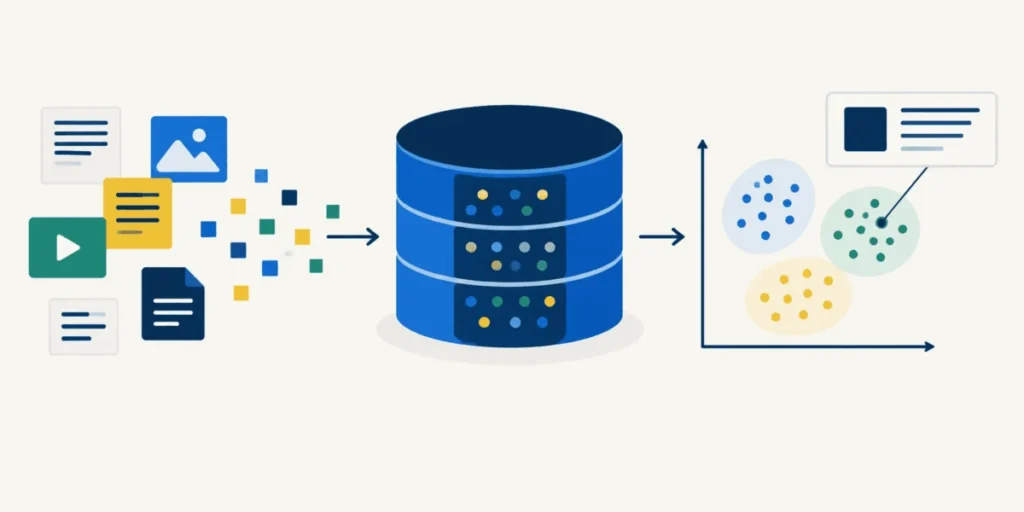
Vector databases represent a departure from this rigid structure. Instead of storing text, they store "embeddings"—high-dimensional vectors of floating-point numbers that represent the semantic essence of a document. When a user submits a query, the database converts that query into a vector of the same dimensions. By calculating the mathematical distance (or similarity) between the query vector and the document vectors, the system can identify content that is conceptually relevant, even if the two pieces of text share not a single common word.
Chronology: The 10-Step Implementation
To bridge the gap between theory and practice, the tutorial breaks down the construction of a vector engine into ten logical, atomic milestones.
Phase 1: Foundations and Setup
The journey begins with the basic environment setup. Developers are instructed to use a set of provided source files—a pre-built database skeleton, a corpus of 25 diverse documents, and a test suite. By utilizing sentence-transformers and numpy, the setup ensures that the system is ready for the mathematical heavy lifting required for high-dimensional vector operations. The initial code establishes helper functions for displaying search results and formatting output, ensuring that the development process remains transparent and observable.
Phase 2: Indexing and Vectorization
The second stage focuses on building the index. Here, the VectorDB class initializes an embedding model and processes the documents. A key insight revealed at this stage is the efficiency of vector representation: regardless of whether a document is a short sentence or an extensive essay, it is reduced to a fixed-size vector (in this case, 384 dimensions). This consistency is the secret sauce that makes vector databases both predictable in terms of memory usage and incredibly fast to scan.
Phase 3: The Power of Semantic Search
With the index built, the tutorial moves to the first search operations. By querying the database for "what keeps a cell supplied with energy?", the system demonstrates its semantic prowess. The engine correctly identifies biological documents related to mitochondria, despite the query being a natural language question. Subsequent steps push this further by searching for concepts like "superheroes" or "sour bread" in a corpus that contains no such words. The successful retrieval of relevant documents proves that the engine is genuinely mapping the "meaning space" of the provided text.
Phase 4: Refinement and Metadata
No database is complete without the ability to narrow results. The tutorial introduces metadata filtering—using tags like "bio," "music," or "food"—to constrain search results. This is a critical feature for real-world applications where global searches are rarely desired. The implementation includes "guard rails" to prevent common developer errors, such as misaligned metadata or inputting raw strings instead of lists, ensuring the integrity of the data index.
Phase 5: Persistence and Scalability
The final stages address the practicalities of production: saving and loading the index to disk. The use of .npy files for raw vectors and .json files for metadata ensures that the database is both compact and human-readable. Finally, the guide addresses the "scalability question" by simulating a massive corpus of 100,000 vectors. This final benchmark demonstrates that the core logic—a simple matrix multiplication—remains performant even as the dataset grows, debunking the myth that building a search engine requires massive, proprietary infrastructure.
Supporting Data and Performance Metrics
The architectural elegance of the vector database lies in its reliance on linear algebra. The tutorial highlights that by normalizing the vectors (scaling them to a length of 1), the complex calculation of "cosine similarity" is reduced to a simple dot product.
In terms of performance, the data is compelling:
- Efficiency: A query against 1,000 documents takes approximately 0.01ms for the scan.
- Scaling: Even as the corpus grows to 100,000 documents, the scan time remains well within the sub-10ms range, proving that the underlying mathematical approach is highly optimized for modern hardware.
- Memory Usage: The memory footprint is linear and predictable, with 100,000 documents consuming only about 146 MB, making it feasible to run robust semantic search on standard consumer-grade hardware without the need for expensive GPUs.
Professional and Industry Implications
The implications of this "build-it-yourself" approach are significant for the AI industry. First, it democratizes access to sophisticated search technology. By understanding that a vector database is, at its heart, a series of matrix operations, developers can build custom, lightweight solutions that are perfectly tailored to their specific use cases rather than relying on heavy, vendor-locked software.
Furthermore, this transparency helps address the "black box" concern in AI development. When developers understand how their data is being transformed into vectors, they can better debug issues, such as why certain documents are not being retrieved or how to improve the relevance of search results by adjusting the embedding model.
Conclusion: The Elegance of Simple Math
The journey from a blank Python script to a functional vector database reveals a profound truth: the most powerful tools in AI often rely on simple, elegant mathematics. The transition from 25 documents to 25 million does not require a change in logic; it merely requires a change in the scale of the infrastructure.
As the industry continues to evolve, the ability to build, maintain, and understand these engines from the ground up will remain a vital skill for any professional involved in AI development. By stripping away the complexity, the guide provides a blueprint for innovation, proving that semantic intelligence is not just a feature of large corporations, but a capability accessible to any developer with a solid understanding of Python and a little bit of linear algebra.