The Redmi Note 17 Stumble: Why Xiaomi’s Latest Mid-Range Lineup Is Missing the Mark
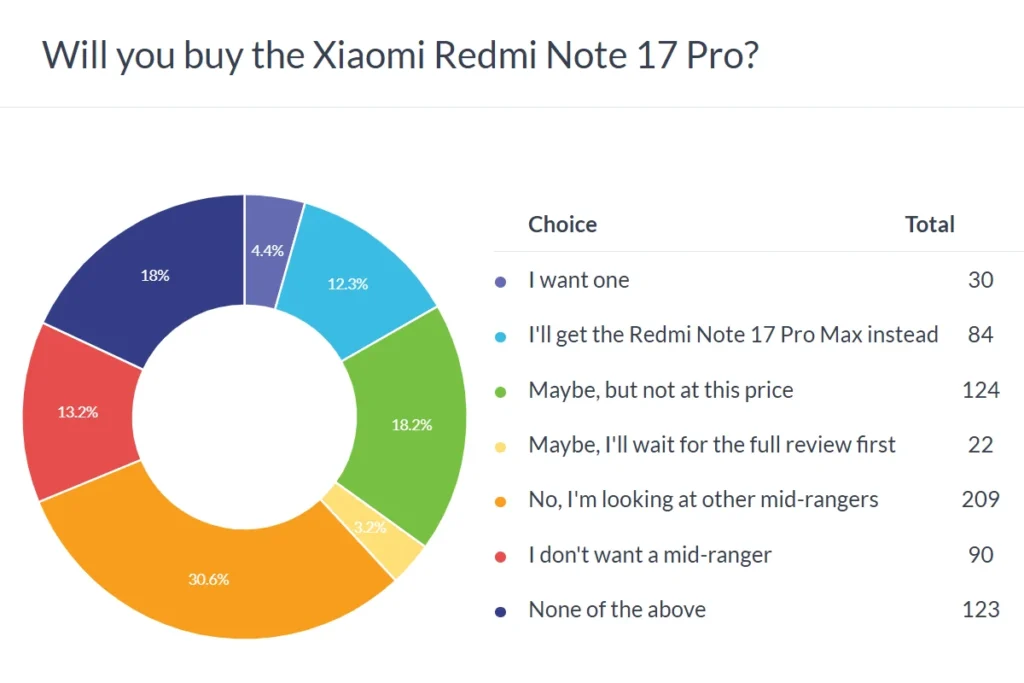
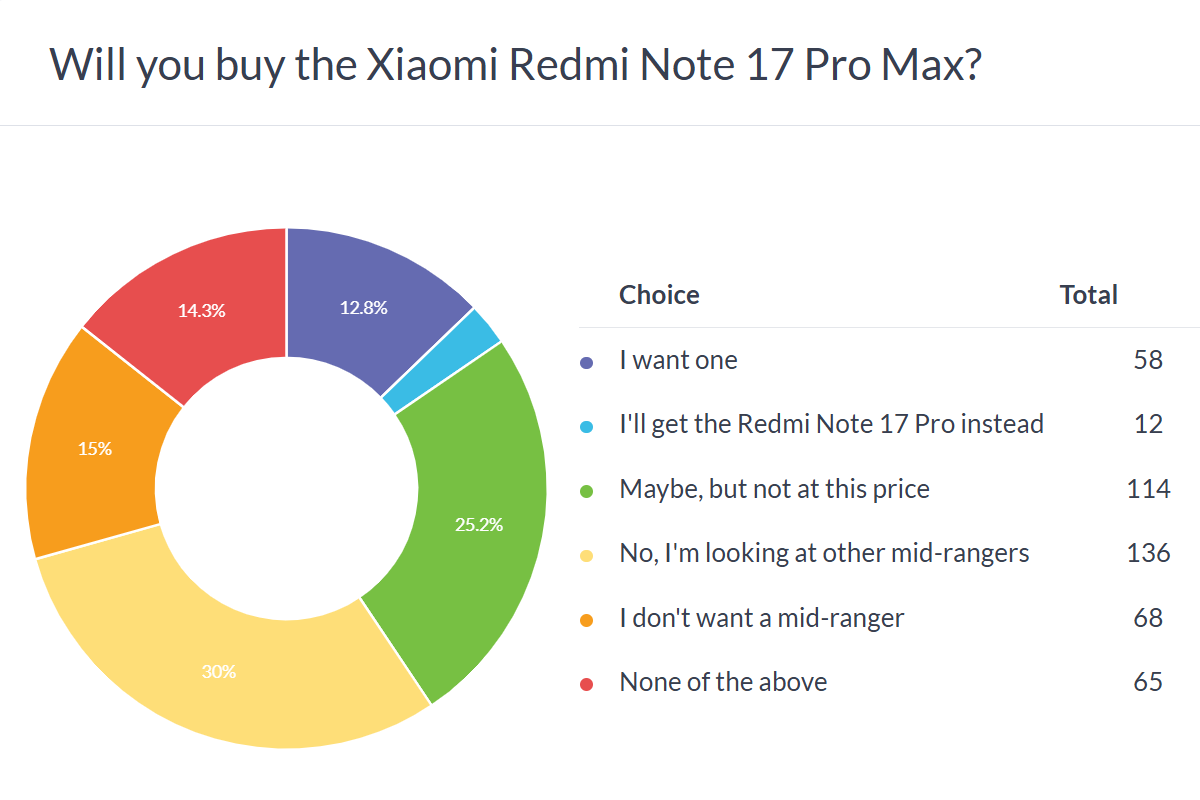
The mid-range smartphone market has long been Xiaomi’s primary stronghold, a segment where the Redmi Note series historically defined the gold standard for value-for-money. However, the recent launch of the Redmi Note 17 Pro and 17 Pro Max has been met with a level of consumer skepticism that is rare for the brand. Following a week-long poll of our readership, the results are clear: the market is not just unimpressed—it is actively rejecting the current pricing and hardware configurations of these new devices.
Main Facts: A Generational Decline in Enthusiasm
Only a year ago, the Redmi Note 15 series enjoyed a warm, if not universally ecstatic, reception. Consumers appreciated the balance of performance, camera prowess, and pricing. Fast forward to 2026, and the narrative has shifted dramatically. The Redmi Note 17 Pro and 17 Pro Max are being viewed as "overpriced" and "under-equipped" in a segment that has become increasingly competitive.
The primary point of contention is the value proposition. Users are finding it difficult to justify a €600 (approx. £430) price tag for a device that, in several critical areas, feels like a downgrade from its predecessors. While the manufacturer touted significant battery improvements—reaching 9,210mAh in European models and a massive 10,000mAh in the Indian market—this feature has failed to distract users from the glaring omissions elsewhere, most notably the loss of the high-resolution 200MP camera sensor that had become a hallmark of the Pro+ branding.
Chronology of the Disconnect
The decline of the Redmi Note’s prestige did not happen overnight; it is the culmination of iterative changes that have finally reached a breaking point for loyal fans.

- The Redmi Note 15 Era: Released to a positive reception, the Note 15 Pro and Pro+ were seen as reliable, high-performing mid-rangers. The series hit a sweet spot in the market, offering premium features at accessible prices.
- The Pre-Launch Hype: Rumors surrounding the Note 17 series suggested a pivot toward battery efficiency and power management, but as leaks confirmed the chipset and camera downgrades, sentiment began to sour.
- The Launch Week: Upon the official release, the pricing structure was revealed to be higher than previous generations, with memory configurations that many deemed archaic for the current year.
- The Post-Launch Poll: Our recent poll confirmed that the vast majority of prospective buyers are choosing to skip this generation entirely, opting either to hold onto their current devices or to look toward competitors—or even Xiaomi’s own Poco sub-brand—for better hardware value.
Supporting Data: The Hardware Bottleneck
The criticism regarding the Note 17 series is backed by specific hardware choices that have alienated the enthusiast community.
The Chipset Conundrum
The decision to utilize the Snapdragon 6 Gen 5 in the Pro Max and the Snapdragon 6s Gen 4 in the base Pro model has been widely criticized. At a price point of €600, consumers expect a chip capable of more than just basic multitasking. The lack of raw processing power has led many to ask a rhetorical but stinging question: If one is sacrificing camera hardware and paying a premium price, why not opt for a Poco device that offers superior performance for the same, if not less, money?
Memory and Storage Limitations
Memory configurations have become a flashpoint for consumer anger. In the European market, the Note 17 Pro Max is restricted to a flat 8GB of RAM, regardless of whether the user opts for 256GB or 512GB of storage. This "one-size-fits-all" approach to RAM is considered insufficient for a device positioned at the top of the mid-range tier in 2026.
The situation is even more dire for the standard Redmi Note 17 Pro. The base model ships with a paltry 6GB of RAM—a configuration that feels entirely out of place in a device costing €400 (£360). For users who require a 512GB storage option, the upgrade cost of €50/£40 to reach 8GB of RAM is viewed as a "hidden tax" rather than a reasonable tier jump.
Regional Discrepancies
Xiaomi’s strategy in India provides a different, but equally frustrating, set of constraints. While Indian consumers benefit from a 12GB RAM option, they are denied the 512GB storage capacity altogether, forcing a compromise between multitasking memory and file storage. The absence of a 512GB option for the Pro model in India further limits the device’s longevity for power users.
Official Responses and Corporate Strategy
To date, Xiaomi has remained largely silent regarding the specific criticisms of the hardware choices. However, industry analysts suggest that the company’s strategy reflects a broader trend in the industry: rising costs of memory and flash storage are forcing manufacturers to make difficult trade-offs.
The focus on massive batteries (the 10,000mAh capacity in India is indeed an engineering feat) suggests that Xiaomi is attempting to market "battery anxiety" as a primary problem to solve. While this is a valid concern for many users, the data suggests that it is not enough to outweigh the loss of camera quality and the stagnation of processing power. Whether the company will offer official price cuts remains to be seen, though retailers have already begun discounting the devices in an attempt to move inventory.
Implications for the Mid-Range Market
The struggle of the Redmi Note 17 series has several major implications for the smartphone industry:
1. The Death of the "Safe Buy"
The Redmi Note series was once considered the default recommendation for anyone seeking a mid-range phone. This "safe buy" status has evaporated. Consumers are now forced to be more discerning, scrutinizing spec sheets with a level of detail previously reserved for flagship hunters.
2. The Rise of Value-Focused Competitors
As Xiaomi moves upmarket in pricing, it leaves a vacuum in the sub-€400 space. Competitors, particularly those who have maintained a focus on performance-per-dollar, are poised to capture the demographic that Xiaomi is currently alienating.
3. The Impact of Component Inflation
The memory-related complaints highlight a harsh reality: the "mid-range" is becoming more expensive to produce. As LPDDR5X and UFS 4.0 (or even 3.1) technologies become standard, the profit margins on cheaper handsets are shrinking. Xiaomi’s attempt to maintain margins by cutting RAM and utilizing older chipsets is a clear signal that the era of inexpensive, high-spec mid-rangers may be coming to a close.
4. Consumer Loyalty vs. Value
The most concerning implication for Xiaomi is the erosion of brand loyalty. When a long-time fan expresses that they would rather look at a different brand entirely, the company faces a high customer acquisition cost to win them back. The "boring" choice of hardware is not just a technical failure; it is a marketing failure that diminishes the brand’s identity as a leader in innovation.

Conclusion: A Turning Point
The Redmi Note 17 Pro and 17 Pro Max are not "bad" phones in a vacuum; they are durable, long-lasting devices with impressive battery endurance. However, in the context of the current market, they represent a step backward in the value equation that defined the series for nearly a decade.
For the average consumer, the choice is simple: if the price doesn’t reflect the performance, the money will go elsewhere. Until Xiaomi addresses the pricing or offers significant, permanent discounts, the Note 17 series is likely to remain a cautionary tale about the dangers of resting on the laurels of a once-great brand name. The market has spoken, and for now, it is looking for a better deal.