Uttarakhand Gym Owner ‘Mohammad Deepak’ Granted Bail Following Arrest Over Alleged Assault
By Editorial Desk
Updated: October 03, 2026
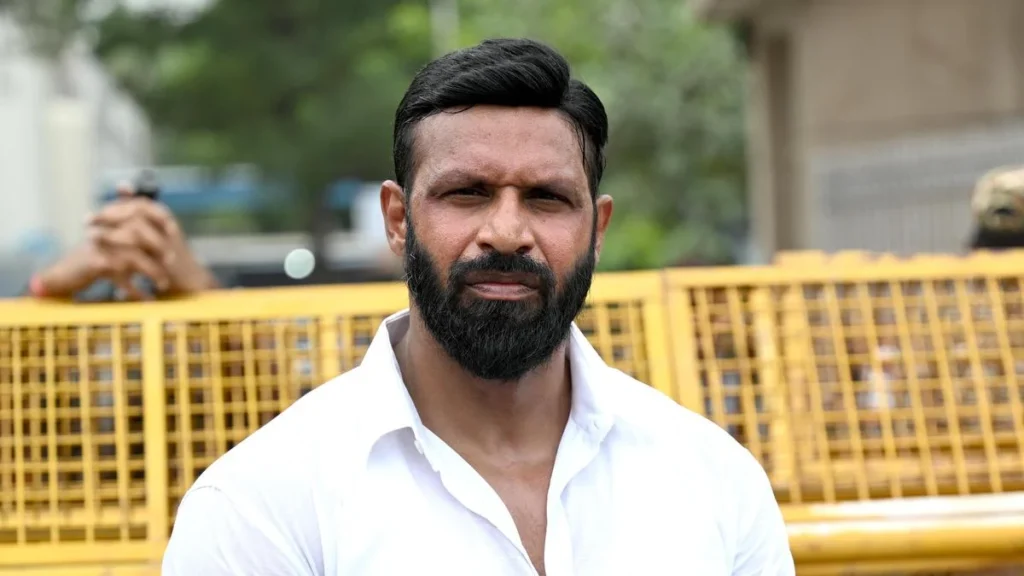
Deepak Kumar, a Kotdwar-based gym owner who gained national notoriety earlier this year for his viral confrontation with right-wing activists, was granted bail by a local court on Friday, October 2, 2026. The release comes just one day after his arrest, which stemmed from allegations of criminal intimidation, assault, and communal provocation against a local businessman.
The case has reignited debates surrounding the intersection of social media influence, vigilantism, and communal harmony in small-town India, casting a spotlight on a figure who has become a polarizing symbol of modern political discourse.
The Incident: From Verbal Altercation to Criminal Charges
The sequence of events leading to Mr. Kumar’s arrest began on the afternoon of October 1, 2026, on Gangadutt Joshi Marg in Kotdwar. According to the First Information Report (FIR) filed by the complainant, Sanjeev Tonk, the encounter was unprovoked and deeply hostile.
Mr. Tonk, a local businessman, recounted that he was engaged in routine conversation with several associates—identified as Irfan, Ahsan, Mohnish, and Saddam—outside his shop. According to Tonk’s testimony, Mr. Kumar approached the group and began aggressively inquiring about their names.
“He then asked why they were standing with me, a Hindu,” Mr. Tonk alleged in his complaint. “When I objected to this, he abused me, attempted to physically assault me, and issued a direct threat that he would ‘finish me off.’”
Following the report, local law enforcement acted swiftly. Initially, the police booked Mr. Kumar under Sections 351(2) (criminal intimidation) and 352 (intentional insult with intent to provoke breach of peace) of the Bharatiya Nyaya Sanhita (BNS), 2023. However, upon reviewing CCTV footage of the altercation, investigators deemed the situation more severe, subsequently adding Section 196 (promoting enmity between different groups) and Section 115 (voluntarily causing hurt) to the charges.
Chronology of a Controversial Figure
To understand the weight of these recent events, one must look at the trajectory of Deepak Kumar’s rise to public prominence.
January 26, 2026: The Viral Confrontation
Mr. Kumar first captured the national imagination on Republic Day, 2026. In a video that circulated rapidly across platforms like X (formerly Twitter) and Instagram, Kumar was seen intervening in a dispute between a group of right-wing activists and an elderly Muslim shopkeeper in Kotdwar.
The video, which garnered millions of views, showed Kumar forcefully defending the shopkeeper against harassment. His declaration during the altercation—introducing himself as "Mohammad Deepak"—became a rallying cry for some and a point of intense derision for others. The moniker was intended as a challenge to the communal polarization he claimed was plaguing his town.
The Aftermath: Economic and Social Fallout
In the months following the viral video, Mr. Kumar claimed that his life changed irrevocably. While he received widespread praise from secular activists and supporters across the country, he also faced significant local backlash. In several interviews, Kumar stated that he was the recipient of multiple death threats and that his professional life suffered immensely. His gym, which had previously been a stable source of income, saw a dramatic drop in memberships as the local community became increasingly divided over his actions.
October 1–2, 2026: The Legal Turn
The arrest on October 1 marks the first major legal hurdle for the gym owner since his rise to fame. The court’s decision to grant bail on Friday came with specific conditions. Reports indicate that the magistrate presiding over the case addressed the role of social media in the altercation, specifically noting that the dispute between Tonk and Kumar had roots in a heated digital debate regarding the demolition of a mosque in Madhya Pradesh.

Judicial Observations and the Power of Influence
During the bail proceedings, the court took a firm stance on the responsibilities of individuals with significant digital followings. The magistrate explicitly cautioned Mr. Kumar to exercise greater restraint and maturity when expressing opinions on social media.
The legal proceedings have highlighted a growing concern among judiciary officials regarding how viral social media disputes often spill over into physical violence. By adding charges of "promoting enmity," the police and the courts are signaling that they view Mr. Kumar’s actions not merely as a personal disagreement, but as an act capable of disrupting public order.
Implications: The Polarization of Small-Town India
The case of "Mohammad Deepak" serves as a microcosm of the current socio-political climate in India, particularly in Uttarakhand. The state, often celebrated for its cultural harmony, has seen an uptick in localized communal frictions.
1. The Vigilante-Activist Blur
Mr. Kumar occupies a space that is increasingly difficult to define. Is he an activist protecting the vulnerable, or a provocateur seeking social media clout? His decision to adopt the name "Mohammad Deepak" was a deliberate performative act, intended to bridge a divide, yet his recent alleged behavior suggests a pivot toward a more aggressive, confrontational style of advocacy.
2. The Weaponization of Social Media
The link between the online argument over the Madhya Pradesh mosque demolition and the physical confrontation on Gangadutt Joshi Marg illustrates the "offline" consequences of "online" rage. Digital echo chambers are no longer confined to the screen; they are increasingly dictating the boundaries of neighborhood interactions and interpersonal relationships.
3. Economic Consequences of Identity Politics
The decline of Mr. Kumar’s business highlights how identity politics can devastate livelihoods in smaller urban centers. In towns like Kotdwar, where social circles are small and reputation is everything, aligning oneself with a controversial cause—regardless of the intent—can lead to immediate economic isolation.
Official Responses and Next Steps
As of now, neither the local administration nor the police have issued a broader statement on the case, choosing to let the judicial process take its course. Legal experts suggest that the addition of Section 196 of the BNS could make for a protracted legal battle, as the burden of proof will now shift to whether the prosecution can demonstrate that Mr. Kumar’s actions were intended to create disharmony on the basis of religion.
For his part, Mr. Kumar has maintained a relatively low profile since his release. His supporters continue to argue that he is being targeted for his earlier stance against communal harassment, while his detractors argue that his recent behavior proves he is a destabilizing influence in the community.
The case remains pending, and the court’s warning regarding his social media usage will be closely monitored by local authorities. As the trial progresses, the broader question remains: can a digital persona survive the scrutiny of the physical law, or will the weight of these contradictions eventually lead to a more permanent removal from the public stage?
Conclusion
The release of Deepak Kumar does not mark the end of the story, but rather a transition into a more complex phase of accountability. The incident serves as a stark reminder that in an era of viral content, the line between heroism and hostility is increasingly thin. Whether the court will ultimately find him guilty of the charges leveled against him remains to be seen, but the incident has already left an indelible mark on the community of Kotdwar and the broader discourse on communal relations in India.
As society grapples with the impact of social media on communal cohesion, the case of the gym owner who called himself "Mohammad Deepak" will likely be cited as a cautionary tale for years to come.