A Convergence of Innovation: Inside the Historic WordCamp Europe 2026 in Kraków
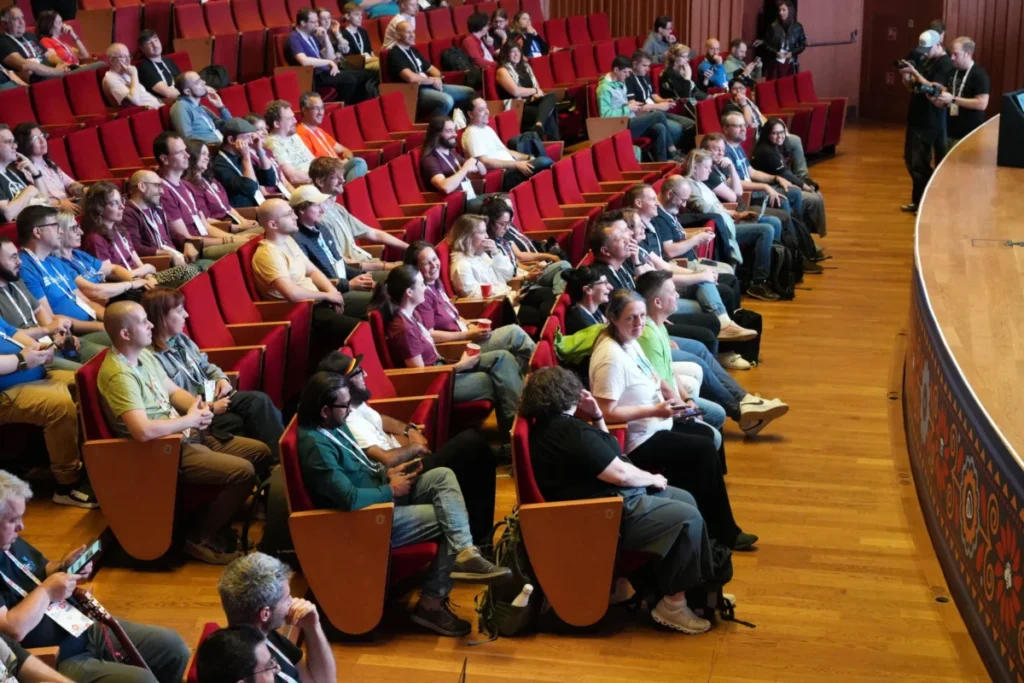
The first week of June 2026 transformed the ICE Kraków Congress Centre into a global epicenter for the digital landscape. WordCamp Europe (WCEU) 2026, the premier gathering for the WordPress community, brought together 2,458 attendees from 81 countries. Against the backdrop of one of Poland’s most historic cities, the event served as a definitive milestone for the world’s most popular content management system, marking a transition toward a more integrated, AI-augmented, and education-focused future.

The Setting: Bridging History and Modernity
Kraków provided a unique contrast between the ancient and the digital. The city’s Main Market Square—Europe’s largest—offered a historical sanctuary for attendees, while the modern, sprawling ICE Kraków facility housed the intense technical discourse of the conference. To ensure seamless movement, organizers implemented a city-wide transport hologram for every attendee, facilitating a frictionless experience that allowed participants to immerse themselves in local culture, from the traditional pierogi and żurek to the street-side obwarzanek pretzels.

As local team lead Sebastian Miśniakiewicz noted, "Kraków is beautiful, with history everywhere." This sentiment set the tone for an event that balanced deep technical legacy with the rapid pace of modern innovation.

Chronology of the Event
Contributor Day: The Engine Room
The event officially kicked off with the annual Contributor Day, a dedicated session where the "work" of WordPress takes precedence over the "talk." The energy in the room was palpable as participants broke into specialized teams. From the Polyglots team working on localization to the Core, Performance, and Testing groups, the day was designed to be inclusive.

Special emphasis was placed on mentorship. Newcomers were not left to navigate the complex workflows alone; they were paired with experienced mentors to shepherd them through their first patch, string translation, or support ticket. For those unable to travel to Poland, the digital bridge remained open via the #contributor-day channel on the Make WordPress Slack, ensuring that the global project remained truly global.

The Opening Keynote: A Shift to CERN
The opening keynote provided a symbolic bridge between the origins of the web and its future. Joachim Valdemar Yde, head of the web team at CERN—the very birthplace of the World Wide Web—took the stage to announce a landmark move: CERN’s flagship website, home.cern, has migrated to WordPress.

This was not merely a cosmetic change but a massive infrastructure overhaul. Working alongside Francisco Borges Aurindo Barros, the team implemented a self-service portal powered by Kubernetes that allows staff to spin up secure, standardized sites in minutes. Perhaps most impressively, they developed an automated tool that converts years of legacy content into modern Gutenberg blocks. The move reaffirms WordPress’s status as a foundational pillar of the open web, now serving as the backbone for the institution that gave the web to the world.

The "Inside WordPress 7.0" Panel
As the conference progressed, the focus shifted to the architectural evolution of the software. A panel discussion on WordPress 7.0 served as the anchor for the middle days. The release was framed not just as a feature update, but as a paradigm shift in how users interact with the CMS. Key contributors discussed the "Abilities API," a mechanism that allows plugins to broadcast their capabilities, and the integration of a native AI client that supports multiple providers, including OpenAI, Anthropic, and Google Gemini.

Supporting Data and Technical Deep Dives
The technical depth of the 49 talks and eight hands-on workshops highlighted a project maturing in its craft.

- Performance Engineering: Long-time contributor Peter Wilson led sessions on optimizing
WP_Querythrough sophisticated caching, while other speakers demonstrated how to profile WordPress performance under heavy load using Grafana. - The Plugin Ecosystem: In a practical clinic, David Perez and Fran Torres, who have collectively reviewed over 25,000 plugins, provided a roadmap for developers to avoid the common pitfalls that lead to bottlenecks in the plugin review directory.
- Hands-On Craft: The workshops were notably hands-on. Ryan Welcher’s session on building a touch-enabled gallery slider using the Interactivity API drew a full house, as did sessions on Full Site Editing (FSE) that sent participants home with functional, production-ready portfolio themes.
Official Responses and Strategic Vision
Mary Hubbard, Executive Director of WordPress, steered the conversation toward the long-term sustainability of the project. During the closing fireside chat, Hubbard announced a groundbreaking partnership with the Kraków University of Technology, which will launch a dedicated WordPress-specific academic course this October. This initiative represents a major victory for the WordPress Campus Connect program, signaling a move to formalize WordPress education at the university level.

Regarding the role of Artificial Intelligence, Hubbard and Matías Ventura (Gutenberg lead) maintained a nuanced stance. They argued against the "black box" approach to AI, advocating for a "human-in-the-loop" philosophy. Ventura showcased experimental desktop modes and open-canvas interfaces that leverage AI to act as a partner in the development process rather than a replacement for human intent.

"We should be talking about it, and we should be much louder about it," Hubbard stated, emphasizing that the open-source values that have allowed WordPress to thrive for over two decades must now be applied to the development and governance of AI tools.

Implications for the Future
The implications of WCEU 2026 are threefold:

- Standardization: The success of the CERN migration provides a blueprint for large-scale enterprise adoption. As more institutions look to move away from proprietary, fragmented systems, the "WordPress as a service" model—standardized, secure, and containerized—is likely to become the industry standard.
- AI Integration: The focus on the "Abilities API" and native AI clients suggests that WordPress is preparing for a future where the CMS acts as an orchestration layer for intelligent agents. By keeping these tools open and accessible, the community is positioning itself to remain relevant in an AI-first web environment.
- Educational Pipeline: The partnership with Kraków University of Technology marks a shift in how the next generation of developers will be introduced to the platform. By bridging the gap between professional web development and higher education, the project is securing a steady influx of skilled contributors.
A Legacy of Community
Beyond the metrics and technical specifications, the true success of the conference lay in the "corridor culture." Whether it was the eight-hour after-party that featured local folklore-themed swag or the intense networking in the sponsor hall, the human element remained the project’s most valuable asset.

As the event concluded, the momentum transitioned directly to the next horizon. WordCamp US, scheduled for August 2026 in Phoenix, promises to continue the dialogue on AI and architectural evolution. Meanwhile, the announcement that WordCamp Europe 2027 will take place in Málaga, Spain, ensures that the continent will continue to serve as a vital staging ground for the global WordPress community.

In the final assessment, WordCamp Europe 2026 was more than a conference; it was a demonstration of a decentralized project’s ability to move with the speed of a startup while maintaining the stability and security of a global infrastructure. As the attendees departed Kraków, they carried with them not only new code and new connections but a renewed sense of purpose: that the open web remains the most important frontier for human knowledge, and WordPress is the primary vessel for its future.