CJP’s Stand-off at Jantar Mantar: Government Agrees to Neutral Venue Talks Amid Growing Pressure for Ministerial Resignation
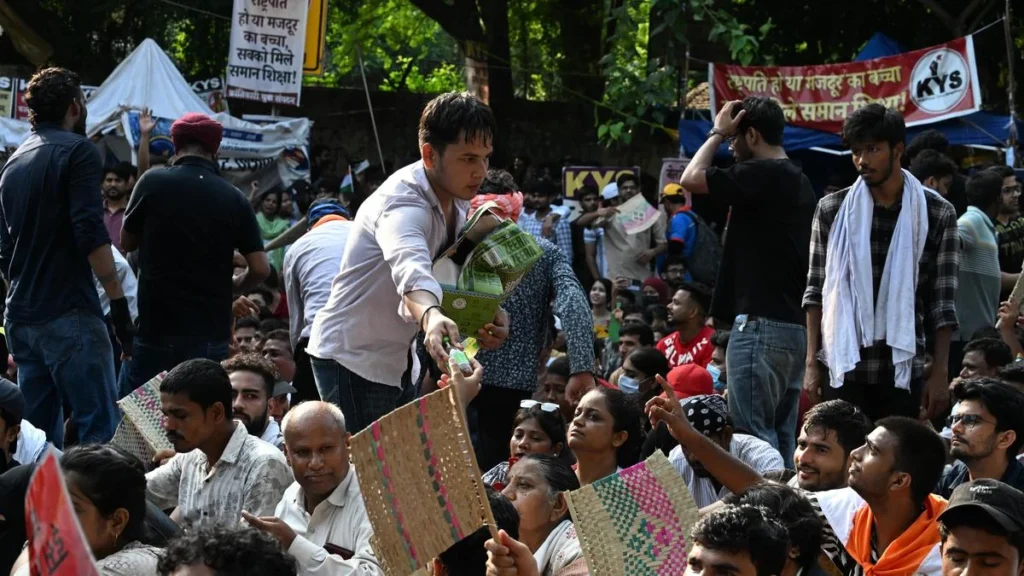
NEW DELHI — The national capital remains the epicenter of a high-stakes standoff as the Cockroach Janta Party (CJP) continues its persistent protest at Jantar Mantar. The demonstration, which has garnered significant public attention, reached a pivotal juncture on July 24, 2026, as the group confirmed that the Union government has formally agreed to hold negotiations at a neutral venue.
The protest, driven by widespread anger over the integrity of national examination processes—specifically the NEET paper leak controversy—has evolved into a broader critique of the current administrative handling of the education sector. As the CJP maintains its firm stance, the political temperature in New Delhi continues to rise.
The Core Demands and the Call for Accountability
At the heart of the CJP’s agitation is a singular, non-negotiable demand: the immediate resignation of Union Education Minister Dharmendra Pradhan. For the protesters, the resignation is not merely a political gesture but a symbolic and functional requirement to restore faith in India’s examination systems.
"The strictest action the government could take against these systemic irregularities is to remove the minister responsible," said CJP founder Abhijeet Dipke. The party argues that the recurring nature of paper leaks and administrative lapses indicates a deep-seated rot within the oversight mechanisms of the Ministry of Education.
The CJP’s protest, characterized by its grassroots mobilization and vocal criticism, gained momentum following Prime Minister Narendra Modi’s recent announcement that a stringent anti-paper leak bill would be introduced in Parliament. While the government presents this as a proactive solution, the CJP contends that legislative measures are insufficient without the removal of the leadership currently overseeing the crisis.
Chronology of the Standoff
The events of the past 48 hours represent a significant shift in the dialogue between the protesters and the state:
- July 23, 2026 (Midnight): In a significant development, activist Sonam Wangchuk concluded his indefinite hunger strike. The breakthrough occurred following a late-night visit to Medanta Hospital in Gurugram by Union Ministers JP Nadda and Jitendra Singh, who provided government assurances regarding his specific demands.
- July 23, 2026 (Daytime): Tensions peaked as the government initially proposed that student leaders meet at the office of BJP President JP Nadda. The CJP categorically rejected this offer, insisting that a political party office was not an appropriate venue for discussions regarding a national educational crisis.
- July 24, 2026 (Morning): In a tactical win for the protesters, the government agreed to move the venue to the Constitution Club of India. CJP representative Sourav Das confirmed the development, expressing optimism that the neutral ground would facilitate a more productive dialogue.
- July 24, 2026 (Ongoing): The sit-in at Jantar Mantar continues. Despite the breakthrough on the meeting venue, the CJP leadership has clarified that the physical presence of their supporters at the protest site will not diminish until concrete outcomes are achieved.
The Broader Context: Why the Education Sector is in Crisis
The protests are symptomatic of a growing disillusionment among India’s youth regarding the fairness and transparency of public recruitment and academic entrance exams. The NEET controversy, which serves as the immediate trigger for the CJP’s agitation, has exposed structural vulnerabilities in how competitive exams are conducted, proctored, and secured.
The Role of Political Opposition
The protest has gained traction far beyond the student community. Opposition figures, including senior leaders like Sonia Gandhi, have used the platform to frame the protests as a direct consequence of the Modi administration’s policies. In recent commentary, Gandhi characterized the student protests as the "trauma of young India," arguing that the collapse of the education system is a deliberate outcome of current governance priorities rather than an accidental failure.
Administrative Lapses vs. Structural Reform
The government, for its part, remains under immense pressure to balance its narrative of "stringent action" with the reality of widespread public distrust. The introduction of the proposed anti-leak legislation is seen by analysts as an attempt to regain control of the narrative. However, critics argue that the legislation focuses on punitive measures for students and operators while shielding high-level officials from political accountability.

Supporting Data: The Impact of Examination Irregularities
The scale of the unrest is tied directly to the sheer volume of candidates impacted by recent examination irregularities. With millions of students appearing for national-level tests annually, even a minor breach in the sanctity of the process carries massive repercussions for social mobility and career prospects.
- Financial and Emotional Toll: Beyond the direct cost of exam fees, families and students suffer significant psychological strain during repeated exam cancellations and delays.
- Credential Erosion: When examination systems are perceived as compromised, the value of the degrees or certifications issued by these institutions is diminished in the eyes of domestic and international employers.
- Trust Deficit: The CJP’s rhetoric resonates because it highlights a "trust deficit." When the government fails to address the failure of its own ministers, the public perception shifts from believing that the system is "broken" to believing that it is "rigged."
Official Responses and Diplomatic Maneuvering
The government’s willingness to engage with the CJP at the Constitution Club of India suggests a strategic pivot. By agreeing to a neutral venue, the administration is attempting to de-escalate the situation and avoid the optics of a confrontational crackdown at Jantar Mantar.
However, the government’s challenge remains twofold:
- Managing Political Ego: Demanding the resignation of a sitting Cabinet Minister is a high-stakes request that the government is historically reluctant to grant, as it could be interpreted as an admission of failure.
- Delivering Concrete Results: The government must now ensure that the talks at the Constitution Club yield more than just empty promises. If the dialogue stalls, the CJP has indicated that they are prepared to escalate their protest further, potentially drawing in larger student unions and civil society groups from across the country.
Implications for the Future
The current impasse at Jantar Mantar serves as a litmus test for the government’s democratic responsiveness. If the administration manages to address the concerns regarding ministerial accountability and system reform, it may successfully dissipate the protest. Conversely, if the government remains rigid, the CJP’s movement could become a rallying point for broader anti-establishment sentiment in the months leading up to the next legislative session.
As the talks proceed at the Constitution Club, the nation watches closely. The CJP’s ability to force the government to the table at a neutral location is already being viewed as a significant victory for non-partisan, student-led advocacy.
Conclusion: A Turning Point for Student Advocacy
The events of July 2026 will likely be remembered as a moment when the youth of India asserted their role as critical stakeholders in national governance. By refusing to be sidelined by political office invitations and demanding transparency, groups like the CJP are redefining the nature of protest in modern India.
As the CJP prepares for the upcoming negotiations, the message remains clear: the protest is not merely about the resignation of a minister, but about the preservation of the sanctity of India’s educational future. Whether this results in a structural overhaul or a temporary political truce remains the most pressing question for the coming weeks.
For ongoing updates on the negotiations at the Constitution Club of India and further developments from the Jantar Mantar protest, follow The Hindu’s comprehensive live coverage.