Corruption Crackdown: Keesara Police Officers Arrested in High-Stakes Bribery Sting
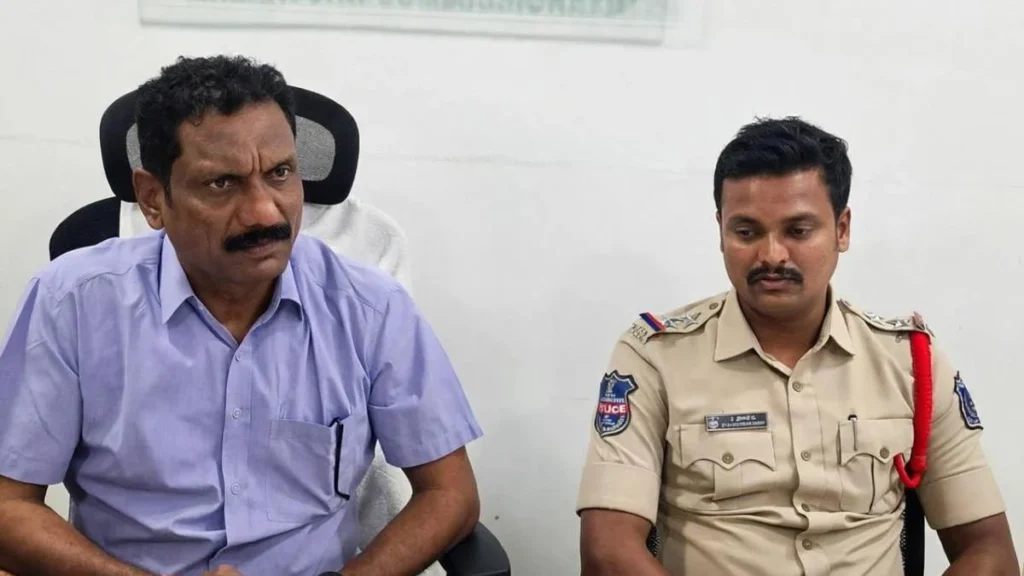
HYDERABAD – In a significant development that has sent shockwaves through the law enforcement establishment in Telangana, the Anti-Corruption Bureau (ACB) executed a high-profile sting operation late Wednesday night, apprehending two senior officers from the Keesara Police Station. The arrest of Station House Officer (SHO) Arkapally Anjaneyulu and Sub-Inspector (SI) Dyapa Gnanender Reddy marks a stinging indictment of departmental integrity and raises fresh concerns regarding the systemic challenges of corruption within local police stations.
The two officials now face grave charges under the Prevention of Corruption Act, having been accused of soliciting and accepting a bribe of ₹5 lakh to subvert the course of justice and shield individuals from police harassment.
The Incident: A Night of Deceit and Discovery
The operation, carried out by the ACB’s City Range-I unit, culminated at approximately 11:25 p.m. on September 16, 2026. The sting was the result of a meticulously planned trap laid after the ACB received a credible tip-off regarding a transactional demand for illegal gratification.
According to official reports, the complainant—whose identity remains shielded by authorities to ensure his protection—had been embroiled in an ongoing legal matter at the Keesara police station. It was in connection with this case that the officers allegedly began their extortion. The bribe was explicitly requested as a "service fee" for two specific guarantees: the immediate granting of station bail and the cessation of ongoing harassment directed at the complainant and his associate.
On the night of the arrest, SI Dyapa Gnanender Reddy was caught red-handed by ACB officials while in the process of accepting the ₹5 lakh cash. The agency noted that Reddy was acting under the direct instructions of SHO Arkapally Anjaneyulu. Upon discovery, the tainted currency was recovered from Reddy’s possession, serving as the primary piece of physical evidence that would lead to the subsequent legal proceedings against both men.
Chronology of the Sting
The timeline of events highlights the proactive nature of the ACB’s intervention:
- Initial Complaint: The complainant approached the ACB, alleging that the Keesara police officers were abusing their authority to demand a massive sum to prevent potential arrest and further legal entanglement.
- Verification Phase: ACB investigators conducted a period of surveillance and verification, confirming that the demand for money was indeed legitimate and linked to official duties at the station.
- The Trap (September 16, 2026): As the exchange was set to occur late Wednesday night, ACB units positioned themselves strategically near the target location.
- 11:25 PM: The handover occurred. As SI Gnanender Reddy took the cash, ACB officers emerged, successfully apprehending the officer and securing the evidence.
- Immediate Aftermath: Following the arrest of the SI, evidence gathered during the interrogation led investigators to implicate SHO Anjaneyulu as the primary mastermind behind the demand.
- September 17, 2026 (Morning): Both officers were processed for formal arrest and prepared for presentation before the Principal Special Judge for SPE and ACB cases at Nampally for judicial remand.
Official Responses and Judicial Proceedings
As of Thursday morning, the case has been moved to the judicial domain. The ACB has formally produced both Arkapally Anjaneyulu and Dyapa Gnanender Reddy before the Principal Special Judge for SPE and ACB cases at Nampally. The prosecution is expected to seek a period of judicial remand as they continue their investigation into the depth of the corruption within the Keesara jurisdiction.
While the Telangana Police Department has yet to issue a comprehensive formal statement regarding the internal disciplinary actions that will follow, such arrests typically trigger an immediate suspension and a departmental inquiry. The ACB has emphasized that the investigation is ongoing, suggesting that there may be a broader audit of recent cases handled by the Keesara station to determine if this was an isolated incident or part of a persistent pattern of malpractice.
Supporting Data: The Rising Tide of Corruption Cases
This incident is not an isolated event but rather a headline-grabbing addition to a growing list of anti-corruption interventions in Telangana. Data released by the ACB over the past few years has indicated a rise in the number of public servants—particularly within the police and revenue departments—being caught in "trap" cases.

For the public, this highlights the fragility of the "station bail" process, which is often intended to be a routine administrative procedure but can, in the hands of unscrupulous officers, become a weapon for extortion. The ₹5 lakh figure requested in this instance underscores the high stakes involved for victims who are often terrified by the prospect of being incarcerated, regardless of the merits of their case.
Implications: A Crisis of Public Trust
The arrest of an SHO and an SI—the very figures responsible for the administration of law and order—strikes at the heart of public confidence. When the guardians of the law are perceived as the primary violators, the societal impact is profound.
1. Erosion of Community Policing
The Keesara community relies on their local station for safety. When officers are arrested for bribery, the immediate fallout is a total breakdown in communication between the public and the police. Citizens become less likely to report crimes, fearing that their own reports might be used as leverage for future extortion.
2. The Need for Systemic Reform
Experts in criminal justice argue that the digitalization of station records and the implementation of body-worn cameras are essential steps to curb such activities. If every interaction between a suspect and a police officer were documented through independent oversight mechanisms, the ability to demand bribes in private would be significantly diminished.
3. Accountability as a Deterrent
The swift action taken by the ACB serves as a warning. By targeting the senior-most officer at the station (the SHO), the Bureau has sent a signal that no rank provides immunity from the law. However, for this to act as a genuine deterrent, the judicial process must be equally swift. Prolonged trials often allow corrupt officials to eventually return to duty, which critics argue perpetuates the cycle of corruption.
Conclusion: The Road Ahead
The case against Arkapally Anjaneyulu and Dyapa Gnanender Reddy is now under the scrutiny of the courts. While the law presumes innocence until proven guilty, the physical evidence recovered by the ACB provides a damning starting point for the prosecution.
For the residents of Keesara and the broader Hyderabad region, the case serves as a stark reminder of the importance of reporting misconduct. The anonymity granted to the complainant in this case was vital to the operation’s success, encouraging others to come forward without fear of retaliation.
As the ACB continues its investigation, the focus will likely shift to whether the accused officers operated in a vacuum or if there were other facilitators involved in the illicit network. The outcome of this case will be closely watched, not only by the legal community but by every citizen who expects the police to serve with integrity, rather than with a price tag.
As of September 17, 2026, the investigation remains in an active phase, with the ACB committed to rooting out the rot within the ranks. The public now waits for the judiciary to deliver a verdict that reaffirms the principle that the law is indeed blind to rank, position, and power.