Naidu’s Delhi Mission: Andhra Pradesh Pushes for Polavaram Progress and National River-Linking
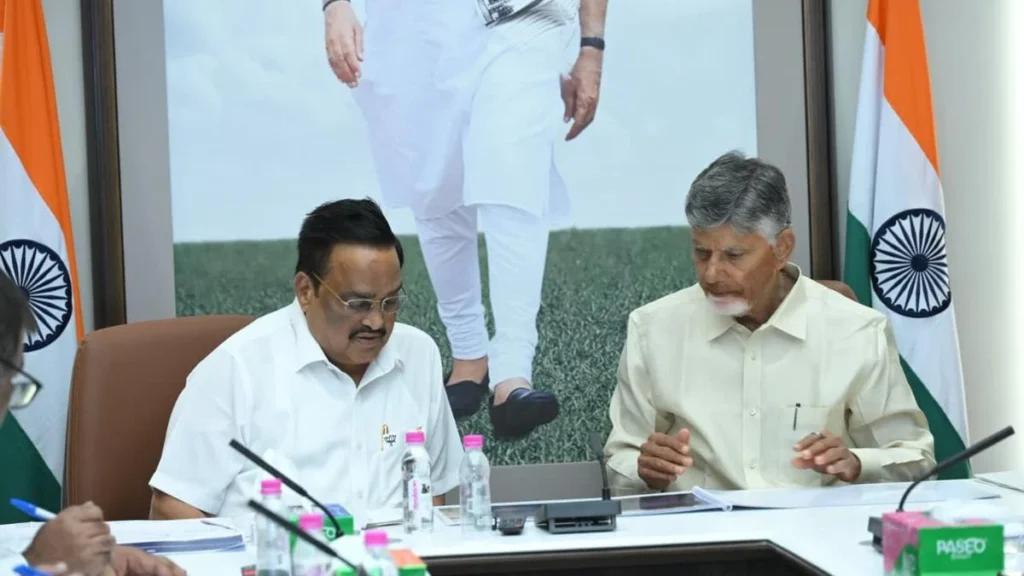
New Delhi: Andhra Pradesh Chief Minister N. Chandrababu Naidu concluded a high-stakes, two-day visit to the national capital this week, marked by a series of strategic meetings with key Union Ministers. The visit, which took place on October 8, 2026, was aimed at accelerating the state’s development agenda, resolving long-standing bureaucratic bottlenecks, and securing critical central funding for major infrastructure and irrigation projects.
Central to his visit was the urgent need for financial clearance for the Polavaram irrigation project and the formalization of the ambitious Godavari-Cauvery river-linking initiative. By engaging directly with Union Home Minister Amit Shah and Union Jal Shakti Minister C.R. Patil, Chief Minister Naidu underscored the state’s intent to expedite projects that have faced delays due to interstate disputes and administrative hurdles.
The Core Agenda: Irrigation and Infrastructure
The primary objective of Mr. Naidu’s mission was to address the structural and financial requirements of Andhra Pradesh’s irrigation sector. The Chief Minister emphasized that the state’s socio-economic growth is intrinsically tied to water security, particularly through the completion of the Polavaram project—often described as the "lifeline" of the state.
Meeting with Union Home Minister Amit Shah
During his interaction with Union Home Minister Amit Shah, Mr. Naidu revisited the unresolved issues stemming from the Southern Zonal Council meeting held in Mahabalipuram, Tamil Nadu, this past August. The dialogue centered on the federal-state coordination required to push the Godavari-Cauvery river-linking project, a national-level endeavor designed to mitigate water scarcity in the southern peninsula.
Mr. Naidu requested the Union Home Ministry’s intervention to navigate the complexities involved in the project, which requires consensus across multiple state borders. The Chief Minister’s advocacy for this project aligns with his long-term vision of transforming the agricultural landscape of Andhra Pradesh through large-scale water diversion strategies.
Discussions with Jal Shakti Minister C.R. Patil
The technical aspects of the state’s water infrastructure were addressed in a detailed meeting with Union Jal Shakti Minister C.R. Patil. The discussions were focused on two critical pillars:
- The Polavaram Project: Securing the timely release of funds for ongoing construction and the massive Rehabilitation and Resettlement (R&R) efforts.
- Jal Jeevan Mission-Amarajeevi Jaladhara (JJM-AJ): A massive state-led initiative to provide potable water to every rural household, with a total estimated cost of ₹30,000 crore.
Chronology of the Visit
The Chief Minister’s visit followed a calculated itinerary designed to maximize administrative output:

- Wednesday, October 7: Mr. Naidu held discussions with Union Finance Minister Nirmala Sitharaman. The focus was on the fiscal health of the state, debt management, and the release of pending grants allocated under the state’s post-bifurcation reconstruction framework.
- Thursday, October 8 (Morning): A high-level meeting with Union Jal Shakti Minister C.R. Patil. This session focused on the technical and financial roadmap for the Polavaram project and the expansion of the JJM-AJ scheme.
- Thursday, October 8 (Afternoon): A meeting with Union Home Minister Amit Shah to discuss pending inter-state issues and the implementation of the Southern Zonal Council’s recommendations.
The Polavaram Imperative: Challenges and Progress
The Polavaram project remains the most significant infrastructure undertaking in Andhra Pradesh. During his meetings, Mr. Naidu provided an update on the current status of the project, noting that construction and R&R works are being fast-tracked to allow for water impounding up to the 41.15-meter contour.
Reaching the Target
The government has set an ambitious goal: completing the critical phases of the project before the Godavari Pushkarams—the major river festival scheduled for next year. Achieving this deadline is essential to prevent further cost overruns and to provide immediate irrigation benefits to the delta regions.
Navigating Interstate Disputes
A major hurdle for Polavaram has been the resistance from neighboring states, specifically Odisha and Chhattisgarh, regarding the potential impact of backwater on their territories. Mr. Naidu urged the Union Minister to mediate these long-standing disputes.
Specifically, he requested the withdrawal of the "stop-work" order issued by the Ministry of Environment, Forest and Climate Change. This order has hampered the construction of protective embankments intended to mitigate flood risks in Odisha and Chhattisgarh. By resolving these concerns through dialogue, the Chief Minister aims to clear the path for the project’s completion while addressing the environmental and social anxieties of neighboring states.
A Vision for Tourism
Beyond irrigation, the Chief Minister outlined a broader vision for the Polavaram region. He proposed developing the area into a major tourism and spiritual hub. By leveraging the vast reservoir, the state government intends to create recreational infrastructure that would boost the local economy, create jobs, and integrate the project into the state’s broader spiritual tourism circuit.
Supporting Data: Rural Water Security
During his presentation on the Jal Jeevan Mission-Amarajeevi Jaladhara (JJM-AJ), Mr. Naidu provided a detailed account of the state’s progress in rural water supply.
- Total Rural Households: Approximately 95 lakh.
- Completed Connections: 62 lakh households have already received tap water connections.
- Under Progress: Work is underway to connect an additional 27 lakh rural households.
The ₹30,000 crore investment in the JJM-AJ scheme is intended to bridge the remaining gap and ensure that the state meets its target of universal water access. The Chief Minister highlighted that the speed of implementation has been hampered by funding delays, and he urged the Central government to expedite the disbursement of funds to ensure the project meets its 2026-2027 targets.

Implications for Andhra Pradesh
The implications of this visit are significant for the state’s political and economic trajectory.
Economic Stability
The push for financial clearance is vital for Andhra Pradesh’s fiscal health. With the state continuing to manage the legacy costs of bifurcation, the timely release of central funds is necessary to keep the state’s capital expenditure projects on track. Failure to secure these funds would force the state to rely on costlier market borrowings, further straining the treasury.
Federal Relations
The visit reaffirms the Chief Minister’s emphasis on "cooperative federalism." By aligning his state-level projects with national initiatives like the Godavari-Cauvery link and the Jal Jeevan Mission, Mr. Naidu is positioning Andhra Pradesh as a key partner in the Union government’s national development agenda. This approach is likely to yield better dividends in terms of political goodwill and administrative cooperation.
Political Significance
The proactive nature of these meetings serves as a message to both the people of Andhra Pradesh and the political opposition. By publicly documenting his efforts in New Delhi, the Chief Minister is demonstrating a commitment to transparency and results-oriented governance. The #CBNInDelhi social media campaign, run by his party, served to amplify the message that the state government is working tirelessly to secure its interests at the highest level of the Union government.
Conclusion
Chief Minister N. Chandrababu Naidu’s visit to New Delhi reflects a government in a hurry to build, consolidate, and deliver. Whether it is the technical complexities of the Polavaram project or the social mandate of providing clean drinking water to millions, the Chief Minister’s agenda is clear: the integration of state-level needs into the national development framework.
As the state looks toward the upcoming Godavari Pushkarams, the pressure to deliver results is mounting. The ball is now in the court of the Union ministries, particularly the Jal Shakti and Home Ministries, to respond to the requests for funding and regulatory clearances. For the residents of Andhra Pradesh, the success of this Delhi mission could mean the difference between timely infrastructure development and years of further stagnation. The next few months will be a critical test of the efficacy of this inter-governmental engagement.