OpenAI’s Frontier Intelligence Meets AWS Scale: GPT-5.5 and Codex Arrive on Amazon Bedrock
In a landmark development for the generative AI landscape, Amazon Web Services (AWS) has officially integrated OpenAI’s latest frontier models—GPT-5.5 and GPT-5.4—alongside the powerful Codex coding agent into the Amazon Bedrock ecosystem. This strategic expansion represents a significant convergence of two of the tech industry’s most influential forces, providing developers and enterprises with a robust, secure, and high-performance infrastructure to deploy next-generation AI applications.
By routing these models through Bedrock’s next-generation inference engine, AWS is positioning itself as the primary destination for organizations seeking to combine the reasoning prowess of OpenAI’s state-of-the-art models with the reliability, compliance, and global reach of AWS cloud infrastructure.
Main Facts: A New Tier of Generative Power
The integration brings three distinct capabilities to the Bedrock platform:
- GPT-5.5: Designed for the most demanding enterprise workloads, this flagship model excels at complex reasoning, agentic workflows, and professional-grade tasks that require deep contextual understanding and high accuracy.
- GPT-5.4: Positioned as the optimal choice for cost-conscious development, GPT-5.4 offers superior price-performance ratios without sacrificing the sophisticated reasoning capabilities required for modern applications.
- Codex: OpenAI’s specialized AI coding assistant, now supercharged by GPT-5.5, is fully integrated into the Bedrock workflow. Designed to handle long-horizon developer tasks, it provides a seamless bridge between natural language instructions and complex code generation, refactoring, and debugging across massive repositories.
Unlike traditional setups that may require complex licensing or per-seat costs, this implementation follows a pure pay-per-token model. Furthermore, AWS has emphasized data residency, ensuring that all processing for these models remains within the user-selected Bedrock region, a critical requirement for highly regulated industries such as finance, healthcare, and government.
Chronology: The Road to Integration
The announcement follows a series of calculated strategic steps by AWS to enhance its AI portfolio.
- May 24, 2026: AWS officially previews the arrival of OpenAI models during the "What’s Next with AWS" event, signaling a major shift in the Bedrock ecosystem.
- June 1, 2026: The official launch date. AWS confirms the availability of the
ResponsesAPI, a specialized interface designed for high-performance inference, marking the primary way for developers to interact with the models. - June 3, 2026: AWS expands the footprint of GPT-5.4, making it available in the AWS GovCloud (US-West) Region to meet the stringent security needs of public sector and defense customers.
- June 7, 2026: AWS updates the Amazon Bedrock console, introducing a new, intuitive interface specifically optimized for OpenAI-compatible APIs, streamlining the management of model deployments.
Supporting Data: Why "Responses" API Matters
The transition to the Responses API is not merely a cosmetic change; it is a fundamental shift in how developers interact with large language models (LLMs) on AWS. The Responses API is built to handle:
- Model-Managed Multi-Turn State: Reducing the overhead of tracking conversation history manually.
- Hosted Tools and Function Orchestration: Allowing the model to trigger external APIs and functions natively, which is essential for agentic workflows.
- Background and Long-Running Work: Supporting complex tasks that require more time than a standard synchronous request-response cycle can accommodate.
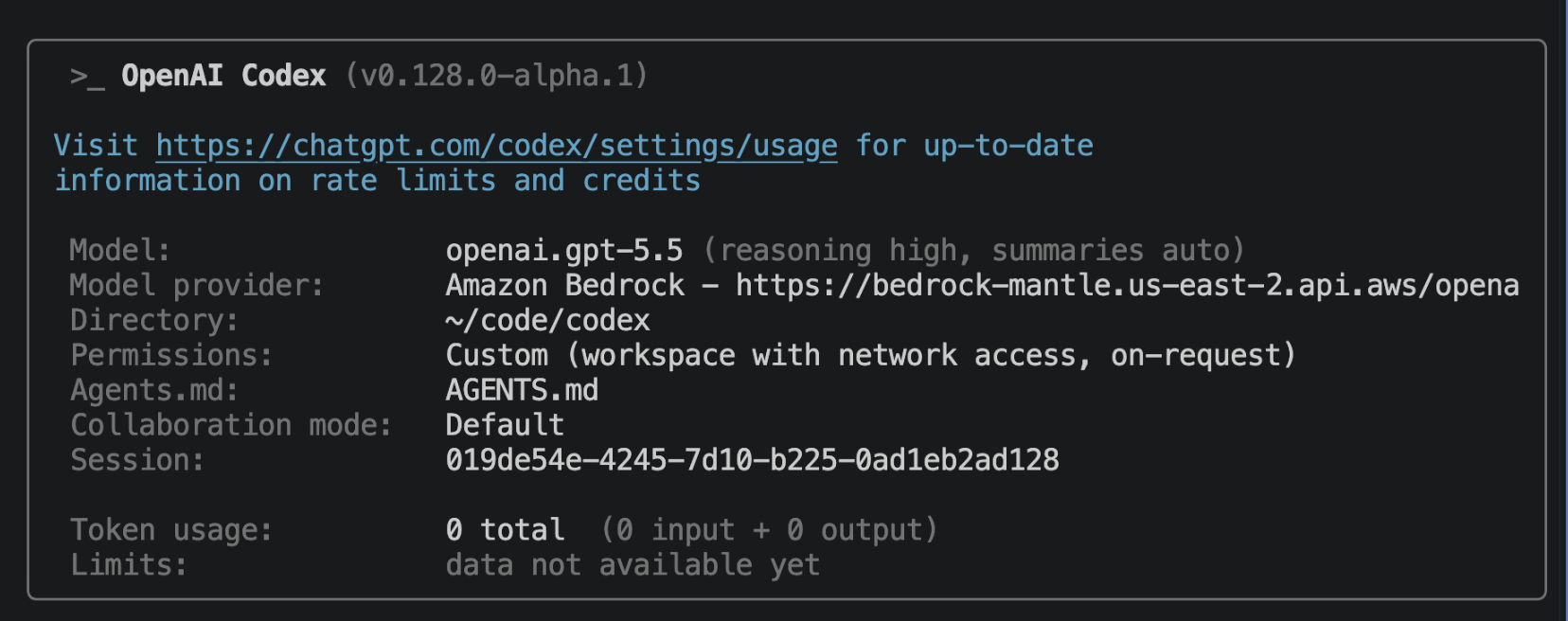
For developers, this means the technical barrier to entry is significantly lowered. By using standard tools like the OpenAI Python SDK and curl commands, teams can swap their existing OpenAI integrations to point to the Bedrock mantle endpoints (https://bedrock-mantle.us-east-2.api.aws/openai/v1) with minimal refactoring.
Official Responses and Technical Implementation
During the launch, AWS emphasized that the goal is to provide a "frictionless experience." Developers can now integrate Codex into their preferred IDEs—including Visual Studio Code, JetBrains, and Xcode—by configuring a simple .toml file.
Configuring the Environment
For developers looking to leverage the power of GPT-5.5, the setup process is streamlined via environment variables:
export OPENAI_BASE_URL="https://bedrock-mantle.us-east-2.api.aws/openai/v1"
export OPENAI_API_KEY="<BEDROCK_API_KEY>"
export BEDROCK_OPENAI_MODEL_ID="openai.gpt-5.5"
The use of the bedrock-mantle endpoint is the key to routing traffic through AWS’s secure infrastructure, ensuring that the inference is handled by the high-performance engines native to the Bedrock architecture rather than public-facing API gateways.

Implications for the Industry
The availability of these models on Bedrock has far-reaching implications for the software development lifecycle and enterprise AI strategy.
1. The Death of the "AI Silo"
Historically, companies were forced to choose between the cutting-edge models offered by providers like OpenAI and the secure, compliant infrastructure offered by cloud hyperscalers. This integration effectively ends that binary choice. By bringing OpenAI to Bedrock, AWS has created a "best of both worlds" environment where developers can innovate with the latest models without compromising on corporate data governance or regional compliance.
2. The Rise of Agentic Development
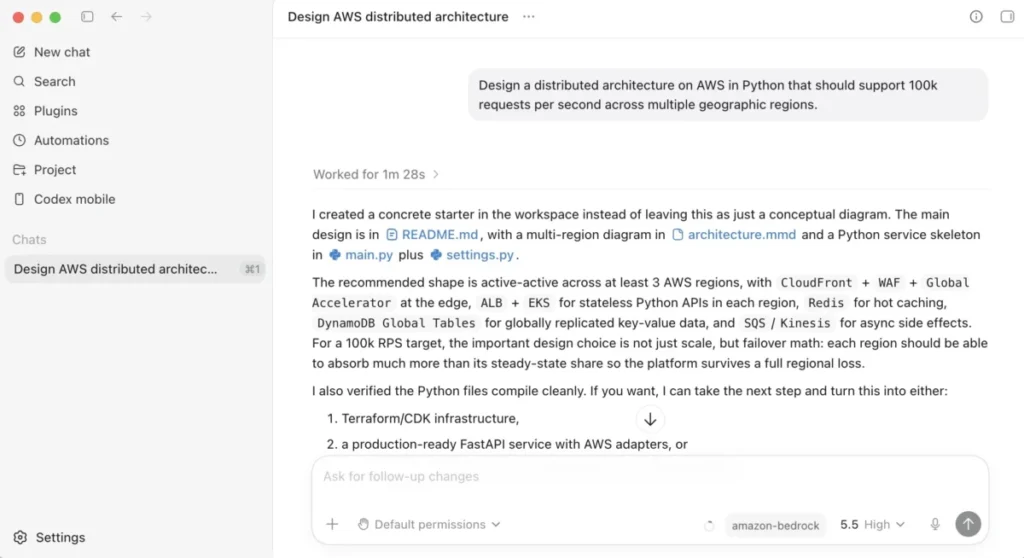
The integration of Codex with GPT-5.5 is a harbinger of the next era of software engineering. By allowing AI to handle "long-horizon" tasks—such as architectural design across multiple geographic regions or the refactoring of legacy codebases—developers are transitioning from being writers of code to being orchestrators of intelligent agents. The ability to invoke these agents directly within an IDE via the Bedrock backbone means that the speed of software development is likely to accelerate by orders of magnitude.
3. Economic Efficiency
The shift toward a pay-per-token model, combined with the absence of seat licenses, represents a significant democratization of high-end AI. Smaller startups now have access to the same infrastructure as Fortune 500 companies, allowing them to scale their AI-driven features linearly with their growth, rather than being locked into expensive, upfront enterprise contracts.
4. A New Standard for Infrastructure
With the inclusion of the AWS GovCloud and the revamped Bedrock console, AWS is setting a new industry standard for how frontier models should be delivered. The focus on "compatibility" means that the industry is moving toward a future where model swapping becomes as trivial as changing a configuration file, forcing providers to compete on infrastructure performance, latency, and reliability rather than simple exclusivity.
Future Outlook
As of mid-2026, the partnership between AWS and OpenAI appears to be in its infancy. With GPT-5.5 and 5.4 already established in major US regions and GovCloud, the industry is now looking toward how these models will be integrated into other AWS services, such as Amazon Q, AWS Lambda, and Amazon SageMaker.
The successful deployment of these models on Bedrock confirms that the future of enterprise AI lies in the hybrid model: the rapid innovation of independent AI labs paired with the global, secure, and scalable backbone of the world’s leading cloud service provider. For the developer community, the challenge is no longer about finding the right model—it is about how effectively they can harness this new level of intelligence to build the next generation of digital solutions.
As Channy, a leading voice in the AWS developer ecosystem, noted, the immediate availability of these tools invites all users—from individual hobbyists to massive engineering teams—to begin experimenting today. Whether it is through the Codex CLI or the robust Responses API, the tools to build the future of AI-powered software are now available on the bedrock of the cloud.