The Apple Watch Series 12 Review: A Leap in Health Intelligence and Data Density
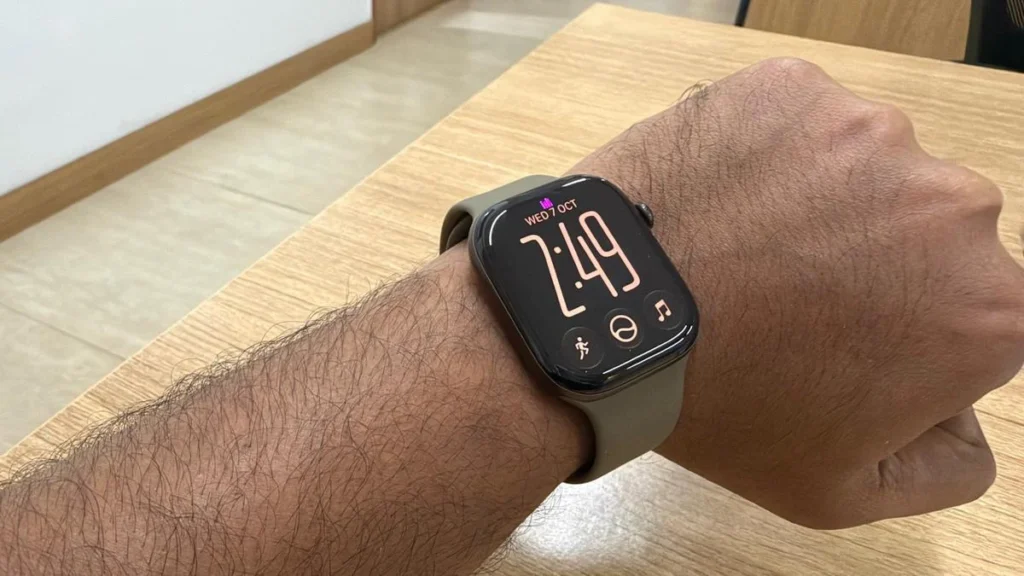
Every autumn, the consumer technology landscape pauses to confront a familiar ritual: the annual pilgrimage of the digital watch upgrade. For millions of users worldwide, the question is no longer whether smartwatches are useful, but rather whether incremental generational leaps justify retiring a perfectly functional device strapped to their wrist. With the launch of the Apple Watch Series 12, Apple has provided a nuanced, data-driven answer that upends traditional upgrade logic.
If you are a casual user who primarily relies on your smartwatch to check incoming notifications, close daily activity rings, and glance intermittently at the weather, the Series 12 offers little to compel an immediate purchase. However, if you are an athlete, a data-obsessed biohacker, or someone who closely monitors physiological recovery numbers, trends, and longitudinal health insights, the Series 12 represents the most compelling and transformative Apple Watch released in years.
Apple has decisively pivoted toward a singular thesis: the future of the wearable lies in advanced health intelligence.
Main Facts: What’s New in the Apple Watch Series 12?
The Apple Watch Series 12 arrives with several targeted updates that separate themselves from routine iterative refreshes. Rather than focusing on superficial aesthetic overhauls, Apple has concentrated its engineering efforts on three core pillars: micro-sensor telemetry, on-device artificial intelligence processing, and rapid-charge architecture.
- High-Frequency Health Sensing: The underside of the Series 12 houses an entirely re-engineered health sensing array. It samples the user’s heart rate every five seconds—representing a staggering 60-fold increase in sampling frequency compared to previous iterations. Meanwhile, heart rate variability (HRV) is captured every five minutes.
- The Readiness Score: Leveraging this hyper-dense data stream, the Series 12 introduces a synthesized metric that aggregates sleep stages, continuous heart rate, and daily physical activity into a single, actionable score to guide daily exertion levels.
- The S11 Silicon Chip: Powered by Apple’s new S11 processor, the watch gains enhanced power efficiency and onboard neural capacity, laying the hardware foundation for forthcoming AI-driven features like Siri Recap and Live Rewind transcription.
- Supercharged Fast Charging: While the standard 24-hour battery life remains unchanged, charging speeds have been dramatically accelerated. A 15-minute charge yields approximately 12 hours of use, while a mere five-minute top-up provides enough juice to power a full night of sleep tracking.
- Durable Materials and Finishes: The hardware lineup introduces a sophisticated new dark bronze aluminum finish alongside a high-end ceramic model. Aluminum variants are now protected by Ceramic Shield 2 glass, significantly boosting scratch and impact resistance.
Chronology of Evolution: The Road to Health Intelligence
To understand the significance of the Series 12, it is helpful to trace the chronological evolution of Apple’s wearable strategy. When the original Apple Watch debuted, it was marketed primarily as a fashion accessory and a convenient extension of the iPhone. It featured basic step-counting, rudimentary workout modes, and app notifications.
- 2015–2018 (The Fitness Era): Early models focused on motivating movement through the iconic "closing rings" interface. The introduction of built-in GPS and cellular connectivity untethered the watch from the phone, turning it into a standalone fitness companion.
- 2018–2022 (The Clinical Era): Apple shifted gears toward preventative medicine. The inclusion of electrical heart sensors (ECG), fall detection, blood oxygen ($SpO_2$) monitoring, and core temperature sensing transformed the device from a fitness tracker into a legitimate health monitor capable of saving lives.
- 2023–2025 (The Predictive Era): Software updates began introducing sleep stages, load tracking, and trend analysis, attempting to contextualize raw data into meaningful lifestyle guidance.
- 2026 (The Series 12 Breakthrough): With the Series 12, Apple moves past simple tracking into health intelligence. By increasing sensor data density exponentially, the watch no longer just records what your body did; it attempts to forecast how your body will respond to stress, exertion, and recovery.
Supporting Data and Technical Deep Dive
The architectural engine driving the Series 12 is its radical departure in sensor polling rates. To truly appreciate what is happening beneath the chassis, one must examine the metrics.
1. High-Density Sensor Analytics
Historically, consumer smartwatches sampled heart rates at intermittent intervals—typically once every few minutes during resting states, ramping up frequency only when a formal workout was initiated. While adequate for spotting gross anomalies like sudden tachycardia, this sparse data collection misses micro-fluctuations caused by acute stress, caffeine intake, poor digestion, or impending illness.

By upping heart rate collection to once every five seconds and capturing HRV every five minutes, the Apple Watch Series 12 generates a data density previously restricted to clinical-grade Holter monitors or elite athletic lab equipment.
| Metric | Previous Apple Watch Models | Apple Watch Series 12 |
|---|---|---|
| Heart Rate Sampling | Every 300 seconds (resting) | Every 5 seconds |
| HRV Capture Rate | Variable / Infrequent | Every 5 minutes |
| 15-Minute Charge Yield | ~6–8 hours | ~12 hours |
| 5-Minute Sleep Top-Up | Inadequate for full night | 10 hours of sleep tracking |
| Glass Protection | Ion-X / Standard Sapphire | Ceramic Shield 2 (Aluminum models) |
2. The Readiness Score Mechanism
The newly introduced Readiness Score does not operate in a vacuum. It relies on the continuous overnight and daytime data gathered by the enhanced sensors. However, Apple has instituted a strict calibration period: the Readiness Score will not populate until the user wears the Series 12 continuously through the night for a full seven days.
This requirement underscores a philosophical shift. Apple is demanding behavioral compliance—habitual 24/7 wear—in exchange for personalized physiological insights. The score combines sleep duration, sleep architecture (REM, deep, and core sleep), resting heart rate trends, and recent training loads to deliver a simple binary recommendation: push forward or rest up.
3. Processing Power and the S11 Chip
Beneath the display lies the S11 chip. While CPU and GPU performance improvements ensure buttery-smooth navigation through watchOS, the true purpose of the S11 is its neural engine architecture. Apple has explicitly engineered this silicon to handle local machine learning tasks.
Features such as Siri Recap (which intelligently summarizes your daily voice notes, messages, and reminders) and Live Rewind transcription require significant computing power. Because Apple is routing these tasks locally for privacy reasons rather than relying entirely on cloud servers, the S11 chip acts as an investment in future software capabilities. At launch, however, these AI features are delayed, meaning early adopters are effectively purchasing hardware potential.
Official Responses and Industry Context
Industry analysts and health tech specialists have been quick to weigh in on Apple’s strategic positioning with the Series 12.
Speaking at the product briefing, Apple’s engineering leads emphasized that consumer wellness devices must bridge the gap between recreational fitness tracking and actionable clinical insights without overwhelming the user. "Data without context is just noise," noted an Apple product spokesperson during the keynote demonstration. "With the Series 12, we aren’t just giving you more numbers; we are giving your body a voice that you can actually interpret and act upon."

Competitor reactions have been swift. Rival brands in the dedicated sports watch and fitness band sectors—such as Garmin, Oura, and Whoop—have long utilized readiness and recovery scores. However, industry analysts point out that Apple’s integration within the broader iOS ecosystem, combined with its unmatched sensor accuracy and ubiquity, poses a serious threat to single-purpose fitness wearables.
At the same time, consumer advocacy groups have raised questions regarding data privacy and the psychological impact of constant biometric monitoring. When a digital watch tells an executive or an athlete that their body is failing to recover adequately, it can induce performance anxiety—a phenomenon sports psychologists refer to as "score-driven stress." Apple’s response has been to frame the metric as an objective guide rather than an absolute mandate, leaving the ultimate decision of whether to skip a workout entirely in the hands of the user.
Implications: Who Should Upgrade, and Who Should Wait?
The release of the Apple Watch Series 12 forces consumers to evaluate their relationship with technology. The market bifurcation is clearer this year than it has ever been.
Upgrade If:
- You are a data-driven athlete or biohacker: If you currently wear a specialized recovery ring or chest strap alongside your Apple Watch to track HRV, sleep cycles, and training readiness, the Series 12 consolidates those tools into a single, beautifully engineered ecosystem.
- You are upgrading from a Series 8 or older: The compound improvements in charging speed, display durability (via Ceramic Shield 2), sensor accuracy, and processing power represent a massive generational leap over hardware that is three or more years old.
- You want future-proof AI hardware: If you are excited about on-device machine learning integrations like Siri Recap and advanced voice transcriptions, buying the S11-equipped Series 12 ensures your device won’t be left behind when these software updates drop later in the year.
Hold Off If:
- You are a casual user: If your primary interaction with your watch involves checking text messages, tracking the occasional jog, and closing activity rings, your current Series 9, 10, or even SE model is more than adequate.
- You dislike wearing watches to bed: Because the cornerstone feature—the Readiness Score—requires a mandatory seven-day baseline of continuous overnight wear, users who refuse to sleep with a device on their wrist will miss out on the primary justification for the Series 12’s existence.
- You expect 48+ hour battery life: Despite engineering tweaks to power efficiency, the 24-hour battery ceiling remains firmly in place. If untethered multi-day battery performance is your holy grail, Apple’s standard lineup is still not for you.
Final Verdict
The Apple Watch Series 12 marks a defining moment in the evolution of consumer wearables. Apple has looked past the temptation of superficial redesigns and focused its considerable engineering might on the microscopic frontier beneath the chassis.
By exponentially increasing heart rate sampling rates, refining biometric tracking, and building the necessary silicon infrastructure for on-device artificial intelligence, Apple has laid out its vision: the future of the smartwatch is deeply personal health intelligence.
For the data enthusiasts, the athletes, and the recovery-obsessed, the Series 12 is an essential, high-value upgrade that justifies its place on the wrist. For everyone else, it is a brilliant piece of technology that can safely be bypassed until the promised AI ecosystem fully matures.