The Sovereign Agent: Building a Zero-Cost, Private AI Workflow with Hermes and Ollama
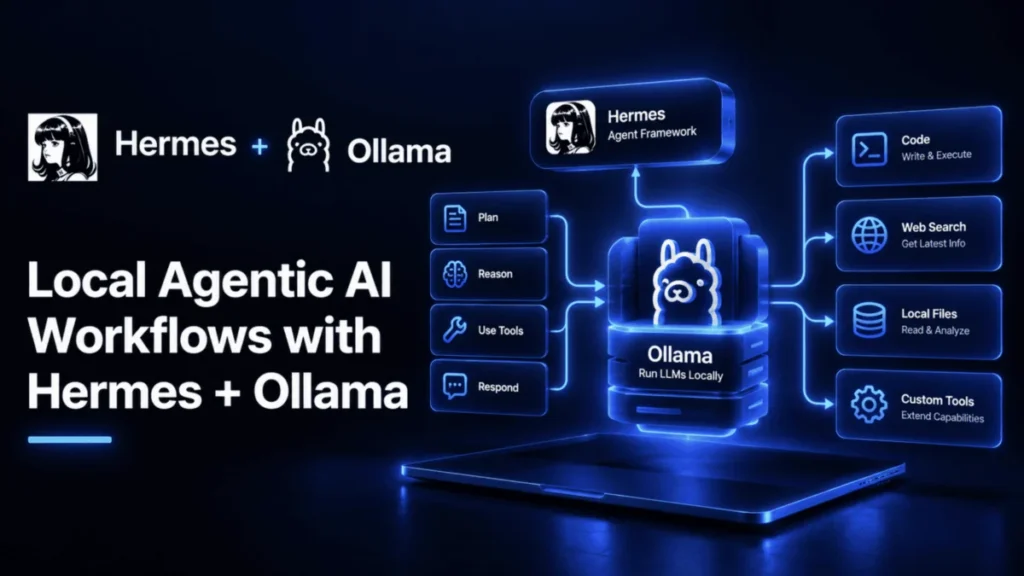
In the rapidly evolving landscape of artificial intelligence, a silent divide has emerged. On one side, power users and enterprises leverage massive cloud-based LLM APIs, paying significant sums for the privilege while surrendering their proprietary data to third-party servers. On the other, the open-source community is building a path toward digital sovereignty. By pairing Hermes Agent with Ollama, developers and hobbyists can now construct fully local, zero-cost agentic workflows where code, personal files, and private conversations never leave the host hardware.
This article serves as a comprehensive guide to reclaiming your data privacy while maintaining high-performance automation capabilities.
The High Cost of Convenience: Why Local Matters
The financial burden of cloud-based AI is often underestimated. According to internal cost breakdowns provided by Nous Research, a standard coding session utilizing cloud-based agentic workflows typically fluctuates between $0.60 and $0.80 per session. For heavy-duty automation, these costs can balloon to $20 per session. While these figures may seem negligible to a single user in the short term, they scale aggressively for students, hobbyists, and developers running continuous integration or autonomous research agents.
Beyond the monetary expense lies the "privacy tax." Every file uploaded, every codebase indexed, and every line of code executed via a cloud API is processed on remote servers. For professionals handling sensitive intellectual property or personal data, this architecture introduces an inherent risk profile that many are no longer willing to accept.
The Architecture of Autonomy
To build a local, cost-free alternative, we utilize two primary pillars of the open-source ecosystem:
1. Hermes Agent: The Intelligence Engine
Hermes Agent (v0.21.1) is an open-source AI agent developed by Nous Research. Unlike traditional chatbots, which are passive text generators, Hermes is an agent. It is designed to interact with the world: it can edit files, execute terminal commands, browse the web, and delegate complex tasks to sub-agents. With features like persistent memory—allowing the agent to learn from past project interactions—and a robust messaging gateway for platforms like Discord and Slack, it functions as a comprehensive productivity layer.
2. Ollama: The Local Model Server
Ollama acts as the infrastructure layer, enabling users to download and serve large language models directly on local hardware. By exposing an OpenAI-compatible /v1/chat/completions endpoint, Ollama allows agents like Hermes to interact with a local model as if it were a high-end cloud service. This "drop-in" compatibility is the bridge that makes local agentic workflows possible.
Technical Implementation: A Step-by-Step Guide
Phase 1: Hardware Preparation and Setup
Before deployment, it is crucial to assess your hardware. While CPU-only setups are functional, they are significantly slower.
| Component | Minimum Requirement | Recommended Specification |
|---|---|---|
| RAM | 8 GB (for 3B models) | 32+ GB (for 27B+ models) |
| Storage | 5 GB free | 30+ GB (for model variety) |
| CPU | 4 cores | 8+ cores |
| GPU | Not required | NVIDIA GPU with 8+ GB VRAM |
For most users, a 9B model on an 8-core CPU will yield approximately 10 tokens per second. However, for complex agentic tasks requiring tool-calling, we recommend a 31B parameter model.
Phase 2: Installing and Configuring the Stack
To begin, install Ollama using the standard CLI script:
curl -fsSL https://ollama.com/install.sh | sh
Verify the installation by querying the API:
curl http://localhost:11434/api/tags
An empty JSON response confirms the server is active and awaiting models. For agentic work, model selection is critical. You must select a model that supports Tool Calling (such as gemma4:31b). A model without tool-calling capabilities will fail to interact with your filesystem or terminal, effectively neutering the "agent" functionality.
Phase 3: Optimizing for Agentic Workloads
Standard model configurations are often insufficient for the high token throughput required by agentic workflows. To ensure stability, increase the context window:
- Create a custom
Modelfile:FROM gemma4:31b PARAMETER num_ctx 64000 - Build the new model:
ollama create gemma4-64k -f /tmp/Modelfile - Update your
~/.hermes/config.yamlto point to this new model.
Additionally, to prevent latency during your workflow, instruct Ollama to keep the model loaded in memory:
curl http://localhost:11434/api/generate -d '"model": "gemma4:31b", "keep_alive": "24h"'
Implications for Workflow Efficiency
Once integrated, the agent can perform tasks that would otherwise require manual intervention. For example, a user can prompt the agent to: "List all Python files in this directory and count the lines of code in each."
The agent will then:
- Access the terminal tool.
- Execute a
findandwc -lcommand sequence. - Parse the output.
- Report the findings directly to the user.
This happens entirely offline. By implementing a Telegram gateway, these capabilities become mobile, allowing you to manage your local projects from your smartphone without exposing your data to the cloud.
Balancing Performance: The Hybrid Fallback Model
One of the most mature aspects of this setup is the ability to implement a "Fallback Provider." Local models, while impressive, may occasionally struggle with highly abstract or novel logic.
By configuring fallback_providers in your Hermes setup (e.g., pointing to OpenRouter for rare, complex queries), you create a tiered system. 90% of your daily tasks remain free and private on your local hardware, while the cloud is reserved only for the most difficult 10% of tasks. This approach ensures that you only pay for compute when the local system genuinely reaches its limits.
Official Perspective and Future Outlook
Nous Research’s release of Hermes Agent represents a pivotal shift in the "agentic" conversation. By emphasizing open-source licensing (MIT), they are effectively democratizing access to autonomous systems. The ability to sandbox these agents—using Docker, SSH, or local isolation backends—ensures that even if an agent hallucinates or executes an erroneous command, the damage to the host system is mitigated.
Conclusion: The Path Toward Sovereign AI
Building a local, agentic workflow is no longer an exercise in futility for elite engineers. With the current maturity of Ollama and the versatility of Hermes, any user with adequate hardware can establish an automated assistant that respects the sanctity of their data.
By moving away from a "Cloud-First" mindset, users can achieve three distinct advantages:
- Economic Efficiency: Eliminating recurring subscription fees and API usage costs.
- Absolute Privacy: Ensuring that proprietary code and private data never traverse an external network.
- Control: Tailoring the agent’s context window, memory, and toolset to specific project needs without being beholden to the constraints or policy changes of a third-party provider.
As we look toward the future of personal computing, the "Sovereign Agent" will likely become the standard for professional development. The tools are ready; the infrastructure is accessible. The only remaining step is to begin the migration from the cloud back to the desktop.